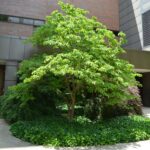
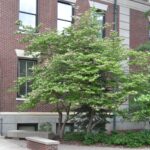
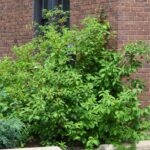
Tree Cornus florida 'Cherokee Princess' [Cherokee Princess Flowering Dogwood] This Flowering Dogwood cultivar is an early and abundant bloomer and produces large (up to 5" wide), showy white bracts. As with all Flowering Dogwoods, it has a distinct horizontal branching pattern and is one of the finest small trees, interesting at almost every season. Flowering Dogwoods are widely adaptable, but material of different geographic origin varies widely in hardiness. The fruit is an important food supply for native birds and other animals. 'Cherokee Princess'…
Tree Indiana Native Cornus florida var. rubra [Pink Flowering Dogwood] The variety rubra is a group of Flowering Dogwoods with beautiful pink bracts of varying intensities. Flowering Dogwoods are one of the finest small trees, interesting at almost every season, and with a branching pattern that is distinctly horizontal. Widely adaptable, but material of different geographic origin varies widely in hardiness, and the flowers of variety rubra tend to be less cold hardy than those of the white flowering type. Fruit is an important food…
Shrub Indiana Native Cornus sericea [Redosier Dogwood] This plant has red twigs all year round, but the color is especially prominent in winter. Grows well in a variety of situations, including wet soil. Easy to transplant. Relatively trouble-free. A three-year pruning cycle improves form, vigor, and winter stem color effect. Cutting all stems 6-12" from ground in late winter has similar effect. Best in mass plantings. Excellent for winter color. Leaf blights and twig cankers can be problematic.
Shrub Cornus sericea 'Baileyi' [Red Twig Dogwood] A shrub with a rounded habit, bright red stems that persist into winter, dark green ovate-laceolate leaves, and white cymes in spring. It has many uses borders, naturalizing, specimen, erosion control, and in moist soils.
Shrub Cornus sericea 'Cardinal' [Red Twig Redosier Dogwood] The Cardinal Red Twig Dogwood has attractive, strongly red stems, providing winter interest to the landscape. It is a larger variant that has better resistance to leaf spot than other cultivars. Grows well in a variety of situations, including wet soil. Easy to transplant. Relatively trouble-free. A three-year pruning cycle improves form, vigor, and winter stem color effect. Cutting all stems 6-12" from ground in late winter has similar effect. Best in mass plantings. Excellent…
Shrub Cornus sericea 'Farrow' [sold as Arctic Fireā¢] [Dwarf Red Twig Redosier Dogwood] This plant has attractive dark red twigs all year round, but the color is especially prominent in winter. Deer resistant. Grows well in a variety of situations, including wet soil. Easy to transplant. Relatively trouble-free. A three-year pruning cycle improves form, vigor, and winter stem color effect. Cutting all stems 6-12" from ground in late winter has similar effect. Best in mass plantings. Excellent for winter color. Leaf blights and twig cankers can be problematic.
Shrub/Tree Cotinus coggygria [Common Smokebush] Usually dioecious, so heavy-fruiting clonal material should be used when possible. Can be pruned to low framework each year to promote plant coloration which occurs best on vigorous stems. Misty fruiting panicles give the species its name. The fine-textured hairs on the fruit pedicels and peduncles change colors, being best when tinted smoky pink.
Shrub/Tree Cotinus obovatus [American Smoketree] Cotinus obovatus can be a large shrub or small tree and is most noted for its extraordinary fall color and fluffy, smoke-like fruiting panicles. It is a tough plant, adapted to poor, rocky, limestone soils.
Tree Indiana Native Crataegus crus-galli [Cockspur Hawthorn] The strong horizontal branching is good for softening vertical lines of buildings. The 2-3" thorns can be dangerous, especially around children. Although attractive, some find the small, white flowers malodorous. Fireblight, leaf spot, and cedar-hawthorn rust are among the worst problems to affect this species. Japanese beetles like to feed on hawthorns.