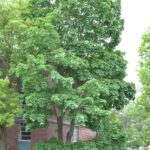
Tree Acer palmatum `Shishigashira` [Lion’s Head Japanese Maple] Avoid planting in windy sites and dry soil.
Tree InvasiveThis plant is considered invasive Acer platanoides [Norway Maple] One of the densest shade trees, widely adaptable to soils and environments, including dry and polluted city conditions. Transplants easily. Extremely dense canopy and shallow root system make it impossible to maintain good turf beneath. Can be a weed problem, especially in cooler parts of the northeast US. Slight susceptibility to verticillium wilt, anthracnose, and leaf scorch. Can be damaged by 2,4-D drift. Does not perform well in southern US (warm nights severely retard growth).…
Tree Acer pseudoplatanus 'Tunpetti' [sold as Regal Petticoat™] [Regal Petticoat Sycamore Maple] This cultivar does well in urban conditions. It is highly salt tolerant and as the tree matures lower hanging branches can be removed allowing for a higher canopy that does not obstruct walkways.
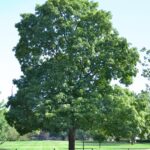
Tree Indiana Native Acer saccharum [Sugar Maple] Widely adapted to climate, but best in at least reasonably fertile soil. One of the best shade tree species over a wide area, but for best results select plants known for adaptability to the local region. Quite shade tolerant. Low maintenance in a good site. 50 gal. sap or more needed to make 1 gal. syrup. Not so drought-tolerant as silver maple, but reasonably so. Does poorly in compacted soils, and doesn't like salt spray.…
Tree Acer saccharum 'JFS-Caddo2' [sold as Flashfire™] [Flashfire Sugar Maple] Come fall the Flashfire® Sugar Maple turns bright red before the foliage drops. The season interest does not stop there, in spring and throughout summer the foliage is glossy and dark green.
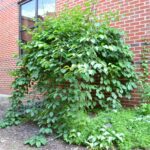
Liana (Climbing Vine) Actinidia arguta [Bower Actinidia] Requires a strong support. Dioecious. Flesh, seed, and fuzzless skin of fruit is edible, and has high vitamin C content. Rampant growth needs pruning. Japanese beetles have some attraction to the foliage.
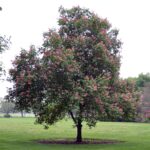
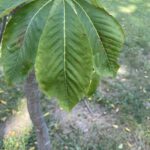
Tree Aesculus × carnea 'Briotii' [Ruby Red Horsechestnut] Has decent tolerance to drought and urban environments. Buds are not as sticky as its parent plant, Aesculus hippocastanum. Flower panicles are larger than both parent species with a rich red coloration, making it a popular tree choice in England.
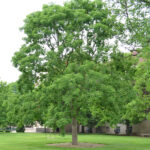
Tree Indiana Native Aesculus flava [Yellow Buckeye] The Yellow Buckeye is a large, majestic native tree that is widely adapted to soils and environments; however, very dry conditions must be avoided. Drought causes early leaf drop and leaf blotch, and leaf scorch can disfigure foliage in dry soil. That being said, this species is less prone to foliar problems than the related Aesculus glabra (Ohio Buckeye) is. Difficult to transplant once established due to long taproot. Large, abundant fruits in autumn can…
Tree Indiana Native Aesculus glabra [Ohio Buckeye] Widely adapted to soils and environments; however, very dry conditions must be avoided. Drought causes early leaf drop. Leaf blotch and leaf scorch often disfigure foliage, especially in dry soil. Spiny fruits in autumn can be troublesome underfoot, and eliminates species type as a good street tree. Fruits are toxic, containing 3-5% saponins.