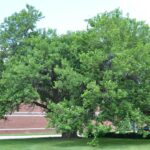
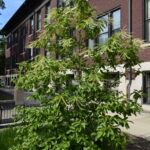
Tree Indiana Native Morus rubra [Red Mulberry] The Red Mulberry is fairly adaptable and can sometimes be a prolific self-seeder. To prevent bleeding, it should be pruned in late fall or winter. Although somewhat more sensitive to soil requirements, Morus rubra is considered to be a better choice than the related Morus alba (White Mulberry), which has a much more invasive character. Morus rubra is dioecious, so male and female flowers are borne on separate trees. Female trees, if fertilized, bear edible…
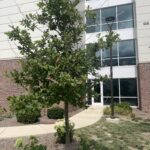
Tree Indiana Native Nyssa sylvatica 'Wildfire' [Wildfire Blackgum] Especially useful in wet soils. One of the most beautiful trees, with habit comparable to Quercus palustris, but usually more irregular, and with a greater number of more slender main limbs. Silvery-grey, picturesque branching; strong horizontal accent. Difficult to transplant due to taproot; use container-grown plants when possible, or at least plants dug with a soil ball. Shelter from wind. In the North, select native northern stock as the species has a wide geographic range.…
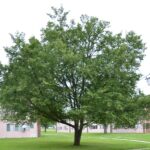
Tree Indiana Native Ostrya virginiana [American Hophornbeam] A good, trouble-free small shade tree worthy of greater use. Very graceful with many drooping branches that create a rounded habit. Best on drier slopes, and is usually found in native ecosystems. Slow growing, and difficult to transplant. Does not tolerate periodic flooding (as does Carpinus caroliniana) or salt.
Tree Indiana Native Oxydendrum arboreum [Sourwood] This plant gets it common and scientific name from its sour-tasting leaves. The genus name is derived from the Greek word "oxys", meaning sour, and "dendron", meaning tree. Honey produced from the pollen of Sourwood flowers is considered valuable. The attractive, slightly fragrant flowers are often prolifically produced, especially in full sun, and are effective for up to four weeks. Like all Ericaceous plants, Oxydendrum arboreum requires rich, organic, moist, well-drained, and acidic soil. This…
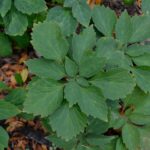
Shrub Indiana Native Pachysandra procumbens [Allegheny Pachysandra] A shade loving plant, the pachysandra procumbens can be a good naturalizing groundcover with greyish green leaves. The Alleghany Pachysandra is considered to be more attractive than the overused Pachysandra terminalis. It is considered deciduous in USDA Zones 5 and 6 bue semi-evergreen to evergreen in Zones 7-9.
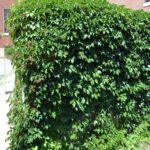
Liana (Climbing Vine) Indiana Native Parthenocissus quinquefolia [Virginia Creeper] One of the strongest-climbing vines, given solid support for attachment of the adhesive discs on tendrils (not root). Not a vine for trellises or fences. Tolerates any soil, and sun or shade. Limited value as groundcover.
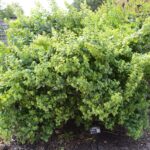
Shrub Philadelphus'Snowbelle' [Snowbelle Mock Orange] 'Snowbelle' is noted for having good heat and cold tolerance. It has minimal ornamental interest when not flowering.
Tree Picea abies [Norway Spruce] Slight mite susceptibility in hot, dry sites. Some susceptibility to borers. May become thin, open, and have a less attractive habit at maturity.
 Indiana Native