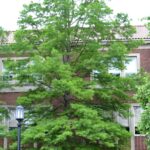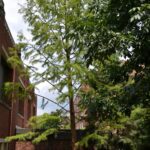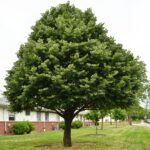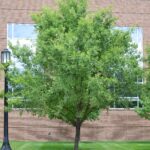
Tree Indiana Native Audio Recording AvailableID That Tree Video AvailablePurdue Plant Doctor Available Taxodium distichum [Common Baldcypress] Nice planted in groupings around water. Develops cypress knees (possibly for gas exchange), but generally only near water. Indiana NativeAudio Recording AvailableID That Tree Video AvailablePurdue Plant Doctor Available
Tree Audio Recording AvailablePurdue Plant Doctor Available Taxodium distichum 'Michelson' [sold as Shawnee Brave®] [Shawnee Brave Baldcypress] Nice planted in groupings around water. Develops cypress knees (possibly for gas exchange), but generally only near water. Mite resistant foliage. Audio Recording AvailablePurdue Plant Doctor Available
Tree Audio Recording AvailablePurdue Plant Doctor Available Taxodium distichum var. imbricarium [Pondcypress] Can tolerate wet and dry soils. Does not tend to develop "cypress knees" like the Common Baldcypress. Audio Recording AvailablePurdue Plant Doctor Available
Tree Audio Recording AvailablePurdue Plant Doctor Available Tilia tomentosa [Silver Linden] Very adaptable, even alkaline soil, but it doesn't tolerate much air pollution. More heat and drought tolerant than other lindens. Japanese beetles are attracted to the foliage. Attractive light-gray, smooth bark approaches beech like in appearance. Audio Recording AvailablePurdue Plant Doctor Available
Tree Purdue Plant Doctor Available Tilia tomentosa ‘Sterling’ [Sterling Linden] Tilia tomentosa 'Sterling' shows some resistance to Japanese beetle. Purdue Plant Doctor Available
Tree Audio Recording AvailablePurdue Plant Doctor Available Ulmus parvifolia [Lacebark Elm] Stunning, multi-colored mottled and exfoliating bark. Grows well under city conditions. Good resistance against Dutch elm disease, elm leaf beetle, and Japanese beetle. Slightly weak wooded, so sometimes damaged by ice storms. Audio Recording AvailablePurdue Plant Doctor Available
Tree Audio Recording AvailablePurdue Plant Doctor Available Ulmus parvifolia 'BSNUPF' [sold as Everclear®] [Columnar Lacebark Elm] This cultivar has a tight, columnar habit and holds this form into maturity. Stunning, multi-colored mottled and exfoliating bark. Grows well under city conditions. Good resistance against Dutch elm disease, elm leaf beetle, and Japanese beetle. Slightly weak wooded, so sometimes damaged by ice storms. Audio Recording AvailablePurdue Plant Doctor Available
Tree Audio Recording AvailablePurdue Plant Doctor Available Ulmus parvifolia 'Emer II' [sold as Allee®] [Allee Lacebark Elm] Stunning, multi-colored mottled and exfoliating bark, even on the surface roots. Tends to maintain foliage well during droughts. Grows well under city conditions. Resistant to Dutch elm disease and the elm leaf beetle. Audio Recording AvailablePurdue Plant Doctor Available
Tree Audio Recording AvailablePurdue Plant Doctor Available Ulmus parvifolia 'UPMTF' [sold as Bosque®] [Bosque Lacebark Elm] Stunning, multi-colored, mottled, and exfoliating bark. Grows well under city conditions. Good resistance against Dutch elm disease, elm leaf beetle, and Japanese beetle. Slightly weak wooded, sometimes damaged by ice storms. Audio Recording AvailablePurdue Plant Doctor Available
Shrub Indiana Native Purdue Plant Doctor Available Viburnum molle [Kentucky Viburnum] The Kentucky Viburnum is uncommon in commerce, and is closely related to Viburnum dentatum (Arrowwood Viburnum). Interesting and attractive exfoliating bark. Flowers malodorous to some. Attractive to birds. Durable viburnum. Serves as a nice neutral background shrub; also good for naturalizing. Indiana NativePurdue Plant Doctor Available