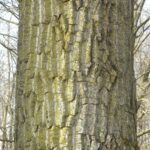
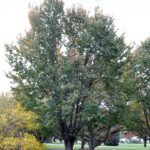
Tree Indiana Native Audio Recording AvailableID That Tree Video AvailablePurdue Plant Doctor Available Platanus occidentalis [American Sycamore] One of the largest of shade trees, making massive, majestic specimens. Tolerant of urban conditions, but generally found in riparian areas in the wild. The mottled, multi-colored, exfoliating bark is very beautiful and makes for excellent winter interest. Needs a large volume of soil space. Anthracnose leaf and twig blight occasionally disfigure this tree, and can damage it severely. Leaves, twigs, bark, and fruit contribute to a significant litter problem. Although this species can tolerate… Indiana NativeAudio Recording AvailableID That Tree Video AvailablePurdue Plant Doctor Available
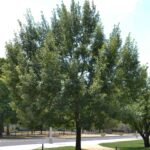
Tree Indiana Native Audio Recording AvailableID That Tree Video AvailablePurdue Plant Doctor Available Populus deltoides [Eastern Cottonwood] Populus deltoides is a large, fast-growing tree that is not generally advised for use in the landscape. This plant is weak-wooded, weedy, and a litter problem, dropping twigs, flowers, branches, leaves, and fruits (the cottony masses that float through the air in early summer). In the wild, it tends to grow along streams, rivers, and other moist areas. Susceptible to many pests and diseases, especially canker. Indiana NativeAudio Recording AvailableID That Tree Video AvailablePurdue Plant Doctor Available
Tree Indiana Native Audio Recording AvailableID That Tree Video AvailablePurdue Plant Doctor Available Populus tremuloides [Quaking Aspen] The common name of Populus tremuloides is derived from the tendency of the leaves to tremble (quake) in the wind, or even light breezes, due to flattened petioles. This is a fast-growing and short-lived species that regenerates from root suckers and can quickly recolonize disturbed sites. Generally, most of the specimens in a grove of P. tremuloides are clones, all originating from the same stem. This plant is dioecious, so groves are usually all male… Indiana NativeAudio Recording AvailableID That Tree Video AvailablePurdue Plant Doctor Available
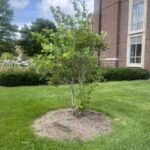
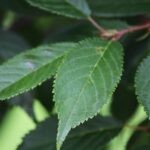
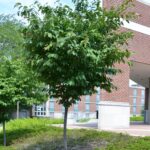
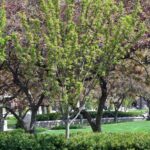
Tree Purdue Plant Doctor Available Prunus × incam 'Okame' [Okame Cherry] 'Okame' is a small cherry tree that performs well in the landscape and provides multi-season interest with beautiful, pink flowers very early in the spring, handsome dark green summer foliage, excellent orange, red, and bronze fall color, and shining, reddish bark in the winter. Purdue Plant Doctor Available
Tree Audio Recording AvailablePurdue Plant Doctor Available Prunus sargentii [Sargent Cherry] One of the better performing and useful cherries available. Beautiful, polished reddish to chestnut brown bark on older trunks. Subject to several minor pests, none usually serious. Audio Recording AvailablePurdue Plant Doctor Available
Tree Audio Recording AvailablePurdue Plant Doctor Available Prunus sargentii 'Columnaris' [Columnar Sargent Cherry] One of the better performing and useful cherries available. This cultivar is known for its very upright, vase-shaped, and somewhat columnar form. Beautiful, polished reddish to chestnut brown bark on older trunks. Subject to several minor pests, none usually serious. Audio Recording AvailablePurdue Plant Doctor Available
Tree Audio Recording AvailablePurdue Plant Doctor Available Prunus sargentii 'JFS-KW58' [sold as Pink Flair®] [Pink Flair Sargent Cherry] One of the better performing and useful cherries available. Compared to the straight species, Pink Flair is more strongly upright and vase-shaped and the pink flowers are larger and brighter. Beautiful, polished reddish to chestnut brown bark on older trunks. Subject to several minor pests, none usually serious. Audio Recording AvailablePurdue Plant Doctor Available
Tree Audio Recording AvailablePurdue Plant Doctor Available Prunus serrulata 'Sekiyama' [Sekiyama Japanese Flowering Cherry] The Japanese Flowering Cherry prefers rich, moist, well-drained loams and full sun. It can tolerate part shade (at the expense of blooms), as well as heat, humidity, and even some drier soils (once it is established). This tree is susceptible to many pests, including leaf spot, powdery mildew, fireblight, Japanese beetles, aphids, scale, borers, leafhoppers, and caterpillars. 'Kwanzan', which is also known as 'Kanzan' or 'Sekiyama,' grows 30 to 40 feet high. This variant, sometimes… Audio Recording AvailablePurdue Plant Doctor Available
Tree Audio Recording AvailablePurdue Plant Doctor Available Quercus acutissima [Sawtooth Oak] Transplants easily. May develop chlorosis on high pH soils. Audio Recording AvailablePurdue Plant Doctor Available
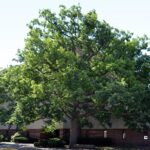
Tree Indiana Native Audio Recording AvailableID That Tree Video AvailablePurdue Plant Doctor Available Quercus alba [White Oak] One of the most majestic trees at maturity with a picturesque framework, but requires many years to reach maturity. Long-lived, the kind of tree to use where it can be appreciated by succeeding generations. Slow growth eliminates it as a tree for quick effect. Roots are highly sensitive to disturbance, even foot traffic. Almost impossible to transplant from the wild. Often difficult to find in nurseries due to slow growth and recalcitrance to propagation by… Indiana NativeAudio Recording AvailableID That Tree Video AvailablePurdue Plant Doctor Available