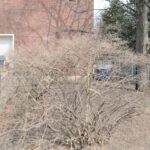
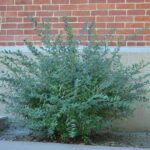
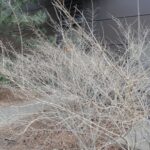
Shrub InvasiveThis plant is considered invasive Audio Recording AvailableID That Tree Video AvailablePurdue Plant Doctor Available Ligustrum obtusifolium [Border Privet] Performs well as an informal hedge, but perhaps too coarse to be a good formal clipped hedge. Extremely tolerant of different soils and climates. Can be coppiced to rejuvenate. Can be invasive by seed. Audio Recording AvailableID That Tree Video AvailablePurdue Plant Doctor Available
Shrub InvasiveThis plant is considered invasive Audio Recording AvailableID That Tree Video AvailablePurdue Plant Doctor Available Ligustrum obtusifolium var. regelianum [Regelianum Border Privet] Ligustrum obtusifolium var. regelianum adds an interesting textural effect to the landscape with its horizontally arranged branches and distichously arranged (in one, flat plane) leaves. An excellent plant used as an informal hedge, but perhaps too coarse to be a good formal clipped hedge. Extremely tolerant of different soils and climates. Can be coppiced to rejuvenate. Can be invasive by seed. Audio Recording AvailableID That Tree Video AvailablePurdue Plant Doctor Available
Shrub Purdue Plant Doctor Available Ligustrum × vicaryi [Golden Privet] Cross between L. ovalifolium 'Aureum' and L. vulgare. Vase-shaped habit and the leaves are golden yellow for the entire growing season. Purdue Plant Doctor Available
Shrub Audio Recording AvailablePurdue Plant Doctor Available Lonicera fragrantissima [Winter Honeysuckle] Widely adapted to different soils and exposures. More drought-tolerant, and also not a weed problem, like some other Lonicera. Branches can be forced indoors in winter to provide fragrance. Renewal pruning to a low framework every 5-8 years is helpful to maintain nice form and vigor. Audio Recording AvailablePurdue Plant Doctor Available
Shrub Purdue Plant Doctor Available Lonicera korolkowii [Blueleaf Honeysuckle] The Blueleaf Honeysuckle is an irregularly loose, open, and arching shrub. Attractive pink flowers appear in the leaf axils in late spring and are followed by bright red fruits that mature in mid to late summer. This plant is rare in the trade and quite difficult to establish. Transplant balled-and-burlapped or container-grown. Rejuvenate periodically by cutting back 6-12" from the ground. Like nearly all honeysuckles, this plant can be invasive in environments that it is… Purdue Plant Doctor Available
Shrub InvasiveThis plant is considered invasive Audio Recording AvailableID That Tree Video AvailablePurdue Plant Doctor Available Lonicera maackii [Amur Honeysuckle] Widely adaptable to different soils and exposures. Can be trained into a small patio tree. Suckers freely, requiring pruning in intensive situations. Seeds, carried by birds, germinate freely, and weed seedlings result. High shade tolerance contributes greatly to its highly invasive character. Perhaps the worst woody weed in the Midwestern and Northwestern US. Audio Recording AvailableID That Tree Video AvailablePurdue Plant Doctor Available
Shrub InvasiveThis plant is considered invasive ID That Tree Video AvailablePurdue Plant Doctor Available Lonicera tatarica [Tatarian Honeysuckle] Widely adapted to different soils and exposures, but avoid wet soils. Pruning of dead twigs is required periodically. Renewal pruning to a low framework every 5-8 years is helpful to maintain nice form and vigor. Russian aphid, which causes witches brooming, is a significant pest. Lonicera tatarica readily invades open woodlands, old fields, and other disturbed sites. It can spread rapidly due to birds and mammals dispersing the seeds and can form an extremely dense… ID That Tree Video AvailablePurdue Plant Doctor Available
Shrub InvasiveThis plant is considered invasive Purdue Plant Doctor Available Lonicera tatarica 'Zabelii' [Zabelii Tatarian Honeysuckle] Widely adapted to different soils and exposures, but avoid wet soils. Pruning of dead twigs is required periodically. Renewal pruning to a low framework every 5-8 years is helpful to maintain nice form and vigor. Russian aphid, which causes witches brooming, is a significant pest. Lonicera tatarica readily invades open woodlands, old fields, and other disturbed sites. It can spread rapidly due to birds and mammals dispersing the seeds and can form an extremely dense… Purdue Plant Doctor Available
Tree Indiana Native Audio Recording AvailableID That Tree Video Available Maclura pomifera [Osage-Orange] Withstands wind and dry conditions well. Used by farmers as a hedgerow for livestock fencing because of its thorniness. Highly deer resistant. Fruits are said to be an insect and rodent repellent. Extremely decay resistant wood, containing 1% by weight 2,3,4,5-tetrahydroxystilbene (a fungitoxic compound). Large fruits create litter problem; select staminate trees to avoid fruit (unless you believe the fruits are of interest). Due to invasive root system, do not plant near sewer or drainage… Indiana NativeAudio Recording AvailableID That Tree Video Available
Tree Maclura pomifera 'White Shield' [White Shield Osage-Orange] 'White Shield' is a cultivar with some charming characteristics including: dark green glossy heart shaped leaves, a lovely yellow fall color, and is both fruitless and thornless.