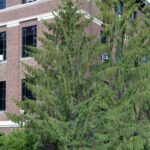
Tree Audio Recording AvailableID That Tree Video AvailablePurdue Plant Doctor Available Picea abies [Norway Spruce] Slight mite susceptibility in hot, dry sites. Some susceptibility to borers. May become thin, open, and have a less attractive habit at maturity. Audio Recording AvailableID That Tree Video AvailablePurdue Plant Doctor Available
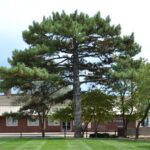
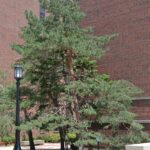
Tree Audio Recording AvailablePurdue Plant Doctor Available Pinus nigra [Austrian Pine] An excellent plant for screening when young. Needs a companion planting eventually for low screening as it loses branches at the base. Tolerates city conditions. Tolerates clay, dry, and alkaline soils, and heat. May be badly damaged by sapsuckers. Sphaeropsis tip blight is a more serious problem. Pine foliar nematode (transmitted by a beetle) can also be problematic. Audio Recording AvailablePurdue Plant Doctor Available
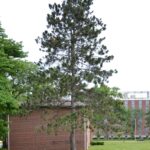
Tree Audio Recording AvailableID That Tree Video AvailablePurdue Plant Doctor Available Pinus resinosa [Red Pine] Forms a decent screen when young, especially on poor, dry soils, but soon drops lowers limbs necessitating the need of companion plants to complete the screen. Develops a shorter, thicker trunk when grown in the open. Pine bud moth (as well as other moths) can be problem if not controlled. Foliage presentation not always full or clearly esthetic. Best in groves or plantations where bark color can be admired. Audio Recording AvailableID That Tree Video AvailablePurdue Plant Doctor Available
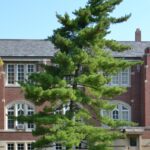
Tree Indiana Native Audio Recording AvailableID That Tree Video AvailablePurdue Plant Doctor Available Pinus strobus [Eastern White Pine] More graceful than most pines, both as a young and an old specimen. Excellent neutral screening plant, it can be kept full by occasional pruning. Among best pines for resistance to moth borers. Transplants easily with a bit of shade tolerance. Somewhat less adapted to severe exposures and very dry soils than Pinus resinosa or Pinus nigra. Very sensitive to air pollution and road salt. Susceptible to White Pine Blister Rust. Decaying needles acidify soil… Indiana NativeAudio Recording AvailableID That Tree Video AvailablePurdue Plant Doctor Available
Tree Audio Recording AvailableID That Tree Video AvailablePurdue Plant Doctor Available Pinus sylvestris [Scotch Pine] Effective as a screen with pruning. Tolerant of fairly dry soils, but not a good specimen in shade or on wet soils. Sphaeropsis, nematodes, and pine wilt fungus are serious problems; not recommended by Morton Arboretum. Audio Recording AvailableID That Tree Video AvailablePurdue Plant Doctor Available
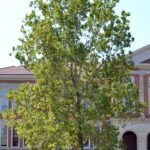
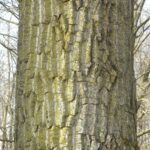
Tree Indiana Native Audio Recording AvailableID That Tree Video AvailablePurdue Plant Doctor Available Platanus occidentalis [American Sycamore] One of the largest of shade trees, making massive, majestic specimens. Tolerant of urban conditions, but generally found in riparian areas in the wild. The mottled, multi-colored, exfoliating bark is very beautiful and makes for excellent winter interest. Needs a large volume of soil space. Anthracnose leaf and twig blight occasionally disfigure this tree, and can damage it severely. Leaves, twigs, bark, and fruit contribute to a significant litter problem. Although this species can tolerate… Indiana NativeAudio Recording AvailableID That Tree Video AvailablePurdue Plant Doctor Available
Tree Indiana Native Audio Recording AvailableID That Tree Video AvailablePurdue Plant Doctor Available Populus balsamifera [Balsam Poplar] Buds exude a resin (the source of "balm of Gilead") that is traditionally used as an ointment to relieve chest congestion. The resin is also flammable, so twigs are used for starting fires. The streaked brown and grey wood is used in carving and woodworking. Trees are found along forest edges, forests, meadows and fields, and shores of rivers or lakes. Indiana NativeAudio Recording AvailableID That Tree Video AvailablePurdue Plant Doctor Available
Tree Indiana Native Audio Recording AvailableID That Tree Video AvailablePurdue Plant Doctor Available Populus deltoides [Eastern Cottonwood] Populus deltoides is a large, fast-growing tree that is not generally advised for use in the landscape. This plant is weak-wooded, weedy, and a litter problem, dropping twigs, flowers, branches, leaves, and fruits (the cottony masses that float through the air in early summer). In the wild, it tends to grow along streams, rivers, and other moist areas. Susceptible to many pests and diseases, especially canker. Indiana NativeAudio Recording AvailableID That Tree Video AvailablePurdue Plant Doctor Available
Tree Indiana Native Audio Recording AvailableID That Tree Video AvailablePurdue Plant Doctor Available Populus grandidentata [Bigtooth Aspen] This tree is very fast-growing with best development in moist, fertile soils but will grow on dry, sand or gravelly soils. It is very valuable for pulp wood. Often pyramidal in youth with a central leader, developing an oval, open, irregular crown at maturity. Indiana NativeAudio Recording AvailableID That Tree Video AvailablePurdue Plant Doctor Available
Tree Purdue Plant Doctor Available Populus × 'Red Caudina' [Red Caudina Poplar] This fast-growing plant is weak-wooded, weedy, and a litter problem, dropping twigs, flowers, branches, leaves, and fruits (the cottony masses that float through the air in early summer). In the wild, the parents of this hybrid tend to grow along streams, rivers, and other moist areas. Susceptible to many pests and diseases, especially canker. 'Red Caudina' is a narrow, all male cultivar that does not produce the problematic cottony fruits. It has red veination and… Purdue Plant Doctor Available