Shrub Fouquieria splendens [Ocotillo] Habit of distinctive vertical lines providing a stark texture. Withstand long periods of drought. Leaves fall off when water is scarce, but can reappear within a few days after rain. This cycle of leaf drop and re-growth can reoccur several times a season. Foliage typically last about one month. Water twice a month to retain leaves in the summer. Otherwise, don't water. May not leaf out for a year after transplanting. Protected by Arizona native…
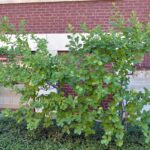
Tree Franklinia alatamaha [Franklin Tree] Franklinia is a small tree or large shrub that was originally discovered in 1773 by John Bartman (Royal Botanist for North America appointed by King George III) and his son, William. Together, they found a small group of the species growing along the Altamaha River in Georgia, and since then no other wild populations have been discovered. This is a rare plant that now appears to be extinct in the wild. All specimens of Franklinia…
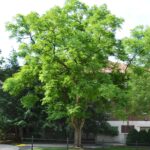
Tree Gleditsia triacanthos f. inermis 'Skycole' [sold as Skyline®] [Skyline Thornless Honeylocust] The Skyline Thornless Honeylocust is a nearly fruitless compact, pyramidal tree with a strongly upright habit and finely compound leaves that provide a pleasant, dappled shade in the summer. The thornless forma inermis is only sold in commerce, as the profuse thorns of the species type can be a liability. Mimosa webworm and locust mite are serious pests in the Midwest, and are becoming more serious (especially in areas tending toward monoculture). Can be controlled…
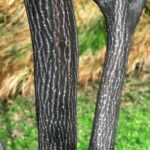
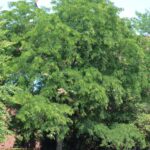
Tree Indiana Native Gymnocladus dioicus [Kentucky Coffeetree] Gymnocladus dioicus is a large deciduous tree with strong winter character from the branches and bark. Drops pods (female trees) and twigs, frequently causing litter problem, thus eliminating the straight species as a good street tree. Seeds were once used by US settlers as a coffee substitute, however pulp and seeds are toxic when not properly and completely roasted.
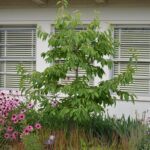
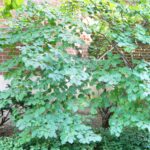
Tree Halesia carolina 'Arnold Pink' [Pink Carolina Silverbell] This small tree is interesting when in bloom with pink bell-shaped flowers that are larger than the straight species, but this plant is rather neutral otherwise. However, it is relatively trouble free and useful in many situations as a neutral background plant, or for its flowers. Best grown as a single stem and allowed to branch low (20-30"). Does not transplant well (a particular problem with field-grown plants).
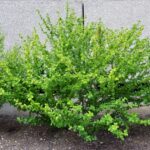
Shrub/Tree Hamamelis vernalis [Vernal Witchhazel] Earliest blooming shrub for the Midwest. Good as a neutral filler for the border with quiet seasonal interest. More pH tolerant than Hamamelis virginiana. Should not be pruned (tip pinching would be acceptable to direct growth). Not as showy in bloom as Hamamelis mollis, the Chinese Witchhazel, or its hybrids.
Shrub/Tree Indiana Native Hamamelis virginiana [Common Witchhazel] Flowers are in evidence because of their spicy fragrance before they are visually obvious, but are fairly showy after leaf drop. Should not be pruned (tip pinching would be acceptable to direct growth).
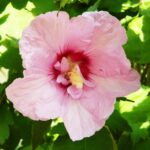
Shrub/Tree Hibiscus syriacus [Rose-of-Sharon] Flowers single or double, in wide range of colors (depending on cultivar), are born on new growth, so heavy pruning in the spring enhances blooming later that summer. Pruning to functional size of 4-5' produces excellent habit and flowering. Becomes leggy with age if not pruned. Prune hard when young to promote more branching. Occasionally, stems are killed back in winter; nevertheless, flowering on new growth is not reduced. Generally not the best for solid…
Shrub Hibiscus syriacus 'Diana' [Diana Rose-of-Sharon] The white flowers of 'Diana' are born on new growth, so heavy pruning in the spring enhances blooming later that summer. Pruning to functional size of 4-5' produces excellent habit and flowering. Becomes leggy with age if not pruned. Prune hard when young to promote more branching. Occasionally, stems are killed back in winter; nevertheless, flowering on new growth is not reduced. Generally not the best for solid screening. Late to leaf out in spring.…