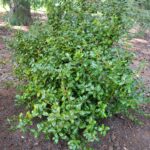
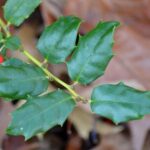
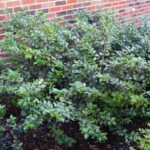
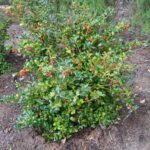
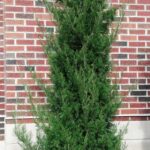
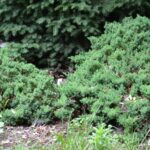
Shrub Ilex × 'Mesdob' [sold as China Boy®] [China Boy Holly] 'China Boy' is a dense, rounded holly hybrid with lustrous evergreen foliage. This cultivar is male (produces no fruits) and is the pollinator for 'China Girl'. Winter desiccation injury to leaves in exposed sites.
Shrub Ilex × meserveae [Meserve Holly] This species, like other hollies, is dioecious, so plant females for fruit and an occasional male for pollination. Winter desiccation injury to leaves occurs in exposed sites.
Shrub Ilex × meserveae 'Conablu' [sold as Blue Prince®] [Blue Prince Meserve Holly] This male cultivar of the Meserve Holly is an excellent pollinator known for its hardiness, beautiful, lustrous, dark blue-green foliage, and dense habit. The Meserve Holly, like other hollies, is dioecious, so plant females for fruit and an occasional male for pollination. Blue Prince is considered to be a good pollinator for Blue Princess ('Conapry'). Winter desiccation injury to leaves occurs in exposed sites.
Shrub Ilex × meserveae 'Conapry' [sold as Blue Princess®] [Blue Princess Meserve Holly] This female cultivar of the Meserve Holly is known for its hardiness, beautiful, lustrous, dark blue-green foliage, and heavily borne dark red fruits. The Meserve Holly, like other hollies, is dioecious, so plant females for fruit and an occasional male for pollination. Blue Prince ('Conablu') is considered a good male pollinator for Blue Princess. Winter desiccation injury to leaves occurs in exposed sites.
Shrub Ilex × 'Mesog' [sold as China Girl®] [China Girl Holly] 'China Girl' is a dense, rounded holly hybrid with lustrous evergreen foliage. This cultivar is female and 'China Boy' is the pollinator if fruit set is desired. Winter desiccation injury to leaves in exposed sites.
Shrub Juniperus chinensis 'Arctic' [Arctic Chinese Juniper] 'Arctic' is a cold hardy, low growing, and wide-spreading cultivar with blue-green needles. Widely adaptable to soils and climates, except for low light conditions. Tolerates alkaline soils, heat, and drought. Members of this species are used from New England to Minnesota to Louisiana. Phomopsis and Kabatina blights can be a serious problem in some areas, especially for small plants.
Shrub/Tree Juniperus chinensis 'Spearmint' [Spearmint Chinese Juniper] This dense cultivar has bright green foliage and a strongly upright, columnar to pyramidal habit. Widely adaptable to soils and climates, except for low light conditions. Tolerates alkaline soils, heat, and drought. Members of this species are used from New England to Minnesota to Louisiana. Phomopsis and Kabatina blights can be a serious problem in some areas, especially for small plants.
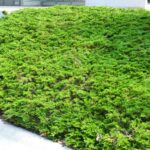
Shrub Juniperus chinensis var. procumbens [Japanese Garden Juniper] Tolerates calcareous soils. Can be pruned to maintain size. Plants can be injured by Phomopsis blight in some areas.
Shrub Indiana Native Juniperus horizontalis [Creeping Juniper] Widely adapted to soils and climates, as evidenced by its broad natural range. Tolerates slightly alkaline and heavy clay soils, but not wet soils. Young plants can be seriously injured by Phomopsis blight in some areas. Plants of all ages are susceptible to mite infestation.