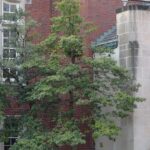
Tree Fagus sylvatica var. heterophylla 'Asplenifolia' [Fern-Leaf European Beech] In a proper site, an excellent trouble-free shade tree with year-round interest. More adaptable to hot, dry conditions than our native F. grandifolia, but somewhat less hardy. F. grandifolia is preferred in Zone 4. Low branching habit is a concern for use in the tree lawn as a street tree (may require more pruning than other street trees). 'Asplenifolia' has attractive, fern-like leaves; the cultivar name was derived from the spleenwort fern genus, Asplenium.
Tree Fagus sylvatica var. heterophylla 'Laciniata' [Cut-Leaf European Beech] In a proper site, an excellent trouble-free shade tree with year-round interest. More adaptable to hot, dry conditions than our native F. grandifolia, but somewhat less hardy. F. grandifolia is preferred in Zone 4. Low branching habit is a concern for use in the tree lawn as a street tree (may require more pruning than other street trees). The cultivar 'Laciniata' has graceful, deeply-cut leaves.
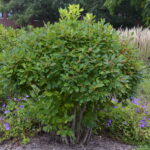
Shrub Hypericum kouytchense [Large-flowered St. John's Wort] The Large-flowered St. John's Wort is a mounded, semi-evergreen shrub with arching branches. Blooming generally begins in June and can last through September. The large, up to 2.5" diameter, bright yellow flowers are crowned by a dome of many long stamens. Some sources state that this species is synonymous with Hypericum 'Sungold'.
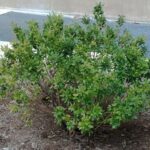
Shrub Ilex glabra 'Compacta' [Compact Inkberry] This hardy cultivar is compact and dense with an oval to rounded habit, but it tends to lose some of its lower branches with age. Ilex glabra, like other hollies, is dioecious, and 'Compacta' is a female cultivar, so plant a male pollinator for fruit set. Withstands severe pruning. Winter desiccation injury to leaves occurs in exposed sites, with severe yellowing when temperatures drop below -20 degrees F. Avoid high pH soils.
Shrub Ilex glabra 'Green Magic' [Green Magic Inkberry] 'Green Magin' is a dense, compact hardy cutlivar that tends to hold on to its lower branches better than many other variants of Ilex glabra. This species, like other hollies, is dioecious, so plant females for fruit and an occasional male for pollination. Withstands severe pruning. Winter desiccation injury to leaves occurs in exposed sites, with severe yellowing when temperatures drop below -20 degrees F. Avoid high pH soils.
Tree Indiana Native Ilex opaca [American Holly] This species, like other hollies, is dioecious, so plant females for fruit and an occasional male for pollination. Winter desiccation injury can occur on leaves in exposed sites. Holly leaf miners are one of the major pest problems for Ilex opaca.
Shrub Ilex verticillata 'Berry Heavy' [Berry Heavy Common Winterberry] Bright red fruits abundantly set; 6 to 8' high; 'Jim Dandy' is recommended as the male pollinator; Spring Meadow introduction.
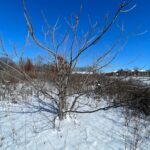
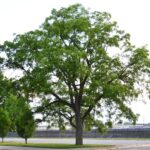
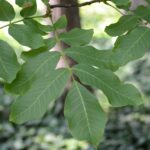
Tree Indiana Native Juglans cinerea [Butternut] Juglans cinera is a large, rounded tree similar to, but overall smaller than the Black Walnut (Juglans nigra). It is not commonly grown for ornamental purposes. The nut, once one is able to crack the hard shell, is edible, sweet, oily, and buttery. Long tap root makes transplanting difficult. This species is valued for its wood and between overharvesting and losses from Butternut Canker (Sirococcus clavigignenti-juglandacearum), this species has become rare in its native habitat.
Tree Indiana Native Juglans nigra [Black Walnut] Nuts are a serious litter problem, staining sidewalks and driveways. Juglone (found in leaf litter and possibly roots) is toxic to many plants, like tomatoes, blackberries, red pines, and many others. Black Walnut wood is valuable and has a variety of commercial uses, especially for furniture.
Tree Juglans regia [Persian Walnut] Juglans regia is a large, rounded, spreading tree that produces the walnuts frequently seen in stores. It may take up to 20 years for this tree to become mature enough to produce a decent-sized crop of nuts. Long tap root makes transplanting difficult.