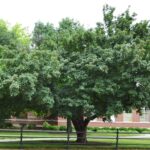
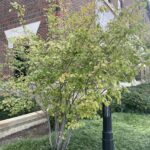
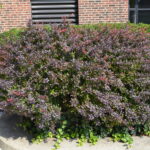
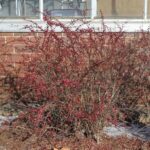
Tree Audio Recording AvailablePurdue Plant Doctor Available Acer campestre [Hedge Maple] Transplants easily. Pruning may be needed to limb up branches to create a shade or patio tree. Tolerates severe pruning and soil compaction. Can be pruned to become a giant hedge. Audio Recording AvailablePurdue Plant Doctor Available
Shrub/Tree Purdue Plant Doctor Available Amelanchier × grandiflora 'Ballerina' [Ballerina Serviceberry] A. x grandiflora is a hybrid cross between A. arborea and A. laevis that typically has larger, slender and longer flowers than its parents. Ripe fruits are sweet and edible. Purdue Plant Doctor Available
Tree Purdue Plant Doctor Available Amelanchier laevis 'Rogers' [sold as Lustre®] [Lustre Allegheny Serviceberry] Lustre Allegheny Serviceberry is a medium-size tree and is a good choice for attracting birds as the berries are edible. Purdue Plant Doctor Available
Shrub Purdue Plant Doctor Available Aronia arbutifolia 'Erecta' [Erecta Red Chokeberry] 'Erecta' has a more upright form than the species and does not bear as colorful of fruit Purdue Plant Doctor Available
Shrub Purdue Plant Doctor Available Aronia melanocarpa 'Viking' [Viking Black Chokeberry] Purdue Plant Doctor Available
Shrub InvasiveThis plant is considered invasive Audio Recording AvailablePurdue Plant Doctor Available Berberis thunbergii [Japanese Barberry] An adaptable plant that does well in an urban environment. Can be coppiced, with the resulting new growth developing better summer color. Can be pruned to ground every 5 to 7 years. Relatively trouble-free. Berberis thunbergii invades a variety of habitats from shaded woodlands to open fields and wetlands. Berberis thunbergii is rapidly spread by birds that eat the berries thus dispersing the seeds. Audio Recording AvailablePurdue Plant Doctor Available
Shrub InvasiveThis plant is considered invasive Purdue Plant Doctor Available Berberis thunbergii 'Bogozam' [sold as Bonanza Gold™] [Bonanza Gold Japanese Barberry] 'Bogozam' is noted for its golden yellow leaves and compact, dwarf habit. An adaptable plant that does well in an urban environment. Place in a high light location for best foliage coloration. Can be coppiced, with the resulting new growth developing better summer color. Can be pruned to ground every 5 to 7 years. Relatively trouble-free. Purdue Plant Doctor Available
Shrub InvasiveThis plant is considered invasive Audio Recording AvailablePurdue Plant Doctor Available Berberis thunbergii var. atropurpurea [Purple Japanese Barberry] This variety has purple to red summer foliage, turning a rich red to red-violet in the fall. It is an adaptable plant that does well in an urban environment. Place in a high light location for best foliage coloration. Can be coppiced, with the resulting new growth developing better summer color. Can be pruned to ground every 5 to 7 years. Relatively trouble-free. Audio Recording AvailablePurdue Plant Doctor Available
Shrub InvasiveThis plant is considered invasive Audio Recording AvailablePurdue Plant Doctor Available Berberis thunbergii var. atropurpurea 'Crimson Pygmy' [Red Dwarf Japanese Barberry] The Red Dwarf Japanese Barberry is exceedingly popular due to its dense, low growing form, brilliant foliage, and tolerance to tough urban conditions. For the best leaf coloration, place in full sun. This plant tolerates dry soils, but will suffer in wet, poorly drained soils. Audio Recording AvailablePurdue Plant Doctor Available