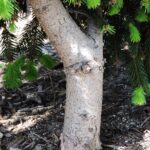
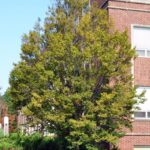
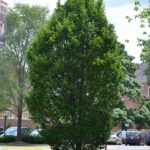
Tree Calocedrus decurrens 'Columnaris' [Columnar California Incensecedar] The Columnar California Incensecedar is a large, handsome plant, excellent for formal plantings. This cultivar is very narrow-columnar in habit, retaining this form well into maturity. Quite adaptable to different types of soils, this plant is also drought and heat tolerant once established.
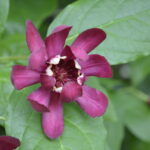
Shrub Calycanthus floridus 'Aphrodite' [Aphrodite Sweetshrub] 'Aphrodite' has an upright form with deep red flowers. The flowers are fragrant and large and bloom throughout the summer season. Large bright green leaves, can grow to be bigger than a human hand.
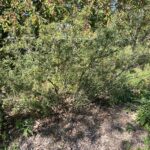
Shrub Caragana arborescens [Siberian Peashrub] The Siberian Peashrub is quite a tough and adaptable, nitrogen-fixing plant that can grow in extremely difficult conditions, but it has very limited use ornamentally. Best reserved for tough environments, such as in a windbreak, hedge, or screen.
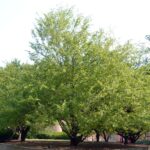
Tree Audio Recording Available Carpinus betulus [European Hornbeam] Carpinus betulus is relatively trouble-free and tolerates a wide range of soil conditions and some shade. This plant is also very tolerant of heavy pruning, making it useful as a hedge. Audio Recording Available
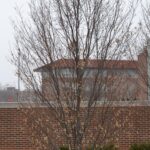
Tree Audio Recording Available Carpinus betulus 'Columnaris' [Columnar European Hornbeam] Carpinus betulus is relatively trouble-free and tolerates a wide range of soil conditions and some shade. This plant is also very tolerant of heavy pruning, making it useful as a hedge. The cultivar 'Columnaris' is a narrow, columnar cultivar that is slow-growing with densely set branches and leaves. Audio Recording Available
Tree Audio Recording Available Carpinus betulus 'Fastigiata' [Fastigiate European Hornbeam] Carpinus betulus is relatively trouble-free and tolerates a wide range of soil conditions and some shade. This plant is also very tolerant of heavy pruning, making it useful as a hedge. The cultivar 'Fastigiata' is a narrow, columnar cultivar with densely set, broom-like branches. Over time this cultivar tends to broaden and open up into a more oval-vase form. Audio Recording Available
Tree Audio Recording Available Carpinus betulus 'Frans Fontaine' [Columnar European Hornbeam] Carpinus betulus is relatively trouble-free and tolerates a wide range of soil conditions and some shade. This plant is also very tolerant of heavy pruning, making it useful as a hedge. The cultivar 'Frans Fontaine' is a tight, narrow, columnar cultivar with densely set branches and leaves. Over time this cultivar retains its fastigiate form better than the similar cultivar 'Fastigiata'. Audio Recording Available
Tree Indiana Native Audio Recording AvailableID That Tree Video Available Carpinus caroliniana [American Hornbeam] A clean, trouble-free small tree, useful in intensive situations such as patios and malls, and equally interesting in naturalized plantings. Useful as a large hedge if coppiced when young. Performs well in heavy shade and tolerates periodic flooding. Difficult to transplant. Move balled-and-burlapped for best results. Sometimes called Blue Beech and Ironwood (although these are best not used). Indiana NativeAudio Recording AvailableID That Tree Video Available
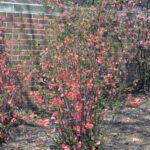
Shrub Purdue Plant Doctor Available Chaenomeles japonica [Japanese Flowering Quince] Orange-red to scarlet flowers occur in early to mid-April and are born on one-year-old wood just before the leaves fully emerge, creating an excellent dispersal of coloring throughout the shrub. Sparsely produces small, apple-like fruits, commonly called quinces, that are edible if used in preserves; harvest in October. Widely adapted to different soils and microclimates. Place in full sun location for best flower display, although it is tolerant to partial shade. Subject to occasional scale… Purdue Plant Doctor Available
Shrub Audio Recording AvailablePurdue Plant Doctor Available Chaenomeles speciosa [Common Flowering Quince] White, pink, orange, salmon, or red single or double flowers (depending on variant) occur in late April, are born on old wood just before the leaves fully emerge, and occur singly or 2-4 per cluster, creating an excellent dispersal of coloring throughout the shrub. Sparsely produces small, apple-like fruits, commonly called quinces, that are edible if used in preserves; harvest in October. Widely adapted to different soils and microclimates. Place in full sun location for… Audio Recording AvailablePurdue Plant Doctor Available