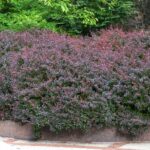
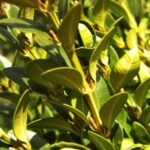
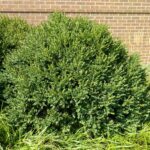
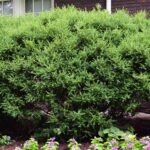
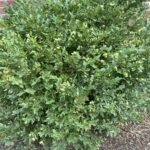
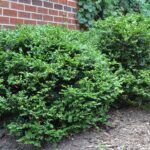
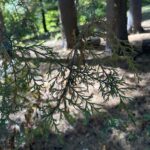
Shrub Purdue Plant Doctor Available Berberis × mentorensis [Mentor Barberry] An adaptable plant that does well in an urban environment. Can be coppiced with new growth developing better summer color. Can be pruned to ground every 5 to 7 years. Full sun to partial shade. Relatively trouble-free. Large thorns and spiny leaves are a maintenance problem. Collects litter around the base. Purdue Plant Doctor Available
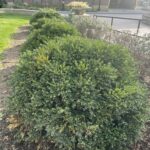
Shrub Purdue Plant Doctor Available Buxus 'Glencoe' [Chicagoland Green Buxus] Low maintenance cultivar popularized in Illinois through partnership with the Chicago Botanic Garden. Broad mounded shrub that is a fast grower in full sun. Purdue Plant Doctor Available
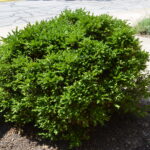
Shrub Purdue Plant Doctor Available Buxus 'Green Gem' [Green Gem Boxwood] This species is a hybrid of Buxus sinica and Buxus sempervirens and is described as a perfect round ball. Hardier than var. insularis 'Winter Beauty'. Requires little prunning and shearing. Avoid cultivating around plants because they have a shallow root. Roots appreciate a good mulch ( 1-2"). Thin plants and remove damaged branches annually to improve air circulation. Buxus X 'Green Gem' is best suited to a sheltered lacation which protects it in the winter… Purdue Plant Doctor Available
Shrub Purdue Plant Doctor Available Buxus × 'Green Mountain' [Green Mountain Boxwood] The Green Mountain Boxwood is known for its very dense, upright pyramidal form. It grows best when placed in areas of moderate shade that are away from strong winter sun and wind. It has shallow roots and prefers moist, cool soils. Tolerates feeding by deer and rabbits. Purdue Plant Doctor Available
Shrub Audio Recording AvailablePurdue Plant Doctor Available Buxus microphylla [Littleleaf Boxwood] The Littleleaf Boxwood is a versatile, small, rounded shrub. It is best when planted away from strong winter sun and wind and prefers moderate shade. Hardiness is highly variable with cultivars. Winter desiccation injury (browning) in full sun is a real concern, but this plant often recovers in spring with new growth. Use the same cultivar when replacing a member of a hedge to reproduce the same texture and color. The Littleleaf Boxwood's shallow roots… Audio Recording AvailablePurdue Plant Doctor Available
Shrub Audio Recording AvailablePurdue Plant Doctor Available Buxus sinica var. insularis [Korean Littleleaf Boxwood] The Korean Littleleaf Boxwood grows best when placed in areas of moderate shade that are away from strong winter sun and wind. It has shallow roots and prefers moist, cool soils. This shrub flowers in April; flowers can attract bees due to the fragrance but are not showy. Audio Recording AvailablePurdue Plant Doctor Available
Shrub Audio Recording AvailablePurdue Plant Doctor Available Buxus sinica var. insularis 'Wintergreen' [Wintergreen Korean Littleleaf Boxwood] The Wintergreen Korean Littleleaf Boxwood is quite hardy (to zone 4) and grows best when placed in areas of moderate shade that are away from strong winter sun and wind. It has shallow roots and prefers moist, cool soils. This shrub flowers in April; flowers can attract bees due to the fragrance but are not showy. Audio Recording AvailablePurdue Plant Doctor Available
Shrub Purdue Plant Doctor Available Buxus sp. [Boxwood] Boxwoods do best when planted away from strong winter sun and wind and prefers moderate shade. Winter desiccation injury (browning) in full sun is a real concern, but this plant often recovers in spring with new growth. The Boxwood's shallow roots prefer moistness and coolness. Purdue Plant Doctor Available
Shrub Audio Recording AvailablePurdue Plant Doctor Available Buxus × 'Green Velvet' [Green Velvet Boxwood] This species is a hybrid of Buxus sinica and Buxus sempervirens and is primarily used for smaller spaces. Audio Recording AvailablePurdue Plant Doctor Available
Tree Calocedrus decurrens [California Incensecedar] The California Incensecedar is a large, handsome plant, excellent for formal plantings. In youth it is distinctly columnar and may develop a more conical habit at maturity. This plant is quite adaptable to different types of soils and is drought and heat tolerant once established. The California Incensecedar is known to be quite long-lived and large in the wild, even over 1000 years old and reaching more than 150' in height.