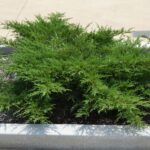
Shrub Purdue Plant Doctor Available Juniperus × pfitzeriana 'Kallay’s Compacta' [Compact Pfitzer Juniper] This flat-topped cultivar is compact, low growing, and wide spreading with deep green foliage. Widely adaptable to soils and climates, except for low light conditions. Tolerates alkaline soils, heat, and drought. Members of this species are used from New England to Minnesota to Louisiana. Phomopsis and Kabatina blights can be a serious problem in some areas, especially for small plants. Purdue Plant Doctor Available
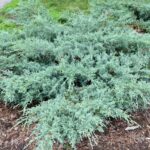
Shrub Purdue Plant Doctor Available Juniperus × pfitzeriana 'Pfitzeriana Nelson’s Compact' [Nelson's Compact Pfitzer Juniper] This slow-growing cultivar is compact with bluish-green foliage that has a whitish-cast. Widely adaptable to soils and climates, except for low light conditions. Tolerates alkaline soils, heat, and drought. Members of this species are used from New England to Minnesota to Louisiana. Phomopsis and Kabatina blights can be a serious problem in some areas, especially for small plants. Purdue Plant Doctor Available
Shrub/Tree Purdue Plant Doctor Available Juniperus virginiana 'Brodie' [Brodie Eastern Red Cedar] Avoid planting near apple trees. Purdue Plant Doctor Available
Tree Purdue Plant Doctor Available Juniperus virginiana 'Cupressifolia' [Hillspire Eastern Redcedar] 'Cupressifolia' is a pyramidal female cultivar with bright yellow-green, cypress-like foliage. Widely adapted to soils and climates. Does well in alkaline soils, but not wet soils. Alternate host for cedar-apple rust disease. Plant other juniper species in areas having many apples, hawthorns, etc. Susceptible to bagworms. Purdue Plant Doctor Available
Shrub Audio Recording AvailablePurdue Plant Doctor Available Juniperus virginiana 'Grey Owl' [Grey Owl Eastern Redcedar] 'Grey Owl' is compact, broad, wide-spreading evergreen, female shrub with glaucous gray-blue foliage and an abundance of blue berries (cones). Widely adapted to soils and climates. Does well in alkaline soils, but not wet soils. Alternate host for cedar-apple rust disease. Plant other juniper species in areas having many apples, hawthorns, etc. Susceptible to bagworms. Audio Recording AvailablePurdue Plant Doctor Available
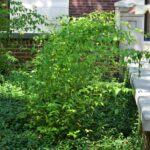
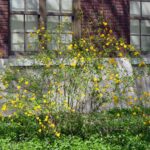
Shrub Audio Recording AvailablePurdue Plant Doctor Available Kerria japonica [Japanese Kerria] Fairly adaptable to soils and microclimates, including considerable shade; best out of extremely sunny exposures. Occasionally winter-injured in the north, but otherwise relatively trouble-free. Suckers and spreads slowly. Needs occasional pruning to remove dead branches and renewal pruning to maintain form. Audio Recording AvailablePurdue Plant Doctor Available
Shrub Audio Recording AvailablePurdue Plant Doctor Available Kerria japonica 'Golden Guinea' [Golden Guinea Japanese Kerria] 'Golden Guinea' has crisply textured leaves and bears an abundance of large yellow flowers. Fairly adaptable to soils and microclimates, including considerable shade; best out of extremely sunny exposures. Occasionally winter-injured in the north, but otherwise relatively trouble-free. Suckers and spreads slowly. Needs occasional pruning to remove dead branches and renewal pruning to maintain form. Audio Recording AvailablePurdue Plant Doctor Available
Shrub Audio Recording AvailablePurdue Plant Doctor Available Kerria japonica 'Pleniflora' [Double Flowered Japanese Kerria] 'Pleniflora' is a very popular cultivar of Japanese Kerria with its long lasting, bright yellow, double flowers that are nearly spherical, reminiscent of "pom-poms". Fairly adaptable to soils and microclimates, including considerable shade; best out of extremely sunny exposures. Occasionally winter-injured in the north, but otherwise relatively trouble-free. Suckers and spreads slowly. Needs occasional pruning to remove dead branches and renewal pruning to maintain form. Audio Recording AvailablePurdue Plant Doctor Available
Shrub Kolkwitzia amabilis [Beautybush] The Beautybush is an arching, deciduous shrub known for its spectacular pink flower show in the spring. However, it can be too coarse for the landscape when not in bloom. Dead wood should be removed and the plant should be pruned (even hard pruning to the ground) every few years to prevent the plant from becoming overgrown. Plants bloom on old wood so hard prunings will result in loss of bloom, but will improve the…
Shrub/Tree Audio Recording AvailablePurdue Plant Doctor Available Lagerstroemia indica [Common Crapemyrtle] Can be grown as a tree or shrub. This species prefers hot sunny sites. For Zones 5 and 6, apply winter mulch to protect roots. Flower color ranges from white, pink, purple, or deep red that terminates the current year's growth. Long flowering period from July to September. Can have problems with powdery mildew. Audio Recording AvailablePurdue Plant Doctor Available