Shrub Purdue Plant Doctor Available Lonicera korolkowii [Blueleaf Honeysuckle] The Blueleaf Honeysuckle is an irregularly loose, open, and arching shrub. Attractive pink flowers appear in the leaf axils in late spring and are followed by bright red fruits that mature in mid to late summer. This plant is rare in the trade and quite difficult to establish. Transplant balled-and-burlapped or container-grown. Rejuvenate periodically by cutting back 6-12" from the ground. Like nearly all honeysuckles, this plant can be invasive in environments that it is… Purdue Plant Doctor Available
Shrub Purdue Plant Doctor Available Lonicera × purpusii 'Winter Beauty' [Purple-Stem Winter Honeysuckle] 'Winter Beauty' is a dense, rounded semi-evergreen shrub that has red-violet stems and produces an abundance of fragrant white flowers in late winter and early spring. Rejuvenate periodically by cutting back 6-12" from the ground. Purdue Plant Doctor Available
Shrub InvasiveThis plant is considered invasive Purdue Plant Doctor Available Lonicera tatarica [Tatarian Honeysuckle] Widely adapted to different soils and exposures, but avoid wet soils. Pruning of dead twigs is required periodically. Renewal pruning to a low framework every 5-8 years is helpful to maintain nice form and vigor. Russian aphid, which causes witches brooming, is a significant pest. Lonicera tatarica readily invades open woodlands, old fields, and other disturbed sites. It can spread rapidly due to birds and mammals dispersing the seeds and can form an extremely dense… Purdue Plant Doctor Available
Shrub InvasiveThis plant is considered invasive Purdue Plant Doctor Available Lonicera tatarica 'Zabelii' [Zabelii Tatarian Honeysuckle] Widely adapted to different soils and exposures, but avoid wet soils. Pruning of dead twigs is required periodically. Renewal pruning to a low framework every 5-8 years is helpful to maintain nice form and vigor. Russian aphid, which causes witches brooming, is a significant pest. Lonicera tatarica readily invades open woodlands, old fields, and other disturbed sites. It can spread rapidly due to birds and mammals dispersing the seeds and can form an extremely dense… Purdue Plant Doctor Available
Tree Purdue Plant Doctor Available Magnolia × 'Ann' [Ann Magnolia] 'Ann' is a cross between M. liliiflora 'Nigra' and M. stellata 'Rosea'. It was developed by the National Arboretum as a part of a hybrid series called the Little Girl series. These plants flower 2-4 weeks later than other Magnolias which reduces risk of damage due to late spring frost. Flowers are slightly fragrant. Purdue Plant Doctor Available
Shrub/Tree Audio Recording AvailablePurdue Plant Doctor Available Myrica pensylvanica [Northern Bayberry] Waxy gray berries were used by early settlers for making aromatic candles, and occasionally still are used for this purpose. Especially good plant for full sun and sandy soils, but grows well on many soils. Tolerates half shade. Relatively salt-tolerant. Forms colonies via suckers. Fixes nitrogen in the soil. Dioecious. Use female plants (when known) for fruiting, and occasional male for pollination. Difficult to transplant from field. Audio Recording AvailablePurdue Plant Doctor Available
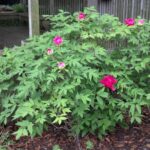
Shrub Purdue Plant Doctor Available Paeonia × 'Leda' [Leda Tree Peony] The Tree Peony is a long-lived, very showy, deciduous shrub that produces numerous large, beautiful flowers beginning in mid to late spring. 'Leda' has large, semi-double blossoms of mauve-pink petals marked with deep reddish-purple flares at the base. These plants do best in a deep, fertile, and well-drained soil, with some protection from strong winds. In colder climates, some winter protection is beneficial to prevent desiccation. The only pruning necessary is to remove dead wood… Purdue Plant Doctor Available
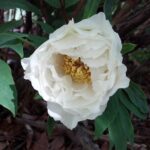
Shrub Purdue Plant Doctor Available Paeonia × suffruticosa 'Godaishu' [Godaishu Tree Peony] The Tree Peony is a long-lived, very showy, deciduous shrub that produces numerous large, beautiful flowers beginning in mid to late spring. 'Godaishu' has large, white, semi-double blossoms. These plants do best in a deep, fertile, and well-drained soil, with some protection from strong winds. In colder climates, some winter protection is beneficial to prevent desiccation. The only pruning necessary is to remove dead wood and suckers in early spring, or a light pruning in… Purdue Plant Doctor Available
Shrub Purdue Plant Doctor Available Paeonia × suffruticosa 'Hana-kisoi' [sold as Floral Rivalry™] [Floral Rivalry Tree Peony] The Tree Peony is a long-lived, very showy, deciduous shrub that produces numerous large, beautiful flowers beginning in mid to late spring. 'Hanna-kisoi', frequently sold under the name Floral Rivalry, has large, pink, semi-double blossoms. These plants do best in a deep, fertile, and well-drained soil, with some protection from strong winds. In colder climates, some winter protection is beneficial to prevent desiccation. The only pruning necessary is to remove dead wood and suckers in… Purdue Plant Doctor Available
Shrub Purdue Plant Doctor Available Paeonia × suffruticosa 'Jitsu-getsu-nishiki' [Jitsu-getsu-nishiki Tree Peony] The Tree Peony is a long-lived, very showy, deciduous shrub that produces numerous large, beautiful flowers beginning in mid to late spring. 'Jitsuge Tsu-nishiki' has large, intensely pink, double blossoms. These plants do best in a deep, fertile, and well-drained soil, with some protection from strong winds. In colder climates, some winter protection is beneficial to prevent desiccation. The only pruning necessary is to remove dead wood and suckers in early spring, or a light… Purdue Plant Doctor Available