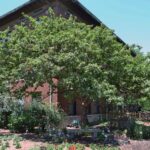
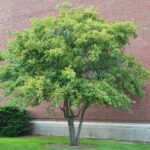
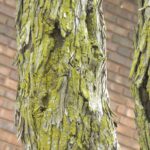
Tree Indiana Native Audio Recording AvailableID That Tree Video AvailablePurdue Plant Doctor Available Crataegus mollis [Downy Hawthorn] Quite susceptible to cedar-hawthorn rust, with leaves heavily spotted with orange in some years. Rust limits usage in many areas. Large fruit pose a maintenance issue when they drop. Indiana NativeAudio Recording AvailableID That Tree Video AvailablePurdue Plant Doctor Available
Tree Indiana Native Audio Recording AvailableID That Tree Video AvailablePurdue Plant Doctor Available Crataegus phaenopyrum [Washington Hawthorn] One of the finest small trees for winter color. The 1-3" thorns can be dangerous, especially around children. Fireblight, leaf spot, and cedar-hawthorn rust are among the worst problems, although more trouble-free than many hawthorns. Japanese beetles like to feed on hawthorns. Indiana NativeAudio Recording AvailableID That Tree Video AvailablePurdue Plant Doctor Available
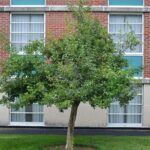
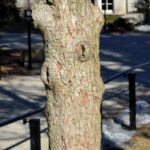
Tree Purdue Plant Doctor Available Crataegus × lavalleei [Lavalle Hawthorn] The Lavalle Hawthorn is a small, rounded tree that resulted from a cross of Crataegus mexicana and C. crusgalli. Quite resistant to rust and less thorny than its Cockspur Hawthorn parent. Purdue Plant Doctor Available
Tree Purdue Plant Doctor Available Crataegus × mordenensis [Morden Hawthorn] This uncommon plant resulted from a cross between Crataegus laevigata 'Paul's Scarlet' and C. succulenta'. It has attractive clusters of double flowers and is highly resistant to hawthorn rust. Purdue Plant Doctor Available
Tree Purdue Plant Doctor Available Crataegus × 'Vaughn' [Vaughn Hawthorn] This small tree is a hybrid of Crataegus crusgalli x C. phaenopyrum. It is generally grown for its fragrant clusters of white flowers in the spring and prolifically produced red fruits that persist into winter. Due to its numerous thorns, it is best used in areas with low traffic. Highly susceptible to rust. Purdue Plant Doctor Available
Shrub Purdue Plant Doctor Available Cryptomeria japonica 'Globosa Nana' [Dwarf Japanese Cedar] Crypomeria japonica 'Globosa Nana' is a compact and rounded, slow-growing shrub that may take over 20 years to reach 4-8 feet. Fairly easy to grow. Prefers acid soils and must be sheltered from strong winds. Purdue Plant Doctor Available
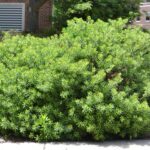
Shrub Audio Recording AvailablePurdue Plant Doctor Available Daphne × burkwoodii 'Carol Mackie' [Variegated Burkwood Daphne] Requires excellent drainage, relatively low fertility, and consistent moisture. Best in a cool site, on soil with pH near neutral, in partial shade to full sun. Notably difficult to transplant. Sometimes dies suddenly with no warning signs. 'Carol Mackie' is more vigorous than the species type. Audio Recording AvailablePurdue Plant Doctor Available
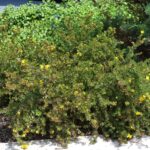
Shrub Indiana Native Audio Recording AvailablePurdue Plant Doctor Available Dasiphora fruticosa [Bush Cinquefoil] Extreme hardiness and long season of bloom make this a favorite in severe climates. Low stature and tolerance of poor, dry soils give it added usefulness in other areas also. Can develop a ragged, unkept habit over time. Remove 1/3 of canes each year (3-year pruning cycle), and consider renewal pruning to a very low framework every 3-5 years if needed. Indiana NativeAudio Recording AvailablePurdue Plant Doctor Available
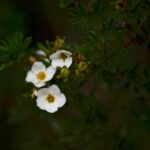
Shrub Audio Recording AvailablePurdue Plant Doctor Available Dasiphora fruticosa 'Abbotswood' [White Bush Cinquefoil] 'Abbotswood' has beautiful, large, white flowers and an especially long blooming period. Extreme hardiness and long season of bloom make Potentilla fruticosa a favorite in severe climates. Low stature and tolerance of poor, dry soils give it added usefulness in other areas also. Can develop a ragged, unkept habit over time. Remove 1/3 of canes each year (3-year pruning cycle), and consider renewal pruning to a very low framework every 3-5 years if needed. Audio Recording AvailablePurdue Plant Doctor Available
Shrub Purdue Plant Doctor Available Dasiphora fruticosa 'Yellow Bird' [Yellow Bird Bush Cinquefoil] 'Yellow Bird' has large, single to semi-double yellow flowers. Extreme hardiness and long season of bloom make Potentilla fruitcosa a favorite in severe climates. Low stature and tolerance of poor, dry soils give it added usefulness in other areas also. Can develop a ragged, unkept habit over time. Remove 1/3 of canes each year (3-year pruning cycle), and consider renewal pruning to a very low framework every 3-5 years if needed. Purdue Plant Doctor Available