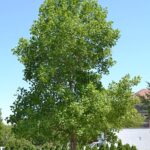
Tree Indiana Native Liriodendron tulipifera [Tuliptree] Handsome, tall shade tree with strong central leader. Performs best in good soil with adequate moisture. Variable in hardiness, depending on geographic source. Use native stock when possible. State tree of Indiana, Kentucky, North Carolina, and Tennessee. Slightly weak-wooded. Subject to damage in very windy sites. Subject to aphid and scale insects when weakened. Needs good drainage and a lot of soil (tree lawn may be too small). Its poorly branched fleshy root system (taproot)…
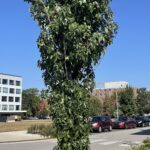
Tree Liriodendron tulipifera 'JFS-Oz' [sold as Emerald City®] [Emerald City® Tulip Tree] 'JFS-Oz' is a cultivar with a bright yellow fall color and more glossy dark green foliage in summer. It has a more compact oval-upright form with a strong central leader than other varieties, while keeping its classic green-yellow-orange tulip-like flowers.
Tree Indiana Native Liriodendron tulipifera 'Little Volunteer' [Little Volunteer Tulip-tree] 'Little Volunteer' is a dwarf cultivar with smaller 4-lobed and flat-topped green leaves. It makes a wonderful street tree with its smaller size in habit, leaf, and flower. While keeping the classic yellow fall color and yellow-orange-green flower as other varieties.
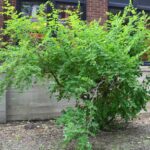
Shrub Lonicera fragrantissima [Winter Honeysuckle] Widely adapted to different soils and exposures. More drought-tolerant, and also not a weed problem, like some other Lonicera. Branches can be forced indoors in winter to provide fragrance. Renewal pruning to a low framework every 5-8 years is helpful to maintain nice form and vigor.
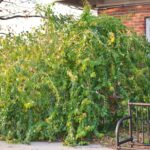
Shrub InvasiveThis plant is considered invasive Lonicera maackii [Amur Honeysuckle] Widely adaptable to different soils and exposures. Can be trained into a small patio tree. Suckers freely, requiring pruning in intensive situations. Seeds, carried by birds, germinate freely, and weed seedlings result. High shade tolerance contributes greatly to its highly invasive character. Perhaps the worst woody weed in the Midwestern and Northwestern US.
Shrub Lonicera × purpusii 'Winter Beauty' [Purple-Stem Winter Honeysuckle] 'Winter Beauty' is a dense, rounded semi-evergreen shrub that has red-violet stems and produces an abundance of fragrant white flowers in late winter and early spring. Rejuvenate periodically by cutting back 6-12" from the ground.
Shrub InvasiveThis plant is considered invasive Lonicera tatarica [Tatarian Honeysuckle] Widely adapted to different soils and exposures, but avoid wet soils. Pruning of dead twigs is required periodically. Renewal pruning to a low framework every 5-8 years is helpful to maintain nice form and vigor. Russian aphid, which causes witches brooming, is a significant pest. Lonicera tatarica readily invades open woodlands, old fields, and other disturbed sites. It can spread rapidly due to birds and mammals dispersing the seeds and can form an extremely dense…
Shrub InvasiveThis plant is considered invasive Lonicera tatarica 'Zabelii' [Zabelii Tatarian Honeysuckle] Widely adapted to different soils and exposures, but avoid wet soils. Pruning of dead twigs is required periodically. Renewal pruning to a low framework every 5-8 years is helpful to maintain nice form and vigor. Russian aphid, which causes witches brooming, is a significant pest. Lonicera tatarica readily invades open woodlands, old fields, and other disturbed sites. It can spread rapidly due to birds and mammals dispersing the seeds and can form an extremely dense…
Tree Indiana Native Maclura pomifera [Osage-orange] Withstands wind and dry conditions well. Used by farmers as a hedgerow for livestock fencing because of its thorniness. Highly deer resistant. Fruits are said to be an insect and rodent repellent. Extremely decay resistant wood, containing 1% by weight 2,3,4,5-tetrahydroxystilbene (a fungitoxic compound). Large fruits create litter problem; select staminate trees to avoid fruit (unless you believe the fruits are of interest). Due to invasive root system, do not plant near sewer or drainage…
Tree Indiana Native Magnolia acuminata [Cucumbertree Magnolia] This tree gets it name from the cucumber-looking fruits it bears in the fall. Full sun is best, although it has tolerance for partial shade. Because the roots are thick and fleshy and grow downward more than out, it can be moderately difficult to transplant. Generally trouble-free, but scale can be a problem on occasion. This species may not be ideal for street tree plantings because of a tendency to suffer ice damage.