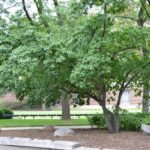
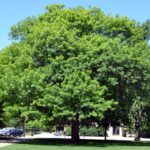
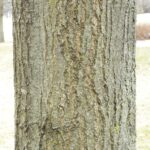
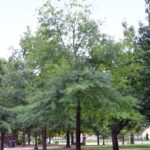
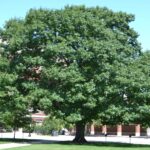
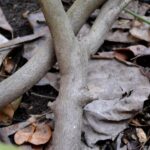
Tree Indiana Native Quercus palustris [Pin Oak] Handsome tree, distinctive for its regular branching, spreading to horizontal to pendulous, from top to bottom of the tree. This effect is partly lost when lower limbs must be removed for traffic underneath. Requires an acidic soil and is subject to severe iron chlorosis on calcareous soils. This can be corrected but it means additional maintenance.
Tree Quercus palustris 'Crownright' [Crownright Pin Oak] Handsome tree with a more upright habit that lacks the pendulous character of the lower branches seen in the species type. Requires an acidic soil and is subject to severe iron chlorosis on calcareous soils. This can be corrected but it means additional maintenance.
Tree Quercus palustris 'Pringreen' [sold as Green Pillar®] [Green Pillar Pin Oak] This cultivar is a columnar habit, great for those smaller spaces. Its fall color is a vibrant red, which leads many to believe that the Scarlet Oak, (Quercus cocinea) is in the genetics of this cultivar. Green Pillar Pin Oak is grafted onto root stock, so graft incompatibility may be an issue in the future. Requires an acidic soil and is subject to severe iron chlorosis on calcareous soils. This can be corrected but it…
Tree Indiana Native Quercus phellos [Willow Oak] Somewhat tolerant of city conditions. Oak wilt and scales, and many other oak tree pests, though none considered very serious. Low maintenance, long-lived tree. Use Northern sources in Indiana.
Tree Indiana Native Quercus rubra [Red Oak] One of the best and most reliable of oaks as a shade or street tree. More vigorous and fast-growing than most oaks. Good street tree since it performs reasonably well in small soil volumes (although it tends to branch close to ground). Oak wilt disease has been troublesome in certain areas of the Midwest. Hybridizes easily with other oaks (be careful of source).
Tree Indiana Native Quercus velutina [Black Oak] Quercus velutina is a large, deciduous oak with an irregular canopy. It is closely related to Q. rubra (Red Oak), which it is known to hybridize with. The interesting bark of the Q. velutina is nearly black and furrowed. Transplanting is made difficult by the long tap root. Not generally sold commercially.
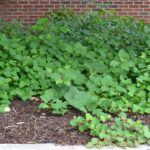
Liana (Climbing Vine) InvasiveThis plant is considered invasive Reynoutria compacta [Japanese Knotweed] Handsome groundcover with summer color. Adaptable to poor, dry soils. Just a root cutting stuck in poor soil will lead to an aggressive spreading groundcover. Spreads by underground stems; can be very invasive. Fall color not attractive (best to mow it down in the fall).
Shrub/Tree InvasiveThis plant is considered invasive Rhamnus cathartica [Common Buckthorn] Tolerates most sites. Dioecious. Very invasive, by the seeds that birds love to eat; probably best to refrain from planting this species in the landscape. Susceptible to rusts (Puccinia coronata), that also attacks oats (in oat growing areas, buckthorn eradication is recommended). The bark, leaves, and fruit were once used in purgatives, thus one of this plant's common names, "Purging Buckthorn".
Shrub Rhododendron × 'Aglo' (P.J.M. Hybrid Group) [Aglo Rhododendron] 'Aglo' is a compact grower and early bloomer. One of the most cold tolerant flower buds of the evergreen rhododendrons. Avoid harsh, dry, windswept sites. Susceptible to a large number of pests and diseases, which can largely be prevented by good cultural practices.
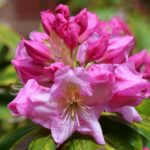
Shrub Rhododendron catawbiense [Catawba Rhododendron] The Catawba Rhododendron is considered to be one of the hardiest rhododendron species. Beautiful plant when it is used in mass. Flower color of the species does not combine well with some other flower colors. Flower color bleaches out in high pH. Subject to winter burning of foliage in exposed sites near the limits of its range. Both flowers and foliage are of equal value in the landscape. Cultivars are usually less hardy than species.…