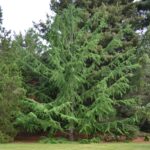
Tree Pseudolarix amabilis [Golden Larch] No serious diseases. Should be protected from too much wind.
Tree Pseudotsuga menziesii [Douglas Fir] A highly variable species, in cold and drought hardiness, color, and form. For use in the Midwest, select the hardiest available forms. Prefers atmospheric moisture. Historically, has been an important timber tree in the West.
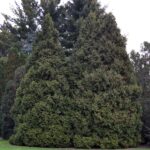
Tree Pseudotsuga menziesii 'Fastigiata' [Columnar Douglas Fir] Pseudotsuga menziesii is a highly variable species, in cold and drought hardiness, color, and form. For use in the Midwest, select the hardiest available forms. Prefers atmospheric moisture. Historically, has been an important timber tree in the West. 'Fastigiata' is a dense, columnar cultivar with distinctly upright branches.
Tree Quercus × 'Crimschmidt' [sold as Crimson Spire™] [Crimson Spire Oak] The Crimson Spire Oak is notable for its powdery mildew resistance and reddish fall color that it gained from its White Oak parent, in addition to the dense, strong, vertical, columnar form, and tolerance to drought and urban conditions gained from its Fastigiate English Oak parent.
Tree Quercus robur 'Fastigiata' [Columnar English Oak] The tightly columnar 'Fastigiata' provides a strong vertical accent, and is far more popular in the Midwest than the straight species. Powdery mildew on the leaves can be a significant problem. Seed propagated 80-90% true to type, thus variation can also be a problem.
Tree Quercus × warei 'Long' [sold as Regal Prince®] [Regal Prince Oak] The Regal Prince Oak is notable for its resistance to powdery mildew and borers, strong vertical, columnar form, and tolerance to wind and ice. Holds its dense, fastigiate form into old age.
Shrub/Tree InvasiveThis plant is considered invasive Rhamnus cathartica [Common Buckthorn] Tolerates most sites. Dioecious. Very invasive, by the seeds that birds love to eat; probably best to refrain from planting this species in the landscape. Susceptible to rusts (Puccinia coronata), that also attacks oats (in oat growing areas, buckthorn eradication is recommended). The bark, leaves, and fruit were once used in purgatives, thus one of this plant's common names, "Purging Buckthorn".
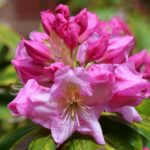
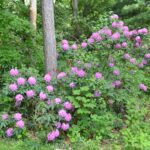
Shrub Rhododendron catawbiense [Catawba Rhododendron] The Catawba Rhododendron is considered to be one of the hardiest rhododendron species. Beautiful plant when it is used in mass. Flower color of the species does not combine well with some other flower colors. Flower color bleaches out in high pH. Subject to winter burning of foliage in exposed sites near the limits of its range. Both flowers and foliage are of equal value in the landscape. Cultivars are usually less hardy than species.…
Shrub Rhododendron catawbiense 'Roseum Elegans' [Roseum Elegans Catawba Rhododendron] A reliable bloomer that is common in commerce. Flower color does not always combine well with some other flower colors. Flower color bleaches out in high pH. Can be subject to winter burning of foliage in exposed sites near the limits of its range, but this cultivar can tolerate extreme heat and extreme cold (to -25 degrees Fahrenheit). Susceptible to a large number of pests and diseases, which can largely be prevented by good cultural…
Shrub Rosa rugosa [Rugosa Rose] Widely adapted to soils and exposures, but especially good in full sun on dry soils. Relatively trouble-free among roses, even resists the common rose pathogens and phytopagous insects. The hips (rose fruits) are a rich source of vitamin C and used commercially in teas. Can get borers in canes (rarely). Good cultural practices are important for roses in order to prevent disease and other pests. Avoid wetting the foliage when watering, place the plant in…