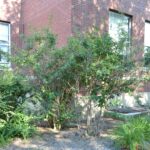
Tree Parkinsonia × [Hybrid Palo Verde] Semi-evergreen leaves, and smooth line green trunks and branches year round. Palo Verde means "green stick" in Spanish, and the green bark carries on photosynthesis. Survives in the desert on natural rainfall once established. Few problems. Needs some minor clean up maintenance of flowers and leaves. Prune when young to develop multi-stems and show off the beautiful bark. 'Desert Museum' is a V-shaped thornless hybrid having genetic characteristics indicating complex hybridization between three species, Parkinsonia…
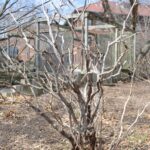
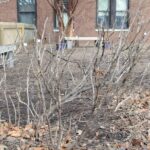
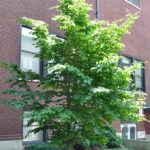
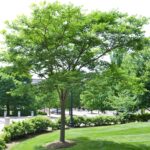
Tree Parrotia persica [Persian Parrotia] One of the best trees for foliage and bark effect. Very adaptable, tolerating drought, various soils, heat, cold, etc. Prefers full sun but tolerates light shade. Sites with strong winter winds will surely cause tip dieback in Northern Indiana.
Tree Parrotia persica 'Vanessa' [Vanessa Persian Parrotia] Vanessa is a cultivar that has a distinctly upright or columnar habit. One of the best trees for foliage and bark effect. Very adaptable, tolerating drought, various soils, heat, cold, etc. Prefers full sun but tolerates light shade. Sites with strong winter winds will surely cause tip dieback in Northern Indiana.
Tree InvasiveThis plant is considered invasive Phellodendron amurense [Amur Corktree] A striking tree for its interesting bark and massive framework. Widely adaptable to soil, trouble-free, and drought and pollution resistance. Easily transplanted. May be less hardy when young and rapidly growing. Fruits smell like turpentine when crushed (or stepped on). This tree is demonstrating invasive characteristics in suburban and urban fringe forests. It escapes intended plantings to invade and displace native hardwood forests. Note: only female plants have the potential to become invasive. Phellodendron amurense…
Shrub Philadelphus coronarius [Sweet Mockorange] Well adapted to different light (even shade) and soil conditions, especially to dry situations. Relatively trouble-free, and one of the most fragrant of the mockoranges. None of the mockoranges have much landscape interest after the season of bloom. Becomes leggy if not pruned. Pruning should be done after flowering (flower buds form on previous years wood), and to maintain fullness of form.
Shrub Physocarpus opulifolius 'Monlo' [sold as Diabolo®] [Diablo Eastern Ninebark] Renew by cutting to the ground in late winter. Very course in texture in the winter with its multi-layered exfoliating bark (which gives it the common name of "ninebark"). 'Monlo', generally sold under the name Diablo, has reddish-purple leaves that sometimes fade to green in hotter climates.
Shrub Physocarpus opulifolius 'Seward' [sold as Summer Wine™] [Summer Wine Eastern Ninebark] Renew by cutting to the ground in late winter. Very course in texture in the winter with its multi-layered exfoliating bark (which gives it the common name of "ninebark"). 'Seward', generally sold under the name Summer Wine, has bronzy wine-red, more deeply cut leaves that may fade to green in hotter climates.
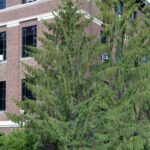
Tree Picea abies [Norway Spruce] Slight mite susceptibility in hot, dry sites. Some susceptibility to borers. May become thin, open, and have a less attractive habit at maturity.
Shrub Picea abies 'Clanbrassiliana' [Dwarf Norway Spruce] 'Clanbrassiliana' is a compact, flat-topped, mounded dwarf form. Slight mite susceptibility in hot, dry sites. Some susceptibility to borers.
Tree Picea abies f. pendula [Weeping Norway Spruce] As its common name suggests, the Weeping Norway Spruce has a drooping habit and pendulous branches. This plant's irregular form varies depending on how it is trained, and it may even spread along the ground if left unsupported. Slight mite susceptibility in hot, dry sites. Some susceptibility to borers.