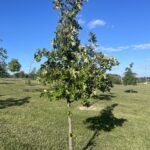
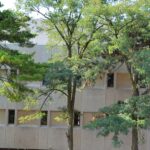
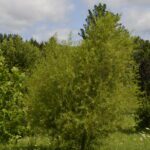
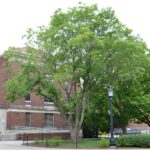
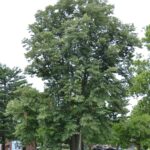
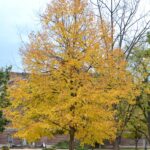
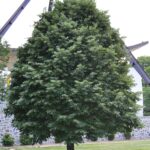
Tree Indiana Native Audio Recording AvailableID That Tree Video AvailablePurdue Plant Doctor Available Quercus stellata [Post Oak] A tough find in Indiana and mostly encountered in the wild throughout the southern states, the native Post Oak can be found in oak-hickory forests of southern Indiana. Open grown trees have a dense, round-topped crown with spreading branches for shade. Bark is similar to the White Oak, gray-brown in color with flat ridges, somewhat scaly, eventually ridged and furrowed. Fall color can vary, ranging from deep red to a golden brown. Indiana NativeAudio Recording AvailableID That Tree Video AvailablePurdue Plant Doctor Available
Tree Indiana Native Audio Recording AvailableID That Tree Video AvailablePurdue Plant Doctor Available Quercus velutina [Black Oak] Quercus velutina is a large, deciduous oak with an irregular canopy. It is closely related to Q. rubra (Red Oak), which it is known to hybridize with. The interesting bark of the Q. velutina is nearly black and furrowed. Transplanting is made difficult by the long tap root. Not generally sold commercially. Indiana NativeAudio Recording AvailableID That Tree Video AvailablePurdue Plant Doctor Available
Tree Purdue Plant Doctor Available Quercus virginiana [Live Oak] Massive, picturesque, wide spreading tree. Trees often imbued with Spanish moss. Very tolerant of soil type. Tolerates salt spray. Acorns are eaten by many songbirds and quail, turkey, squirrel, and deer. State tree of Georgia. Old leaves drop in spring, and must be raked-up. Purdue Plant Doctor Available
Tree Indiana Native Audio Recording AvailableID That Tree Video AvailablePurdue Plant Doctor Available Robinia pseudoacacia [Black Locust] Widely variable in form, the most picturesque are straight-trunked with branches abruptly fanning out at the top. Fixes N2. Locust borers are troublesome and difficult to control, but many trees live with them successfully for many years. Leaf minors and permanently wet soils can be problems. Indiana NativeAudio Recording AvailableID That Tree Video AvailablePurdue Plant Doctor Available
Tree Indiana Native Audio Recording AvailableID That Tree Video AvailablePurdue Plant Doctor Available Salix nigra [Black Willow] The Black Willow is a fast-growing, wet soils tolerant tree, reaching 30 to 60 feet at maturity. Can sucker profusely, so use sparingly in the landscape. In the wild, you can find Salix nigra near floodplains, streams and rivers, and marshes. The ancient Greeks knew the therapeutic values of willow (Salix) and brewed tea made from willow bark to relieve stiff joints and other bodily aches and pains. A number of insect species attack the… Indiana NativeAudio Recording AvailableID That Tree Video AvailablePurdue Plant Doctor Available
Tree Audio Recording Available Styphnolobium japonicum [Japanese Pagodatree] A widely adapted tree with good drought and pollution tolerance, and foliage texture comparable to Gleditsia, but a smaller tree and with more seasonal interest. Relatively trouble-free except for fungi that live in weaker twigs that cause twig blight and canker. Fungi invade most readily those twigs killed by cold or self-pruning. Seeds are poisonous. Difficult to train a central leader. More cold sensitive when young. Audio Recording Available
Tree Indiana Native Audio Recording AvailableID That Tree Video AvailablePurdue Plant Doctor Available Tilia americana [American Linden] Very adaptable, even in alkaline soil, but does not tolerate much air pollution. Too big for most urban landscapes. Japanese beetles like feeding on it. Indiana NativeAudio Recording AvailableID That Tree Video AvailablePurdue Plant Doctor Available
Tree Purdue Plant Doctor Available Tilia americana 'McKSentry' [sold as American Sentry®] [American Sentry Linden] Purdue Plant Doctor Available
Tree Audio Recording AvailablePurdue Plant Doctor Available Tilia americana 'Redmond' [Redmond American Linden] Very adaptable, even in alkaline soil, but does not tolerate much air pollution. Too big for most urban landscapes. Japanese beetles like feeding on it. Audio Recording AvailablePurdue Plant Doctor Available
Tree Audio Recording AvailablePurdue Plant Doctor Available Tilia cordata [Littleleaf Linden] Never colorful, but a good shade tree that is well-adapted to most city conditions and relatively troublefree. Functions as a small tree for many years. Japanese beetles can feed heavily on foliage beginning in mid-summer. Audio Recording AvailablePurdue Plant Doctor Available