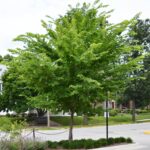
Tree Audio Recording AvailablePurdue Plant Doctor Available Taxodium distichum var. imbricarium [Pondcypress] Can tolerate wet and dry soils. Does not tend to develop "cypress knees" like the Common Baldcypress. Audio Recording AvailablePurdue Plant Doctor Available
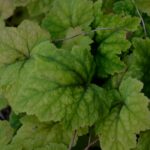
Herbaceous Audio Recording AvailablePurdue Plant Doctor Available Tiarella wherryi [Foamflower] Tiarella wherryi is a clump-forming herbaceous perennial that grows about half a foot tall and can spread up to 20 inches. The white flowers reach heights of up to 20 inches. The leaves are green and lobe shaped. Tiarella wherryi prefers moist soils but dislikes wet feet, so plant accordingly. Tiarella wherryi also does not tolerate full sun. Audio Recording AvailablePurdue Plant Doctor Available
Tree Purdue Plant Doctor Available Tilia americana 'McKSentry' [sold as American Sentry®] [American Sentry Linden] Purdue Plant Doctor Available
Tree Audio Recording AvailablePurdue Plant Doctor Available Ulmus americana 'Princeton' [Princeton American Elm] This American Elm cultivar retains the attractive vase-shaped form that the American Elm is known for and has some resistance to both the elm leaf beetle and Dutch Elm Disease, which is caused by Ophiostoma ulmi. (Dutch Elm Disease has lead to the near extinction of the American Elm in the US). Many other diseases can cause damage to this cultivar, though. Audio Recording AvailablePurdue Plant Doctor Available
Tree Audio Recording AvailablePurdue Plant Doctor Available Ulmus americana 'Valley Forge' [Valley Forge American Elm] This cultivar has the classic vase-like form and ascending branches that the American elm is know for, while also having the best Dutch elm disease resistance of the new "Dutch elm resistant" cultivars. Important to stake when young. Audio Recording AvailablePurdue Plant Doctor Available
Tree InvasiveThis plant is considered invasive Audio Recording AvailableID That Tree Video AvailablePurdue Plant Doctor Available Ulmus pumila [Siberian Elm] Grows under almost any conditions, especially useful in dry sites. Resists Dutch elm disease. Leaf beetles can defoliate trees. Brittle branches and subsequently messy. Avoid planting this tree in the landscape, unless there is no other choice. Considered invasive in many areas. Audio Recording AvailableID That Tree Video AvailablePurdue Plant Doctor Available
Tree Indiana Native Audio Recording AvailableID That Tree Video AvailablePurdue Plant Doctor Available Ulmus rubra [Slippery Elm] The Slippery Elm has a vase-shaped form, similar to that of the American Elm (Ulmus americana), but with more ascending branchlets. This tree gained its common name from the moist, slippery, red inner bark chewed by Native Americans and pioneers to quench thirst. Not considered very ornamental for the landscape, due to its coarse texture, weedy tendencies, and susceptibility to Dutch Elm Disease (although not as severe as the American Elm). Indiana NativeAudio Recording AvailableID That Tree Video AvailablePurdue Plant Doctor Available
Shrub Audio Recording AvailablePurdue Plant Doctor Available Viburnum opulus [European Cranberrybush Viburnum] Widely tolerant of soils and microclimates, although found in more wet sites in wild stands. May be troubled by aphids. The snowball variety, V. opulus 'Roseum', is badly troubled by aphids. Prune on a 3-year cycle to maintain best form and fruiting. Flower cymes have an outer showy and sterile ring and an inner inconspicuous and fertile cluster which produces the berries. Audio Recording AvailablePurdue Plant Doctor Available
Shrub Audio Recording AvailablePurdue Plant Doctor Available Viburnum opulus 'Compactum' [Dwarf European Cranberrybush Viburnum] 'Compactum' is a dense, dwarf cultivar that produces an abundance of flowers and fruits and has excellent fall color. Widely tolerant of soils and microclimates, although found in more wet sites in wild stands. May be troubled by aphids. Prune on a 3-year cycle to maintain best form and fruiting. Flower cymes have an outer showy and sterile ring and an inner inconspicuous and fertile cluster which produces the berries. Audio Recording AvailablePurdue Plant Doctor Available
Shrub Purdue Plant Doctor Available Viburnum setigerum [Tea Viburnum] The Tea Viburnum is most noted for its truly outstanding fruit display. In autumn, branches are heavily laden with large clusters of striking bright red oval berries. For optimal fruit production, plant in groups. Can be quite open and leggy; it is advisable to plant other, shorter, plants in front of the Tea Viburnum. Gained its common name from the fact that the leaves were once used to make tea. Purdue Plant Doctor Available