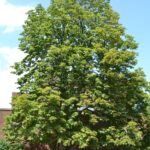
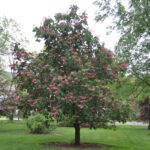
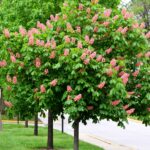
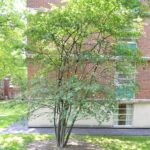
Tree Aesculus × carnea [Red Horsechestnut] More drought resistant and more resistant to blotch and mildew than A. hippocastanum. Comes true to type from seed. Flowers at early age. Does not perform well in dry sites. Prickly fruits may be a problem underfoot. Fruits are poisonous (containing toxic saponins). Often develops branches having narrow crotch angles (branches that should be removed).
Tree Aesculus × carnea 'Fort McNair' [Fort McNair Red Horsechestnut] Fort McNair Red Horsechestnut is less suscebtible to leaf scorch, leaf blotch and mildew than the straight species, although it can still contract the diseases. Does not perform well in dry sites; plant in moister soils for best growth and flowering. Flowers at an early age. Prickly fruits may be a problem underfoot. Fruits are poisonous (containing toxic saponins). Often develops branches having narrow crotch angles (branches that should be removed).
Tree InvasiveThis plant is considered invasive Ailanthus altissima [Tree of Heaven] Unusual form and texture not unlike a large sumac. Highly adaptable. Tolerates salt spray. Dioecious. Coarse and inclined to drop twigs. Male flowers are malodorous; female plants make many weed seedlings. Ailanthus altissima forms dense, clonal thickets which displace native species and can rapidly invade fields, meadows, and harvested forests. This invasive tree species is extremely tolerant of poor soil conditions and can even grow in cement cracks. Ailanthus altissima is not shade tolerant, but…
Tree Albizia julibrissin [Albizia] Albizia julibrissin is known for its attractive, "pom-pom" like flowers that begin in late spring and last through the summer. The interesting effect of the flowers is due to the the over 1" long pink stamens. This plant is not an ideal landscape choice due to its susceptibility to many pests and diseases, including vascular wilt disease (Fusarium).
Tree InvasiveThis plant is considered invasive Alnus glutinosa [Black Alder] During establishment growth is fast but upon blooming of abundant flowering and fruiting growth rate slows. Will average 24" to 30" per year.
Tree Indiana Native Amelanchier arborea [Downy Serviceberry] Would grow well on a streambank. Susceptible to rust, leaf blight, powdery mildew, fruit rot, leaf minor, borers, and scale. Rarely requires pruning.
Tree Amelanchier × grandiflora 'Cole’s Select' [Cole's Select Apple Serviceberry] Cole's Select Apple Serviceberry is an attractive plant with multi-seasonal interest, thick, glossy foliage, and especially outstanding red to orange fall coloration. 'Cole's Select' tends to have slightly larger flowers and stronger spreading, more horizontal branching than the species type. The beautiful white clusters of flowers give rise to sweet purple-black berries that are edible by humans and especially relished by birds. The fruits can be used in pies, jams, and jellies.
Tree Amelanchier × grandiflora 'Robin Hill' [Robin Hill Serviceberry] A. x grandiflora is a hybrid cross between A. arborea and A. laevis that typically has larger, slender and longer flowers than its parents. Ripe fruits are edible.
Tree Indiana Native Amelanchier laevis [Allegheny Serviceberry] An excellent small tree for naturalizing and for very early, but short-lived, bloom. Fruits are edible and a prime source of food for birds. Can produce fruit by apomixis. Subject to the troubles of Rosaceous plants in general, including fire-blight and mites, which can be controlled, usually quite easily.