
Euonymus americanusIndiana NativeIndiana Native
American Euonymus

 Plant Type:
 Growth Forms:
 Hardiness:
 Deciduous / Evergreen:
 Flower Notes:
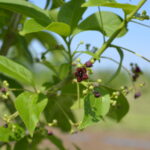
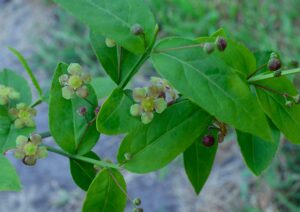
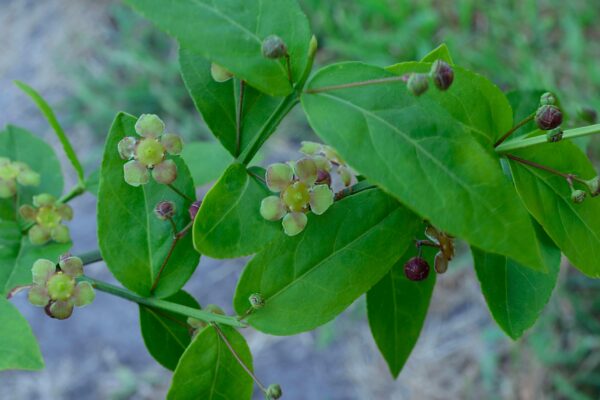
Yellow (Yellow-green, 1/3" 5-petaled flowers, unusual as Euonymus typically has 4-petaled flowers)
 Foliage Notes:
Green (Dark green); Red (Shades of red in the fall)
 Stem Notes:
Slender, 4-sided, squarish stem.
 Fruit Notes:
Red (Bright red, warty seed capsules open to bright red seeds)
 Ultimate Height:
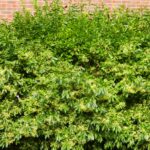
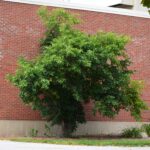
4-6 feet
 Ultimate Spread:
4-6 feet
 Bloom Times:
 Light Requirements:
 Soil Water Requirements:
 Soil Notes:
Moist, loamy to dry soils
 Range:
Eastern United States and west to Texas.
 Maintenance:
 Diagnostic Characteristics:
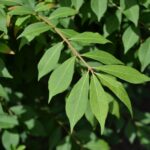
Leaves are opposite, simple, lance-ovate to lanceolate, 1/2 to 3 1/2" long, 1/2 to 1 1/4" wide, acuminate, cuneate, glabrous, crenate-serrate, flat medium green, turning yellow to green to shades of red in fall; petiole- 1/12 to 1/8"long. Seeds are a yellow-white with a bright red seed coat at 1/4" diameter. Seeds are encased by showy, 3-5 lobed, warty capsules that turn a bright red in the fall, ranging 1/2 to 3/4" in diameter.

Additional Information

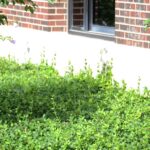
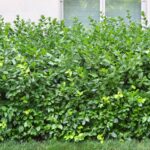
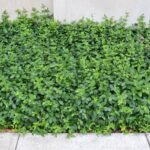
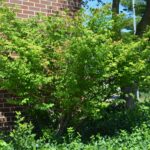
The American Euonymus is a small, suckering shrub that is native to the eastern portions of the United States, west to Texas. Normally, the American Euonymus can be found in woodlands and can tolerate deep shade and a wide range of soil types. Its flowers are unusual for Euonymus because of its five-petaled flowers instead of the usual four for most other Euonymus species. Other common names, such as Strawberry-bush or Hearts-a-Burstin, are derived from its showy fruit capsules that turn a bright red in the fall and split open to reveal a bright red seed. This species is particularly susceptible to scale, even in remote woodland regions, which is a noted issue when considering use in the industry.
When Euonymus americanus has been observed flowering or fruiting at Purdue University

Flowering

JanFebMarAprMayJunJulAugSepOctNovDec
Week 1 flowering not presentWeek 2 flowering not presentWeek 3 flowering not presentWeek 4 flowering not presentWeek 5 flowering not presentWeek 6 flowering not presentWeek 7 flowering not presentWeek 8 flowering not presentWeek 9 flowering not presentWeek 10 flowering not presentWeek 11 flowering not presentWeek 12 flowering not presentWeek 13 flowering not presentWeek 14 flowering not presentWeek 15 flowering not presentWeek 16 flowering not presentWeek 17 flowering not presentWeek 18 flowering not presentWeek 19 flowering not presentWeek 20 flowering not presentWeek 21 flowering not presentWeek 22 flowering not presentWeek 23 flowering not presentWeek 24 flowering presentWeek 25 flowering not presentWeek 26 flowering not presentWeek 27 flowering not presentWeek 28 flowering not presentWeek 29 flowering not presentWeek 30 flowering not presentWeek 31 flowering not presentWeek 32 flowering not presentWeek 33 flowering not presentWeek 34 flowering not presentWeek 35 flowering not presentWeek 36 flowering not presentWeek 37 flowering not presentWeek 38 flowering not presentWeek 39 flowering not presentWeek 40 flowering not presentWeek 41 flowering not presentWeek 42 flowering not presentWeek 43 flowering not presentWeek 44 flowering not presentWeek 45 flowering not presentWeek 46 flowering not presentWeek 47 flowering not presentWeek 48 flowering not presentWeek 49 flowering not presentWeek 50 flowering not presentWeek 51 flowering not presentWeek 52 flowering not present

No Fruiting Observations Available

The Purdue Arboretum is a collaboration between the Department of Horticulture and Landscape Architecture and Physical Facilities Grounds Department

Purdue Arboretum, 625 Agriculture Mall Dr, West Lafayette, IN, 47907
© 2026 Purdue UniversityAn equal access/equal opportunity universityCopyright ComplaintsMaintained by Purdue Arboretum Explorer
Contact Purdue Arboretum at arboretum@purdue.edu for accessibility issues with this page | Accessibility Resources | Contact Us