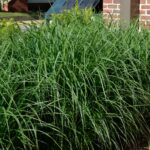
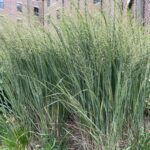
Herbaceous Panicum virgatum 'Northwind' [Northwind Switchgrass] Switch Grass is native to Missouri prairies. 'Northwind' is more compact han the straight species and more vertical in comparison.
Herbaceous Panicum virgatum 'Rotstrahlbusch' [Rotstrahlbusch Switchgrass] 'Rotstrahlbusch' is used for the burgundy-red color it has in the fall. Similar vertical clump to 'Northwind'.
Herbaceous Panicum virgatum 'Thundercloud' [Thundercloud Switch Grass] This tall hedge grass can grow up to 8 feet tall, making it a great option to buffer views or frame spaces. Open panicles frame the crown creating a soft fluffy top that contrast the dark green switchgrass blades.
Herbaceous Papaver orientale 'Crimson Red' [sold as Crimson Red Oriental Poppy] [Crimson Red Oriental Poppy]
Herbaceous Papaver orientale 'Orange Scarlet' [sold as Orange Scarlet Oriental Poppy] [Orange Scarlet Oriental Poppy]
Tree Parkinsonia × [Hybrid Palo Verde] Semi-evergreen leaves, and smooth line green trunks and branches year round. Palo Verde means "green stick" in Spanish, and the green bark carries on photosynthesis. Survives in the desert on natural rainfall once established. Few problems. Needs some minor clean up maintenance of flowers and leaves. Prune when young to develop multi-stems and show off the beautiful bark. 'Desert Museum' is a V-shaped thornless hybrid having genetic characteristics indicating complex hybridization between three species, Parkinsonia…
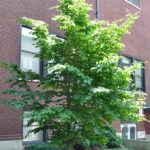
Tree Parrotia persica [Persian Parrotia] One of the best trees for foliage and bark effect. Very adaptable, tolerating drought, various soils, heat, cold, etc. Prefers full sun but tolerates light shade. Sites with strong winter winds will surely cause tip dieback in Northern Indiana.
Tree Parrotia persica 'Vanessa' [Vanessa Persian Parrotia] Vanessa is a cultivar that has a distinctly upright or columnar habit. One of the best trees for foliage and bark effect. Very adaptable, tolerating drought, various soils, heat, cold, etc. Prefers full sun but tolerates light shade. Sites with strong winter winds will surely cause tip dieback in Northern Indiana.