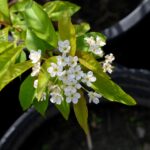
Shrub Philadelphus'Snowbelle' [Snowbelle Mock Orange] 'Snowbelle' is noted for having good heat and cold tolerance. It has minimal ornamental interest when not flowering.
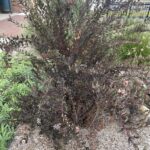
Shrub Physocarpus opulifolius 'SMNPOTW' [sold as Tiny Wine®] [Tiny Wine Ninebark] Tiny Wine Ninebark is noted for its features as it is interesting season round. The exfoliating bark on mature wood reveals red-brown inner bark, this is how the common name Ninebark was chosen as the color is ever changing.
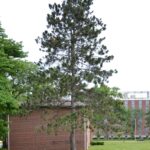
Tree Pinus resinosa [Red Pine] Forms a decent screen when young, especially on poor, dry soils, but soon drops lowers limbs necessitating the need of companion plants to complete the screen. Develops a shorter, thicker trunk when grown in the open. Pine bud moth (as well as other moths) can be problem if not controlled. Foliage presentation not always full or clearly esthetic. Best in groves or plantations where bark color can be admired.
Tree Indiana Native Prunus pensylvanica [Pin Cherry] Pin or Wild Red Cherry is a slender, small shrub-like tree that is native to Indiana. Often seen as a pioneer species, Pin Cherry can be seen to develop in vacant areas. Its bark is shiny, red in color, and often aromatic when brusied or cut. P. pensylavnica produces a large amount of fruit when fully mature, which could promote weediness.
Shrub Indiana Native Prunus pumila [Sand Cherry] Prunus pumila is a creeping, low-growing small shrub naturally found in sandy locations, such as dunes, where it acts an important stabilizer. The cherry fruits are too bitter to eat fresh, but can be used in jams and jellies.
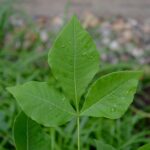
Shrub/Tree Indiana Native Ptelea trifoliata [Hoptree] A widely adaptable species which performs best in well-drained soils, can be grown in full sun or even under heavy shade. This plant is susceptible to several leaf spot and even a rust disease, but none are serious. It's fruit can also be use as a substitute for hops, thus giving rise to one of its common name: the 'Hoptree'. This tree's bark can also be utilized for medical purposes, and its stems when bruised…
Shrub Rhododendron catawbiense 'Chionoides' [Chionoides Rhododendron] White flowers have the yellow centers and make numerous dome shaped trusses. The broad, dense plant is easy to grow and has attractive, narrow foliage.
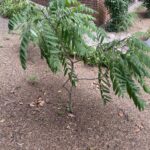
Shrub Indiana Native Rhus glabra [Smooth Sumac] Large, club-like fruit clusters and rather coarse compound leaves make this a plant that can best be appreciated from a distance, and so it is at its best in large-scale plantings. Picturesque branches. Hard to kill this plant. Can be rejuvenated by cutting to ground in late winter. Plants are dioecious, so only females have the fruiting interest, but all plants are reliably colorful in fall foliage. Spreads rapidly by suckers.
Shrub Rhus typhina 'Bailtiger' [sold as Tiger Eyes®] [Cutleaf Tiger Eyes Staghorn Sumac] The Tiger Eyes cultivar makes a great landscape plant as it suckers less than the species, and for it's nice foliage.