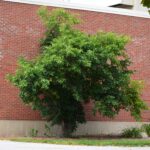
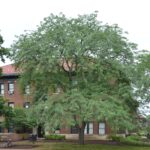
Tree Indiana Native Juglans cinerea [Butternut] Juglans cinera is a large, rounded tree similar to, but overall smaller than the Black Walnut (Juglans nigra). It is not commonly grown for ornamental purposes. The nut, once one is able to crack the hard shell, is edible, sweet, oily, and buttery. Long tap root makes transplanting difficult. This species is valued for its wood and between overharvesting and losses from Butternut Canker (Sirococcus clavigignenti-juglandacearum), this species has become rare in its native habitat.
Tree Indiana Native Juglans nigra [Black Walnut] Nuts are a serious litter problem, staining sidewalks and driveways. Juglone (found in leaf litter and possibly roots) is toxic to many plants, like tomatoes, blackberries, red pines, and many others. Black Walnut wood is valuable and has a variety of commercial uses, especially for furniture.
Tree Koelreuteria paniculata [Goldenraintree] Colorful small tree in bloom and interesting for its form. Tolerates heat, drought, wind, alkaline soils, and air pollution. Newly emerging leaves can be damaged by late spring freezes. Rather weak-wooded. Can be damaged or killed by –25 degrees F. Invasive in some parts of the country.
Tree Indiana Native Liriodendron tulipifera [Tuliptree] Handsome, tall shade tree with strong central leader. Performs best in good soil with adequate moisture. Variable in hardiness, depending on geographic source. Use native stock when possible. State tree of Indiana, Kentucky, North Carolina, and Tennessee. Slightly weak-wooded. Subject to damage in very windy sites. Subject to aphid and scale insects when weakened. Needs good drainage and a lot of soil (tree lawn may be too small). Its poorly branched fleshy root system (taproot)…
Tree Indiana Native Liriodendron tulipifera 'Little Volunteer' [Little Volunteer Tulip-tree] 'Little Volunteer' is a dwarf cultivar with smaller 4-lobed and flat-topped green leaves. It makes a wonderful street tree with its smaller size in habit, leaf, and flower. While keeping the classic yellow fall color and yellow-orange-green flower as other varieties.
Tree Indiana Native Maclura pomifera [Osage-orange] Withstands wind and dry conditions well. Used by farmers as a hedgerow for livestock fencing because of its thorniness. Highly deer resistant. Fruits are said to be an insect and rodent repellent. Extremely decay resistant wood, containing 1% by weight 2,3,4,5-tetrahydroxystilbene (a fungitoxic compound). Large fruits create litter problem; select staminate trees to avoid fruit (unless you believe the fruits are of interest). Due to invasive root system, do not plant near sewer or drainage…
Tree Magnolia virginiana 'Northern Belle' [Northern Belle Sweetbay Magnolia] The most cold-hardy evergreen magnolia. Large white blossoms that open with the scent of vanilla. This is great around woodlands and near water, where it still grows in very wet soil. Can take full sun or partial shade. Pests and diseases are almost never a problem and has some resistance to drought.
Tree Indiana Native Nyssa sylvatica [Black Gum] Especially useful in wet soils. One of the most beautiful of trees, with habit comparable to Quercus palustris, but usually more irregular, and with a greater number of more slender main limbs. Silvery-gray, picturesque branching; strong horizontal accent. Difficult to transplant due to taproot; use container-grown plants when possible, or at least plants dug with a soil ball. Shelter from wind. In the North, select native northern stock as the species has a wide geographic…
Tree Nyssa sylvatica 'David Odom' [sold as Afterburner® Tupelo] [Afterburner® Tupelo] Female trees must have a male pollinator to set fruit, difficult to transplant due to taproot.