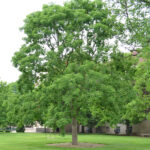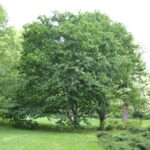
Tree Indiana Native Aesculus glabra [Ohio Buckeye] Widely adapted to soils and environments; however, very dry conditions must be avoided. Drought causes early leaf drop. Leaf blotch and leaf scorch often disfigure foliage, especially in dry soil. Spiny fruits in autumn can be troublesome underfoot, and eliminates species type as a good street tree. Fruits are toxic, containing 3-5% saponins.
Tree Indiana Native Amelanchier arborea [Downy Serviceberry] Would grow well on a streambank. Susceptible to rust, leaf blight, powdery mildew, fruit rot, leaf minor, borers, and scale. Rarely requires pruning.
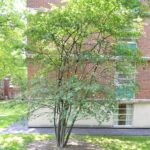
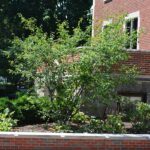
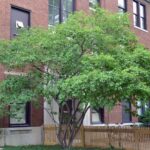
Shrub/Tree Indiana Native Amelanchier canadensis [Shadblow Serviceberry] Amelanchier canadensis, the Shadblow Serviceberry, tends to be confused with Amelanchier arborea, the Downy Serviceberry, and Amelanchier laevis, the Allegheny Serviceberry. However, A. canadensis, compared to A. arborea and A. laevis, is generally much more shrub-like (often forming thickets), flowers a week later, and produces upright flower clusters (as opposed to the pendulous racemes of A. arborea and A. laevis). The Shadblow Serviceberry is excellent for woodland plantings, naturalizing, and along stream and pond banks.…
Tree Indiana Native Amelanchier laevis [Allegheny Serviceberry] An excellent small tree for naturalizing and for very early, but short-lived, bloom. Fruits are edible and a prime source of food for birds. Can produce fruit by apomixis. Subject to the troubles of Rosaceous plants in general, including fire-blight and mites, which can be controlled, usually quite easily.
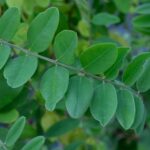
Shrub Indiana Native Amorpha fruticosa [Indigobush Amorpha] The Indigobush Amorpha is a Indiana native shrub that can be found along river banks and shallow marshes. This shrub can be planted in areas of poor soil where few other plants will survive, as well as used for erosion control. To avoid weediness, seeds can be collected shortly after flowering as it can spread readily by seeds. Common problems of Amorpha fruticosa includes rust, leaf spots, powdery mildew and twig canker. Some gall problems…
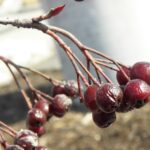
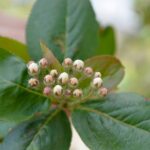
Shrub Indiana Native Aronia arbutifolia [Red Chokeberry] Red Chokeberry is often a multi-stem shrub that's native to Indiana as well as Eastern North America to Minnesota and south as far as Texas. This shrub bears white to slightly pinkish flowers with prominent anthers that gives it a unique look. Red berries form in September to often December. Best grown in mass plantings or for a naturalizing species in the landscape. Though the berries are bitter to taste, they are often used in…
Shrub Indiana Native Aronia melanocarpa [Black Chokeberry] This Indiana native shrub is similar to the Red Chokeberry in habit and form, but differs in that the Black Chokeberry is larger, has black-colored fruits, broader leaves, and generally larger flowers. Place in a higher light location for the best flower and fruit display. Best used for naturalizing, mass plantings, and wetland reclamation projects. The berries are edible, but only palatable when used in jellies and jams.
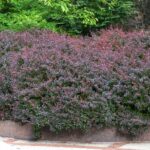
Shrub Berberis × mentorensis [Mentor Barberry] An adaptable plant that does well in an urban environment. Can be coppiced with new growth developing better summer color. Can be pruned to ground every 5 to 7 years. Full sun to partial shade. Relatively trouble-free. Large thorns and spiny leaves are a maintenance problem. Collects litter around the base.
Tree Indiana Native Betula alleghaniensis [Yellow Birch] Graceful tree, interesting for its shining bark beginning yellowish or bronze and exfoliating in thin shreds, becoming reddish brown until finally forming blackish-brown plates. Especially well adapted to wet soils. Does not do well in dry situations. Less subject to the borer troubles of B. papyrifera in the Midwest.