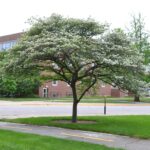
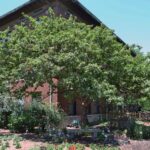
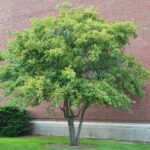
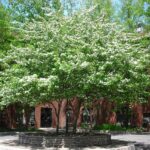
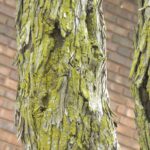
Tree Purdue Plant Doctor Available Crataegus × 'Vaughn' [Vaughn Hawthorn] This small tree is a hybrid of Crataegus crusgalli x C. phaenopyrum. It is generally grown for its fragrant clusters of white flowers in the spring and prolifically produced red fruits that persist into winter. Due to its numerous thorns, it is best used in areas with low traffic. Highly susceptible to rust. Purdue Plant Doctor Available
Shrub Indiana Native Audio Recording AvailablePurdue Plant Doctor Available Dasiphora fruticosa [Bush Cinquefoil] Extreme hardiness and long season of bloom make this a favorite in severe climates. Low stature and tolerance of poor, dry soils give it added usefulness in other areas also. Can develop a ragged, unkept habit over time. Remove 1/3 of canes each year (3-year pruning cycle), and consider renewal pruning to a very low framework every 3-5 years if needed. Indiana NativeAudio Recording AvailablePurdue Plant Doctor Available
Shrub Purdue Plant Doctor Available Deutzia x 'NCDX1' [sold as Yuki Snowflake®] [Yuki Snowflake Deutzia] Purdue Plant Doctor Available
Tree Indiana Native Audio Recording AvailableID That Tree Video Available Diospyros virginiana [Common Persimmon] Most are usually dioecious and have a deep tap root which makes large plants difficult to transplant. Flowers attract bees while the fruit attracts birds and many mammals. The fruit is astringent when green, sweet and edible when ripe. Fruits, twigs, and leaves can be a littler problem. Indiana NativeAudio Recording AvailableID That Tree Video Available
Tree Diospyros virginiana 'Meader' [Meader Persimmon] Most usually dioecious. Flowers attract bees. Fruit attracts birds and many mammals. The fruit is astringent when green, sweet and edible when ripe. Fruits, twigs, and leaves can be a littler problem. Deep tap root makes large plants difficult to transplant. Can be poisonous to horses. ‘Meader’ is a self-fertile cultivar usually producing fruit after 2-3 years.
Shrub Indiana Native Audio Recording AvailableID That Tree Video Available Dirca palustris [Leatherwood] Dirca palustris is a small, dense, quite rounded, Indiana native shrub with excellent yellow fall coloration. Although it is generally uncommon in the wild, Leatherwood can be found growing naturally and thriving along the ravines of Turkey Run State Park in Marshall, IN. This plant requires rich, moist, acidic soils and should be protected from intense sun. Leatherwood fruits, bark, and roots are poisonous. Indiana NativeAudio Recording AvailableID That Tree Video Available
Shrub Indiana Native Audio Recording AvailablePurdue Plant Doctor Available Euonymus americanus [American Euonymus] The American Euonymus is a small, suckering shrub that is native to the eastern portions of the United States, west to Texas. Normally, the American Euonymus can be found in woodlands and can tolerate deep shade and a wide range of soil types. Its flowers are unusual for Euonymus because of its five-petaled flowers instead of the usual four for most other Euonymus species. Other common names, such as Strawberry-bush or Hearts-a-Burstin, are derived from… Indiana NativeAudio Recording AvailablePurdue Plant Doctor Available
Shrub/Tree Indiana Native Audio Recording AvailableID That Tree Video AvailablePurdue Plant Doctor Available Euonymus atropurpureus [Eastern Wahoo] The Easter Wahoo is an Indiana native shrub/small tree that can be found in open woods or along forest edges and is grown for its attractive red fruits and great fall color. Due to its irregular habit, the Eastern Wahoo can be an issue in the formal landscape, but regular pruning can fix this issue. Far less invasive than the infamous Euonymus alatus (Winged Euonymus or Burning Bush). Flowers are small, rich purple that bloom… Indiana NativeAudio Recording AvailableID That Tree Video AvailablePurdue Plant Doctor Available
Shrub/Tree Indiana Native Audio Recording Available Forestiera acuminata [Swamp Privet] The Swamp Privet is a large shrub typically found near swamps, floodplains, wet woods and marshes. Purple-black fruits (drupes) ripen during late summer and is a food source for water fowl, such as ducks. Forestiera acumunata is dioecious, so one would need a male and female for the shrub to produce its fruit. Leaves are a dark green and looks evergreen from a glance, yet turns a golden yellow in fall. Indiana NativeAudio Recording Available
Shrub Purdue Plant Doctor Available Forsythia × intermedia 'Golden Bells' [Golden Bells Forsythia] The Golden Bells Forsythia flowers in early spring, golden flowers cover the bare shrub as the emerge before foliage. Groups or clusters are produced along the stems although, Forsythias only bloom on old wood, leaves sprout shortly after bloom and are medium to dark green in the summer season. Purdue Plant Doctor Available