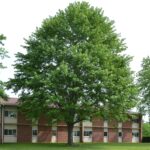
Tree Purdue Plant Doctor Available Acer pseudoplatanus 'Tunpetti' [sold as Regal Petticoat™] [Regal Petticoat Sycamore Maple] This cultivar does well in urban conditions. It is highly salt tolerant and as the tree matures lower hanging branches can be removed allowing for a higher canopy that does not obstruct walkways. Purdue Plant Doctor Available
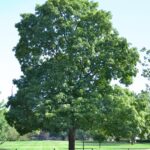
Tree Indiana Native Audio Recording AvailableID That Tree Video AvailablePurdue Plant Doctor Available Acer saccharinum [Silver Maple] Grows largest along stream banks. One of the best trees for poor soils, and in places where a functional shade tree is quickly needed. Roots invade and clog drainage tiles, and break sidewalks. Very weak wooded. Many disease and insect problems. Indiana NativeAudio Recording AvailableID That Tree Video AvailablePurdue Plant Doctor Available
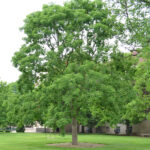
Tree Indiana Native Audio Recording AvailableID That Tree Video AvailablePurdue Plant Doctor Available Acer saccharum [Sugar Maple] Widely adapted to climate, but best in at least reasonably fertile soil. One of the best shade tree species over a wide area, but for best results select plants known for adaptability to the local region. Quite shade tolerant. Low maintenance in a good site. 50 gal. sap or more needed to make 1 gal. syrup. Not so drought-tolerant as silver maple, but reasonably so. Does poorly in compacted soils, and doesn't like salt spray.… Indiana NativeAudio Recording AvailableID That Tree Video AvailablePurdue Plant Doctor Available
Tree Purdue Plant Doctor Available Acer tataricum ‘Garann’ [sold as Hot Wings® Tatarian Maple] [Hot Wings Tatarian Maple] The cultivar name comes from the scarlet red winged fruits that appear on this tree in mid to late summer. Purdue Plant Doctor Available
Tree Indiana Native Audio Recording AvailableID That Tree Video AvailablePurdue Plant Doctor Available Aesculus glabra [Ohio Buckeye] Widely adapted to soils and environments; however, very dry conditions must be avoided. Drought causes early leaf drop. Leaf blotch and leaf scorch often disfigure foliage, especially in dry soil. Spiny fruits in autumn can be troublesome underfoot, and eliminates species type as a good street tree. Fruits are toxic, containing 3-5% saponins. Indiana NativeAudio Recording AvailableID That Tree Video AvailablePurdue Plant Doctor Available
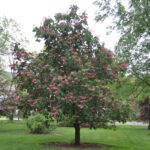
Tree Audio Recording AvailablePurdue Plant Doctor Available Aesculus × carnea [Red Horsechestnut] More drought resistant and more resistant to blotch and mildew than A. hippocastanum. Comes true to type from seed. Flowers at early age. Does not perform well in dry sites. Prickly fruits may be a problem underfoot. Fruits are poisonous (containing toxic saponins). Often develops branches having narrow crotch angles (branches that should be removed). Audio Recording AvailablePurdue Plant Doctor Available
Tree Purdue Plant Doctor Available Amelanchier alnifolia [Saskatoon serviceberry] Purdue Plant Doctor Available
Tree Indiana Native Audio Recording AvailableID That Tree Video AvailablePurdue Plant Doctor Available Amelanchier arborea [Downy Serviceberry] Would grow well on a streambank. Susceptible to rust, leaf blight, powdery mildew, fruit rot, leaf minor, borers, and scale. Rarely requires pruning. Indiana NativeAudio Recording AvailableID That Tree Video AvailablePurdue Plant Doctor Available
Shrub/Tree Indiana Native Audio Recording AvailablePurdue Plant Doctor Available Amelanchier canadensis 'Sprizam' [sold as Spring Glory®] [Spring Glory Shadblow Serviceberry] A new variety, notable for its compact, upright habit reaching only 12' tall and 8-10' wide. Indiana NativeAudio Recording AvailablePurdue Plant Doctor Available
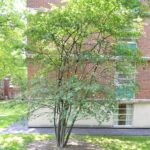
Shrub/Tree Purdue Plant Doctor Available Amelanchier × grandiflora 'Ballerina' [Ballerina Serviceberry] A. x grandiflora is a hybrid cross between A. arborea and A. laevis that typically has larger, slender and longer flowers than its parents. Ripe fruits are sweet and edible. Purdue Plant Doctor Available