Shrub Syringa meyeri 'Palibin' [Dwarf Meyer Lilac] Flowers by the time it reaches one foot tall, very floriferous. Flowers in spring before leaves are fully out. Powdery mildew resistant. Very low maintenance. Flowers can be damaged by a late spring freeze. Best to prune immediately after flowering to promote flower buds for the next year.
Shrub Syringa pubescens ssp. patula 'Miss Kim' [Miss Kim Manchurian Lilac] 'Miss Kim' is known for its prolific fragrant ice-blue flower panicles and more dense, compact habit. Powdery mildew resistant. Very low maintenance. Heat tolerant, so grows better in warmer climates than other lilacs. Also known as Syringa patula 'Miss Kim'.
Tree Tilia americana 'Redmond' [Redmond American Linden] Very adaptable, even in alkaline soil, but does not tolerate much air pollution. Too big for most urban landscapes. Japanese beetles like feeding on it.
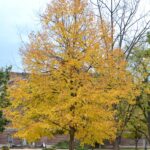
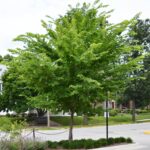
Tree Ulmus americana 'Valley Forge' [Valley Forge American Elm] This cultivar has the classic vase-like form and ascending branches that the American elm is know for, while also having the best Dutch elm disease resistance of the new "Dutch elm resistant" cultivars. Important to stake when young.
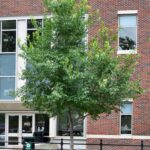
Tree Ulmus × hollandica 'Pioneer' [Pioneer Dutch Elm] Resistant to Dutch elm disease and phloem necrosis, but susceptible to the elm leaf beetle.
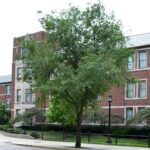
Tree Ulmus × 'Homestead' [Homestead Elm] Dutch elm and phloem necrosis resistant, but susceptible to the elm leaf beetle. 'Homestead' was formed from a cross between Ulmus minor, U. x hollandica, and U. pumila.
Tree InvasiveThis plant is considered invasive Ulmus pumila [Siberian Elm] Grows under almost any conditions, especially useful in dry sites. Resists Dutch elm disease. Leaf beetles can defoliate trees. Brittle branches and subsequently messy. Avoid planting this tree in the landscape, unless there is no other choice. Considered invasive in many areas.
Shrub Indiana Native Vaccinium angustifolium [Lowbush Blueberry] The Lowbush Blueberry requires acidic soils with a pH between 4.5 and 5.5. Iron chlorosis can be a problem in higher pH soils. Mulch around roots to maintain high organic matter. For higher blossom and berry output, grow in full sun. Berries are sweet and edible.
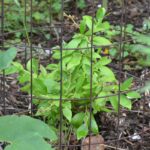
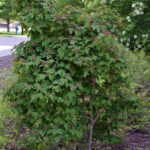
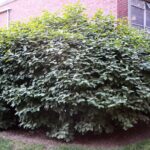
Shrub Indiana Native Viburnum acerifolium [Mapleleaf Viburnum] The Mapleleafe Viburnum is a shade and drought tolerant plant that is excellent for naturalizing. Tolerant to the poison excreted by Black Walnuts.
Shrub Viburnum × burkwoodii [Burkwood Viburnum] Trouble-free plant tolerant of soils and pollution (except sulfur). Also, does not tolerate more severe drought. Very fragrant when in bloom, although to a lesser degree than Viburnum carlesii (Koreanspice Viburnum). Bacterial spot and powdery mildew susceptibility (but not always a problem). Sulfur containing pesticides burn or defoliate leaves. Too thin to be a solid screen.