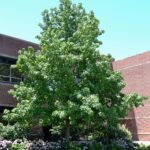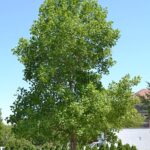
Tree Audio Recording Available Parrotia persica [Persian Parrotia] One of the best trees for foliage and bark effect. Very adaptable, tolerating drought, various soils, heat, cold, etc. Prefers full sun but tolerates light shade. Sites with strong winter winds will surely cause tip dieback in Northern Indiana. Audio Recording Available
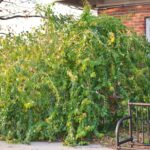
Liana (Climbing Vine) Audio Recording AvailablePurdue Plant Doctor Available Parthenocissus tricuspidata [Boston Ivy] One of the strongest-climbing vines, give solid support for attachment of the adhesive discs on tendrils. Not a vine for trellises or fences. Very tolerant of urban soils. Not a good groundcover. Audio Recording AvailablePurdue Plant Doctor Available
Shrub Audio Recording AvailablePurdue Plant Doctor Available Philadelphus coronarius [Sweet Mockorange] Well adapted to different light (even shade) and soil conditions, especially to dry situations. Relatively trouble-free, and one of the most fragrant of the mockoranges. None of the mockoranges have much landscape interest after the season of bloom. Becomes leggy if not pruned. Pruning should be done after flowering (flower buds form on previous years wood), and to maintain fullness of form. Audio Recording AvailablePurdue Plant Doctor Available
Tree Audio Recording AvailablePurdue Plant Doctor Available Pinus parviflora [Japanese White Pine] The species exhibits good salt tolerance. Although subject to rusts, wood rots, nematodes, and sawflies, none are serious. Audio Recording AvailablePurdue Plant Doctor Available
Tree Purdue Plant Doctor Available Pinus thunbergii 'Thunderhead' [Thunderhead Japanese Pine] Compact cultivar with irregular growing habit. Purdue Plant Doctor Available
Tree Purdue Plant Doctor Available Platanus × acerifolia 'Bloodgood' [Bloodgood London Planetree] 'Bloodgood' is known for its winter interest from the exfoliating bark and its urban adaptability Purdue Plant Doctor Available
Shrub/Tree Audio Recording Available Platycladus orientalis [Oriental Arborvitae] Best in at least fairly moist soils, and with fairly high humidity. Habit tends toward becoming thinner (open) with age. Subject to "winter-burn" near the edge of its useful range. Certain forms provide very positive accent, but can be over-used. Bagworms can also be a problem. Audio Recording Available
Tree Audio Recording Available Pseudolarix amabilis [Golden Larch] No serious diseases. Should be protected from too much wind. Audio Recording Available
Shrub Audio Recording AvailablePurdue Plant Doctor Available Pyracantha coccinea 'Lalandei' [Lalandei Scarlet Firethorn] A favorite for espalier training, because of the adaptable branching habit, showy fruits, and vigourous growth. Adapted to a variety of soils and environments but is susceptible to scab. 'Lalandei' is the most popular Scarlet Firethorn cultivar in northern areas, although it may winter burn. Audio Recording AvailablePurdue Plant Doctor Available
Tree InvasiveThis plant is considered invasive Audio Recording AvailableID That Tree Video AvailablePurdue Plant Doctor Available Pyrus calleryana 'Glen’s Form' [sold as Chanticleer®] [Chanticleer Callery Pear] Generally considered to be one of the best cultivars of P. calleryana. While still prone to limb breakage, it is stronger wooded than other variants. The Chanticleer Callery Pear is also known for its resistance to fireblight. Flowers are malodorous and often killed by late spring freezes. Very small fruits are a litter problem when abundant. Considered invasive in many areas. Audio Recording AvailableID That Tree Video AvailablePurdue Plant Doctor Available