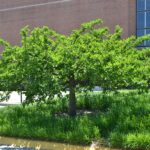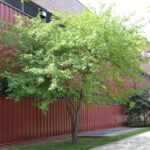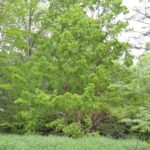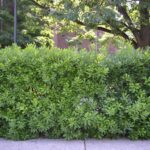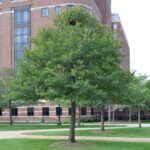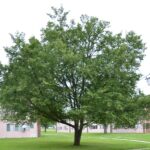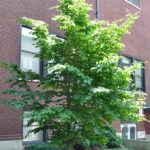
Shrub/Tree InvasiveThis plant is considered invasive Rhamnus cathartica [Common Buckthorn] Tolerates most sites. Dioecious. Very invasive, by the seeds that birds love to eat; probably best to refrain from planting this species in the landscape. Susceptible to rusts (Puccinia coronata), that also attacks oats (in oat growing areas, buckthorn eradication is recommended). The bark, leaves, and fruit were once used in purgatives, thus one of this plant's common names, "Purging Buckthorn".
Shrub Rhododendron maximum 'Roseum' [Roseum Rosebay Rhododendron] 'Roseum' requires wind and shade protection, although it is a vigorous grower. Susceptible to a large number of pests and diseases, which can largely be prevented by good cultural practices.
Shrub Rhodotypos scandens [Black Jetbead] Relatively trouble-free. Tolerant of a variety of soils and environments, particularly dryness and shade. Commonly becomes straggly if growing in a site that is too dry or too wet.
Shrub Rhus typhina 'Bailtiger' [sold as Tiger Eyes®] [Cutleaf Tiger Eyes Staghorn Sumac] The Tiger Eyes cultivar makes a great landscape plant as it suckers less than the species, and for it's nice foliage.
Shrub InvasiveThis plant is considered invasive Rosa multiflora [Multiflora Rose] Highly invasive. Multiflora rose was imported from Eastern Asia in the late 1700s as an ornamental, in erosion control, and as a living fence. his bush forms dense strands that interfere with other woody species and replaces native plants on forest edges. In Indiana, it is illegal to move, plant, or distribute multiflora rose without a permit, according to DNR DEPP Admin code 312 IAC 18-3-13. It is designated a noxious weed in several states…
Tree Indiana Native Sassafras albidum [Common Sassafras] Roots sucker and form thickets, which may or may not be desirable. Sassafras tea contains safrole, a mild carcinogen banned in food products. Iron chlorosis in high pH can turn leaves yellow.
Shrub Sorbaria sorbifolia [Ural Falsespirea] Coarse texture and unusual spirea-like flowers give this plant unique summer interest. Best in large-scale situations. Spreads vigorously by suckering if not contained. Intensive root pruning can be used to control spread. Does not do the best in dry soils but does tolerate them. Does poorly in heavy wind. Flowers turn brown with senescence and esthetic is slightly improved by their removal. To some, a bit too coarse in winter habit.
Tree Stewartia pseudocamellia [Japanese Stewartia] In the wild, this specimen can grow up to 60' high, much larger than the mature landscape tree which ranges from 20-40' high. The outstanding, multi-colored bark is rich and flaking, ranging from soft grays and browns to orangish brown. There are no serious pests or diseases for this specimen.
Tree Styphnolobium japonicum [Japanese Pagodatree] A widely adapted tree with good drought and pollution tolerance, and foliage texture comparable to Gleditsia, but a smaller tree and with more seasonal interest. Relatively trouble-free except for fungi that live in weaker twigs that cause twig blight and canker. Fungi invade most readily those twigs killed by cold or self-pruning. Seeds are poisonous. Difficult to train a central leader. More cold sensitive when young.
Tree Styrax japonicus [Japanese Snowbell] Relatively trouble-free. Can be susceptible to Ambrosia beetle and canker. Partial shade best in Zones 7 and 8 due to heat intolerance.