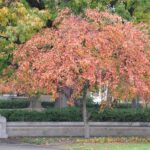
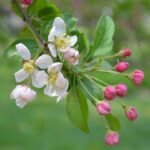
Tree Malus × 'Robinson' [Robinson Flowering Crabapple] The Flowering Crabapple is a popular small ornamental tree with an extremely showy flower display in the spring. 'Robinson' has deep pink flowers, red fruits (which may be used in jellies), and red-bronze foliage. This cultivar has some susceptibility to apple scab, but relatively good resistance to other pests and diseases that commonly affect crabapples (such as fireblight, Japanese beetles, leaf spot, cedar-apple rust, and powdery mildew). Tends to flower and fruit in alternate years.…
Tree Malus × 'Simpson 10-35' [Simpson 10-35 Flowering Crabapple] The Flowering Crabapple is a popular small ornamental tree with an extremely showy flower display in the spring. 'Simpson 10-35' is a hybrid with white flowers and edible, dark red-blushed fruits developed by Simpson Orchard Co., Inc. in Vincennes, IN. Tends to flower and fruit in alternate years. Well-drained heavy loam soils and full sun promote best growth. Can be susceptible to certain pests and diseases, such as apple scab, fireblight, Japanese beetles, leaf spot,…
Tree Malus × [Flowering Crabapple] The Flowering Crabapple is a popular small ornamental tree with an extremely showy flower display in the spring. There are hundreds of types of crabapples available, and more being cultivated every day. Flowers can range from white to pink to purple to red and are followed by small pome fruits (crabapples) that can be red, yellow, orange, purple, or green. Tends to flower and fruit in alternate years. Well-drained heavy loam soils and full sun…
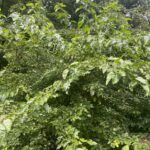
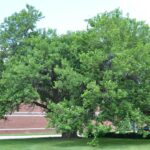
Tree InvasiveThis plant is considered invasive Morus alba [White Mulberry] It will grow in nearly any situation. There are occasional problems with cankers, mites, and bacterial blights. Morus alba is very similar to the native red mulberry (Morus rubra), but may be distinguished by the leaves. Its leaves have glossy surfaces whereas the leaves of Morus rubra do not. Morus alba is found throughout the United States, where it invades old fields, urban lots, roadsides, forest edges, and other disturbed areas. It poses an ecological…
Tree Indiana Native Morus rubra [Red Mulberry] The Red Mulberry is fairly adaptable and can sometimes be a prolific self-seeder. To prevent bleeding, it should be pruned in late fall or winter. Although somewhat more sensitive to soil requirements, Morus rubra is considered to be a better choice than the related Morus alba (White Mulberry), which has a much more invasive character. Morus rubra is dioecious, so male and female flowers are borne on separate trees. Female trees, if fertilized, bear edible…
Shrub Indiana Native Opuntia humifusa [Pricklypear] The Pricklypear is a cactus native to the eastern United States, including Indiana, and is hardy to USDA zone 4. The cactus pads can break off and root into the ground, forming colonies. It is an evergreen plant, but becomes shriveled and wilted during cold winters. Fruits are edible and are often used to make jams and candies. The pads (fleshy green segments with thorns) are also edible as a roasted vegetable. This plant has…
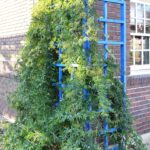
Liana (Climbing Vine) Passiflora caerulea [Blue Passionflower] This is one of the hardiest passion flowers, dying back in colder climates, but hardy to 10 degrees F. (It is suspected that the specimen at Purdue University in West Lafayette, IN (USDA zone 5a), is kept alive in the winter by the heat radiated from the greenhouses and building it is planted near.) Plant is evergreen in tropical environments. Extraordinary flowers and tasty, edible fruits (passion fruit). Prefers loose sandy or gravelly soil that…
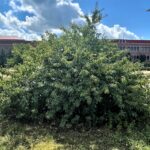
Shrub/Tree Indiana Native Prunus americana [American Red Plum] Common shrub or small tree, often forming large colonies along roadsides, in waste areas, and other uncultivated habitats.
Tree Prunus cerasifera [Cherry Plum] This tree is not pollution tolerant and is short-lived, often living to only about 20 years. There are numerous diseases and pests that can affect Prunus cerasifera, especially canker, fireblight, leaf spots, powdery mildew, aphids, scale, borers, and tent caterpillars. Despite its drawbacks, this tree is extraordinarily popular and has been used extensively in the landscape. The straight species Prunus cerasifera is not often seen, with purple-leaf forms being the most predominant.
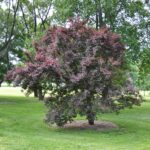
Tree Prunus cerasifera 'Atropurpurea' [Purple Cherry Plum] This tree is not pollution tolerant and is short-lived, often living to only about 20 years. There are numerous diseases and pests that can affect Prunus cerasifera, especially canker, fireblight, leaf spots, powdery mildew, aphids, scale, borers, and tent caterpillars. Despite its drawbacks, this tree is extraordinarily popular and has been used extensively in the landscape. The straight species Prunus cerasifera is not often seen, with purple-leaf forms, such as 'Atropurpurea' being the most predominant.…