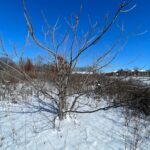
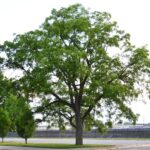
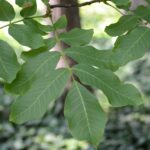
Tree Indiana Native Juglans cinerea [Butternut] Juglans cinera is a large, rounded tree similar to, but overall smaller than the Black Walnut (Juglans nigra). It is not commonly grown for ornamental purposes. The nut, once one is able to crack the hard shell, is edible, sweet, oily, and buttery. Long tap root makes transplanting difficult. This species is valued for its wood and between overharvesting and losses from Butternut Canker (Sirococcus clavigignenti-juglandacearum), this species has become rare in its native habitat.
Tree Indiana Native Juglans nigra [Black Walnut] Nuts are a serious litter problem, staining sidewalks and driveways. Juglone (found in leaf litter and possibly roots) is toxic to many plants, like tomatoes, blackberries, red pines, and many others. Black Walnut wood is valuable and has a variety of commercial uses, especially for furniture.
Tree Juglans regia [Persian Walnut] Juglans regia is a large, rounded, spreading tree that produces the walnuts frequently seen in stores. It may take up to 20 years for this tree to become mature enough to produce a decent-sized crop of nuts. Long tap root makes transplanting difficult.
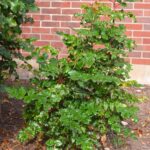
Shrub Mahonia aquifolium [Oregon Grapeholly] Widely adapted to soil type and environment, except high pH soils that will cause chlorosis. Quite susceptible to winter-burn. Do not plant in sites exposed to strong winds or afternoon sun in winter. Can get leggy with age. Fruits are edible and can be used in jellies.
Tree Malus × 'Branzam' [sold as Brandywine®] [Brandywine Flowering Crabapple] The Flowering Crabapple is a popular small ornamental tree with an extremely showy flower display in the spring. 'Branzam', commonly sold as Brandywine, is a vigorous variant that produces an abundance of fragrant, double pink flowers and large yellowish-green, edible fruits that can be used in jellies. It is moderately susceptible to apple scab and severely susceptible to cedar-apple rust, but has high resistance to Japanese beetles. Tends to flower and fruit in alternate years.…
Tree Malus × 'Dolgo' [Dolgo Flowering Crabapple] The Flowering Crabapple is a popular small ornamental tree with an extremely showy flower display in the spring. 'Dolgo' is a large, vigorous, early blooming cultivar that is resistant to many crabapple diseases, but is slightly susceptible to apple scab, fireblight, and leaf spot. Fruits are edible and can be used in jellies, but they also attract birds. Tends to flower and fruit in alternate years. Well-drained heavy loam soils and full sun promote best…
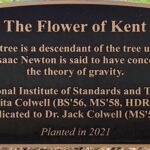
Tree Malus domestica 'Flower of Kent' [The Flower of Kent] Also known as Isaac Newton's Apple Tree, Flower of Kent is a descendent of the original apple tree that was said to inspire Sir Isaac Newton's theory of gravity.
Tree Malus domestica 'Williams’ Pride' [Williams' Pride Apple] 'Williams' Pride' was developed as an early ripening dessert apple by cooperative breeding programs at the agricultural experiment stations of Indiana, Illinois, and New Jersey (PRI: Purdue University, Rutgers University, and University of Illinois). This vigorous tree is an annual bloomer and fruiter that produces an abundance of white flowers, which are followed by dark red apples. 'Williams' Pride' has excellent resistance against apple scab and cedar-apple rust and good to moderate resistance against fireblight…
Tree Malus × 'Ellen Gerhart' [Ellen Gerhart Flowering Crabapple] The Flowering Crabapple is a popular small ornamental tree with an extremely showy flower display in the spring. 'Ellen Gerhart' is a cultivar that has single to semi-double blossoms, but it is not suggested for use in the landscape due to its severe susceptibility to apple scab. However, it has generally good resistance to other pests and diseases that can affect crabapples, such as fireblight, Japanese beetles, leaf spot, cedar-apple rust, and powdery mildew. Fruits…
Tree Malus × 'Ralph Shay' [Ralph Shay Flowering Crabapple] The Flowering Crabapple is a popular small ornamental tree with an extremely showy flower display in the spring. This vigorous cultivar is named in honor of Purdue University plant physiologist Ralph Shay (1918-1981) who was head of the Department of Botany & Plant Pathology from 1954-1966. This tree has attractive white flowers followed by exceptionally large, long persisting, bright red fruits that can be used in jellies or preserves. 'Ralph Shay' has slight susceptibility to…