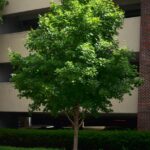
Tree Acer × freemanii 'Celzam' [sold as Celebration®] [Celebration Freeman Maple] 'Celzam' has a classic upright form with uniform growth, making for a great specimen tree in the landscape. This plant, like most Freeman hybrids, is generally seedless and is also known for its fall color. In early October, 'Celzam' becomes a brilliant red and then slowly changes to gold by late October.
Tree Acer × freemanii 'Marmo' [Marmo Freeman Maple] The Marmo Maple has similar characteristics to its Silver Maple parent, more so than to its Red Maple parent. This cultivar produces staminate flowers, and therefore is seedless. 'Marmo' fall color ranges from reds to greens. Once established, it becomes tolerant to most pests and disease.
Tree Acer × freemanii 'Scarsen' [sold as Scarlet Sentinel®] [Scarlet Sentinel Freeman Maple] This cultivar is a cross between the Red Maple and the Silver Maple, though it's leaves and bark more closely resemble the Silver Maple. It is one of the most adapted maples for southern regions of the country. 'Scarsen' is known for its colorful yellow-orange to orange-red fall foliage and columnar growth form.
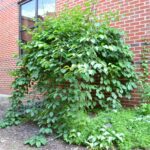
Liana (Climbing Vine) Actinidia arguta [Bower Actinidia] Requires a strong support. Dioecious. Flesh, seed, and fuzzless skin of fruit is edible, and has high vitamin C content. Rampant growth needs pruning. Japanese beetles have some attraction to the foliage.
Tree InvasiveThis plant is considered invasive Ailanthus altissima [Tree of Heaven] Unusual form and texture not unlike a large sumac. Highly adaptable. Tolerates salt spray. Dioecious. Coarse and inclined to drop twigs. Male flowers are malodorous; female plants make many weed seedlings. Ailanthus altissima forms dense, clonal thickets which displace native species and can rapidly invade fields, meadows, and harvested forests. This invasive tree species is extremely tolerant of poor soil conditions and can even grow in cement cracks. Ailanthus altissima is not shade tolerant, but…
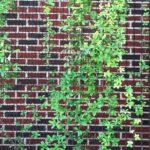
Liana (Climbing Vine) Akebia quinata [Fiveleaf Akebia] Fiveleaf Akebia is a vigorous vine that establishes quickly under many different conditions, even to the point of invading an area. Prune to keep this plant within its boundaries. Best used to climb up structures, but can also be used as a sprawling groundcover. Although generally deciduous, Akebia quinata can be evergreen in the south.
Tree Albizia julibrissin [Albizia] Albizia julibrissin is known for its attractive, "pom-pom" like flowers that begin in late spring and last through the summer. The interesting effect of the flowers is due to the the over 1" long pink stamens. This plant is not an ideal landscape choice due to its susceptibility to many pests and diseases, including vascular wilt disease (Fusarium).
Liana (Climbing Vine) Allamanda cathartica [Golden Trumpet] Can be grown as a small shrub if pruned regularly. Quite tolerant of many soil types. Full sun needed for maximum flower show. All Allamandas are poisonous. Caterpillars and mites can be problematic. Not salt tolerant. 'Hendersonii' is most often planted, while 'Yellow Butterflies' is compact with many large yellow flowers.
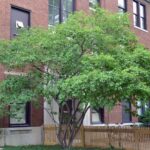
Tree Indiana Native Amelanchier laevis [Allegheny Serviceberry] An excellent small tree for naturalizing and for very early, but short-lived, bloom. Fruits are edible and a prime source of food for birds. Can produce fruit by apomixis. Subject to the troubles of Rosaceous plants in general, including fire-blight and mites, which can be controlled, usually quite easily.
Tree Amelanchier laevis 'JFS-Arb' [sold as Spring Flurry®] [Spring Flurry Allegheny Serviceberry] An excellent tree for naturalizing and for very early, but short-lived, bloom, the Spring Flurry Allegheny Serviceberry has an upright form and grows larger than the species type, up to 35 feet tall. Fruits are edible and a prime source of food for birds. Subject to the troubles of Rosaceous plants in general, including fire-blight and mites, which can be controlled, usually quite easily.