Shrub/Tree Chamaecyparis obtusa 'Filicoides' [Fernspray Hinoki Falsecypress] Chamaecyparis obtusa 'Filicoides' is a slow-growing, irregularly-branched, open shrub or small tree that has straggly branches with clusters of fernspray foliage. This plant grows well in average soils, as long as they are well-drained. Provide shelter from the wind.
Shrub Chamaecyparis pisifera 'Filifera' [Threadleaf Sawara Falsecypress] The Threadleaf Sawara Falsecypress has very fine-textured, drooping foliage and branches. While this slow-growing plant may eventually reach 15' tall, it will likely take well over 15 years to reach that point. 'Filifera' can grow in average soils, as long as they are well-drained. Provide shelter from the wind.
Tree Chamaecyparis pisifera 'Filifera Aurea' [Golden Threadleaf Sawara Falsecypress] The Golden Threadleaf Sawara Falsecypress has distinctly yellow, very fine-textured, drooping foliage and branches. While this slow-growing plant may eventually reach 15-20' tall, it will likely take well over 20 years to reach that point. 'Filifera Aurea' can grow in average soils, as long as they are well-drained. Provide shelter from the wind.
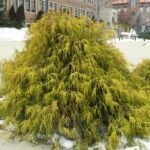
Shrub Chamaecyparis pisifera 'Golden Mop' [Golden Mop Japanese Falsecypress] An attention-grabbing plant, Chamaecyparis pisifera 'Golden Mop' is a compact, dwarf cultivar of the Sawara Falsecypress. It has bright yellow, drooping, thread-like foliage that retains its color well throughout the year. For best color, place is full sun. A slow grower, this plant can reach up to 5' tall and wide at maturity, but it can take over a decade to reach that point. 'Golden Mop' can grow in average soils, as long as they…
Shrub/Tree Cornus mas [Cornelian Cherry Dogwood] Large multi-stemmed shrub or small tree of oval rounded outline, usually branching to the ground. Small yellow flowers are beautiful when borne in mass in the spring. No serious disease problems. Sometimes it suckers abundantly, and these suckers should be removed to control spread; this is especially important if maintaining this plant in tree form.
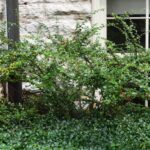
Shrub Cotoneaster divaricatus [Spreading Cotoneaster] One of the most ornamental and trouble-free of the cotoneasters, although subject to the troubles of Rosaceous plants on occasion. These include lacebugs, scale, mites, and fireblight, but they are not usually a serious problem.
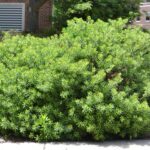
Shrub Daphne × burkwoodii 'Carol Mackie' [Variegated Burkwood Daphne] Requires excellent drainage, relatively low fertility, and consistent moisture. Best in a cool site, on soil with pH near neutral, in partial shade to full sun. Notably difficult to transplant. Sometimes dies suddenly with no warning signs. 'Carol Mackie' is more vigorous than the species type.
Shrub/Tree Euonymus europaeus [Common Spindle Tree] Euonymus europaeus is an adaptable small tree (sometimes large shrub) that can spread and become invasive. The Common Spindle Tree's primary ornamental interest is its attractive and interesting fruits in the fall. Unfortunately, this tree can otherwise be quite unattractive, irregular, and spindley.
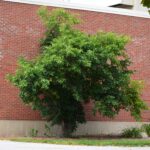
Shrub/Tree Euonymus planipes [Siberian Spindletree] The Siberian Spindletree is a large shrub (or sometimes small tree) that has showy 4-lobed, crimson fruits appearng in late summer followed by handsome red fall color. Plant can be affected by scale.
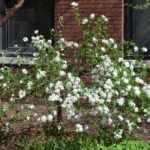
Shrub Exochorda racemosa [Common Pearlbush] The Common Pearlbush is lovely in the spring time with its abundance of beautiful, white flowers, but is unfortunately a rather non-descript shrub during the rest of the year. It is a tough plant, able to withstand both heat and drought. The common name refers to the round, pearl-like white flower buds.