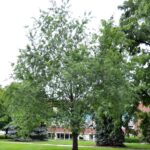
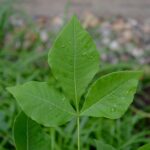
Tree Indiana Native Audio Recording AvailableID That Tree Video AvailablePurdue Plant Doctor Available Quercus imbricaria [Shingle Oak] Somewhat tolerant of city conditions. Can be pruned into a hedge. Leaves persist into winter after the normal leaf-raking period and then fall. Oak gall is susceptible, but it is a minor problem. Unlike its relatives, the shingle oak's leaves do not feature any lobes and have a complete margin. Indiana NativeAudio Recording AvailableID That Tree Video AvailablePurdue Plant Doctor Available
Tree Indiana Native Audio Recording AvailableID That Tree Video AvailablePurdue Plant Doctor Available Quercus lyrata [Overcup Oak] The Overcup Oak is a medium-sized oak with an oval crown and lower branches that sweep upward. This species thrives in lowlands and bottomlands and can tolerate extended flooding. The common name is derived from its acorn, which can be nearly 3/4 "cupped" by the cap. Acorns generally aren't produced until the tree is around 25-30 years old. Indiana NativeAudio Recording AvailableID That Tree Video AvailablePurdue Plant Doctor Available
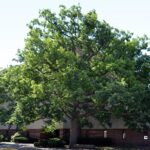
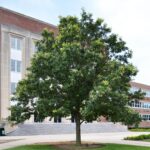
Tree Indiana Native Audio Recording AvailableID That Tree Video AvailablePurdue Plant Doctor Available Quercus macrocarpa [Bur Oak] More tolerant of city conditions than most oaks. Perhaps too large for a typical residential landscape when mature. Indiana NativeAudio Recording AvailableID That Tree Video AvailablePurdue Plant Doctor Available
Tree Indiana Native Audio Recording AvailableID That Tree Video AvailablePurdue Plant Doctor Available Quercus marilandica [Blackjack Oak] The Blackjack Oak is a small to medium sized tree with distinct, stout, irregular branches. It is very tolerant of poor, dry conditions, but does not tolerate wet conditions. This oak's common name is in reference to its dark, blackjack-like leaves. Indiana NativeAudio Recording AvailableID That Tree Video AvailablePurdue Plant Doctor Available
Tree Indiana Native Audio Recording AvailablePurdue Plant Doctor Available Quercus michauxii [Swamp Chestnut Oak] Similar to Quercus montana but obtains a larger ultimate size and is found in moister soils. Common in low areas, river bottoms, swamp borders and ravines. It gained its common name of "Basket Oak" from the baskets created from its wood, and the common name "Cow Oak" from the sweet, edible acorns relished by cows. Indiana NativeAudio Recording AvailablePurdue Plant Doctor Available
Tree Indiana Native Audio Recording AvailableID That Tree Video AvailablePurdue Plant Doctor Available Quercus montana [Chestnut Oak] Naturally grows in rocky places and poor, dry sites. Dislikes poor drainage. Bark has the highest tannin content of any Quercus species. Indiana NativeAudio Recording AvailableID That Tree Video AvailablePurdue Plant Doctor Available
Tree Indiana Native Audio Recording AvailableID That Tree Video AvailablePurdue Plant Doctor Available Quercus muehlenbergii [Chinquapin Oak] More tolerant of city conditions than most oaks. Indiana NativeAudio Recording AvailableID That Tree Video AvailablePurdue Plant Doctor Available
Tree Indiana Native Audio Recording AvailableID That Tree Video AvailablePurdue Plant Doctor Available Quercus pagoda [Cherrybark Oak] Generally only hardy up to zone 6, this oak is larger than the closely related Southern Red Oak (Quercus falcata) and prefers wetter sites. It is native to southeastern regions of the United States and naturally grows as far north as southern Indiana and Illinois. Indiana NativeAudio Recording AvailableID That Tree Video AvailablePurdue Plant Doctor Available
Tree Indiana Native Audio Recording AvailableID That Tree Video AvailablePurdue Plant Doctor Available Quercus palustris [Pin Oak] Handsome tree, distinctive for its regular branching, spreading to horizontal to pendulous, from top to bottom of the tree. This effect is partly lost when lower limbs must be removed for traffic underneath. Requires an acidic soil and is subject to severe iron chlorosis on calcareous soils. This can be corrected but it means additional maintenance. Indiana NativeAudio Recording AvailableID That Tree Video AvailablePurdue Plant Doctor Available
Tree Indiana Native Audio Recording AvailablePurdue Plant Doctor Available Quercus phellos [Willow Oak] Somewhat tolerant of city conditions. Oak wilt and scales, and many other oak tree pests, though none considered very serious. Low maintenance, long-lived tree. Use Northern sources in Indiana. Indiana NativeAudio Recording AvailablePurdue Plant Doctor Available