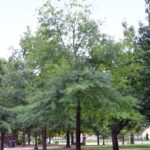
Tree Indiana Native Audio Recording AvailablePurdue Plant Doctor Available Quercus phellos [Willow Oak] Somewhat tolerant of city conditions. Oak wilt and scales, and many other oak tree pests, though none considered very serious. Low maintenance, long-lived tree. Use Northern sources in Indiana. Indiana NativeAudio Recording AvailablePurdue Plant Doctor Available
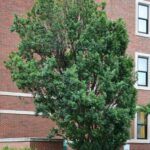
Tree Audio Recording AvailablePurdue Plant Doctor Available Quercus robur 'Fastigiata' [Columnar English Oak] The tightly columnar 'Fastigiata' provides a strong vertical accent, and is far more popular in the Midwest than the straight species. Powdery mildew on the leaves can be a significant problem. Seed propagated 80-90% true to type, thus variation can also be a problem. Audio Recording AvailablePurdue Plant Doctor Available
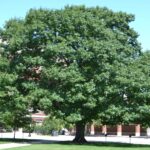
Tree Indiana Native Audio Recording AvailableID That Tree Video AvailablePurdue Plant Doctor Available Quercus rubra [Northern Red Oak] One of the best and most reliable of oaks as a shade or street tree. More vigorous and fast-growing than most oaks. Good street tree since it performs reasonably well in small soil volumes (although it tends to branch close to ground). Oak wilt disease has been troublesome in certain areas of the Midwest. Hybridizes easily with other oaks (be careful of source). Indiana NativeAudio Recording AvailableID That Tree Video AvailablePurdue Plant Doctor Available
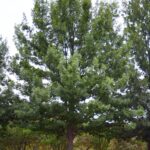
Tree Indiana Native Audio Recording AvailableID That Tree Video AvailablePurdue Plant Doctor Available Quercus shumardii [Shumard Oak] The Shumard Oak is a handsome tree that is drought and air pollution tolerant, and but can also be used in rain gardens. Transplanting and establishment can be difficult. Indiana NativeAudio Recording AvailableID That Tree Video AvailablePurdue Plant Doctor Available
Tree Indiana Native Audio Recording AvailableID That Tree Video AvailablePurdue Plant Doctor Available Quercus velutina [Black Oak] Quercus velutina is a large, deciduous oak with an irregular canopy. It is closely related to Q. rubra (Red Oak), which it is known to hybridize with. The interesting bark of the Q. velutina is nearly black and furrowed. Transplanting is made difficult by the long tap root. Not generally sold commercially. Indiana NativeAudio Recording AvailableID That Tree Video AvailablePurdue Plant Doctor Available
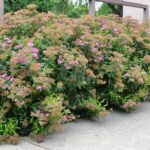
Shrub Audio Recording AvailablePurdue Plant Doctor Available Spiraea × bumalda [Bumald Spirea] Flowers heavily in June (on new growth) and then continues intermittently through August. Annual pruning results in better foliage and flower effect. Tolerant of widely different soils and exposures, but tends to do best in full sun with adequate moisture and a pH of 6.0-7.5. Avoid very wet sites. Audio Recording AvailablePurdue Plant Doctor Available
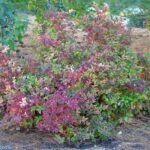
Shrub Purdue Plant Doctor Available Spiraea × bumalda 'Anthony Waterer' [Anthony Waterer Bumald Spirea] 'Anthony Waterer' Japanese Spirea is a cultivar of Spiraea japonica that originated from the original cultivar of Spiraea x bumalda (hybrid of S. albiflora and S. japonica), as many other cultivars of Spiraea. This condensed shrub reached 3 to 4' in height and roughly 4-5' in width at maturity. Flowers reach 4 to 6" in diameter, flat topped, deep carmine-pink inflorescences that bloom through the summer months. New leaves emerge a rusty-brown and change to… Purdue Plant Doctor Available
Shrub Purdue Plant Doctor Available Spiraea japonica [Japanese Spirea] Flowers heavily in June (on new growth) and then continues intermittently through August. Annual pruning results in better foliage and flower effect. Tolerant of widely different soils and exposures, but tends to do best in full sun with adequate moisture and a pH of 6.0-7.5. Avoid very wet sites. Purdue Plant Doctor Available
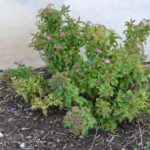
Shrub Purdue Plant Doctor Available Spiraea japonica 'Dolchica' [Dolchica Japanese Spirea] 'Dolchica' has deep pink flowers and interesting crinkled and cutleaf foliage. Flowers heavily in June (on new growth) and then continues intermittently through August. Annual pruning results in better foliage and flower effect. Tolerant of widely different soils and exposures, but tends to do best in full sun with adequate moisture and a pH of 6.0-7.5. Avoid very wet sites. Purdue Plant Doctor Available
Shrub Purdue Plant Doctor Available Spiraea japonica 'Genpei' [Genpei Japanese Spirea] 'Genpei' (also seen sold as 'Shirobana' and 'Shibori') is an excellent, mounded cultivar that produces flower clusters that can be pink, deep rose, or white, or a combination. Flowers heavily in June (on new growth), and then continues intermittently through August. Annual pruning results in better foliage and flower effect. Tolerant of widely different soils and exposures, but tends to do best in full sun with adequate moisture and a pH of 6.0-7.5. Avoid very… Purdue Plant Doctor Available