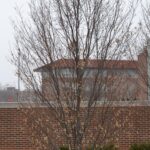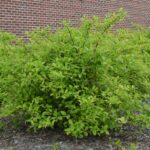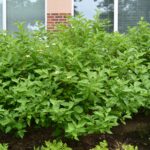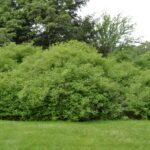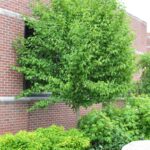
Tree Carpinus betulus 'Frans Fontaine' [Columnar European Hornbeam] Carpinus betulus is relatively trouble-free and tolerates a wide range of soil conditions and some shade. This plant is also very tolerant of heavy pruning, making it useful as a hedge. The cultivar 'Frans Fontaine' is a tight, narrow, columnar cultivar with densely set branches and leaves. Over time this cultivar retains its fastigiate form better than the similar cultivar 'Fastigiata'.
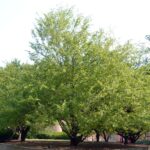
Tree Indiana Native Carpinus caroliniana [American Hornbeam] A clean, trouble-free small tree, useful in intensive situations such as patios and malls, and equally interesting in naturalized plantings. Useful as a large hedge if coppiced when young. Performs well in heavy shade and tolerates periodic flooding. Difficult to transplant. Move balled-and-burlapped for best results. Sometimes called Blue Beech and Ironwood (although these are best not used).
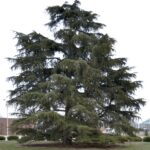
Tree Cedrus libani ssp. stenocoma 'Purdue Hardy' [Cedar of Lebanon] Widely adaptable, the Cedar of Lebanon was considered hardy from Zone 7 southward until hardy strains were imported from higher elevations in Asia Minor, beginning with the Arnold Arboretum expedition in 1903. The Cedar of Lebanon prefers pollution-free, open, and sunny areas. It is difficult to transplant and is not tolerant of air pollution or shade. This tree is also very difficult to propagate from cuttings (i.e. asexually). It is the most cold-hardy of the…
Shrub/Tree Chamaecyparis obtusa 'Filicoides' [Fernspray Hinoki Falsecypress] Chamaecyparis obtusa 'Filicoides' is a slow-growing, irregularly-branched, open shrub or small tree that has straggly branches with clusters of fernspray foliage. This plant grows well in average soils, as long as they are well-drained. Provide shelter from the wind.
Tree Chamaecyparis pisifera [Sawara Falsecypress] The species and full-size variants are often used as "quick" foundation and corner plantings, and just as quickly outgrow these situations. These variants should be grown as trees, and the dwarf variants used in more intensive situations. Numerous brown needles and branchlets are retained, and not especially attractive. This species requires good drainage and does not tolerate wet soils. Provide shelter from the wind.
Shrub Indiana Native Clethra alnifolia [Summersweet Clethra] Spreads by underground stems to make large clumps, but can be restrained when necessary. Can be badly infested with mites, especially on dry soils. Can suffer in full sun and/or dry soils, but can bloom well in shade.
Shrub Cornus alba [Tatarian Dogwood] Grows well in a variety of situations, including wet soil. Easy to transplant. Relatively trouble-free. A three-year pruning cycle improves form, vigor, and winter stem color effect. Cutting all stems 6-12" from ground in late winter has similar effect. Best in mass plantings. Excellent for winter color. Leaf blight can be a problem.
Shrub Indiana Native Cornus amomum [Silky Dogwood] Easy to transplant. Relatively trouble-free. A three-year pruning cycle improves form, vigor, and winter stem color effect. Cutting all stems 6-12" from ground in late winter has similar effect. Best in mass plantings. Excellent for winter color. Scale and leaf spot can be a problem. Can appear a bit coarse in the landscape.
Shrub/Tree Cornus mas [Cornelian Cherry Dogwood] Large multi-stemmed shrub or small tree of oval rounded outline, usually branching to the ground. Small yellow flowers are beautiful when borne in mass in the spring. No serious disease problems. Sometimes it suckers abundantly, and these suckers should be removed to control spread; this is especially important if maintaining this plant in tree form.
Shrub/Tree Cornus officinalis [Japanese Cornel Dogwood] The Japanese Cornel Dogwood is a large multi-stemmed shrub or small tree of oval rounded outline, usually branching to the ground. No serious disease problems, although it sometimes suckers abundantly. These suckers should be removed to control spread; this is especially important if maintaining this plant in tree form. Closely related to Cornus mas, but tends to have more attractive bark, is more open in habit, flowers one to two weeks earlier, and is slightly…