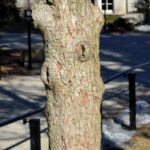
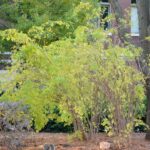
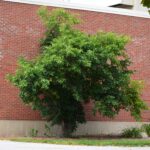
Tree Crataegus × 'Vaughn' [Vaughn Hawthorn] This small tree is a hybrid of Crataegus crusgalli x C. phaenopyrum. It is generally grown for its fragrant clusters of white flowers in the spring and prolifically produced red fruits that persist into winter. Due to its numerous thorns, it is best used in areas with low traffic. Highly susceptible to rust.
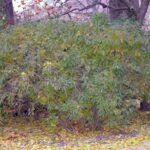
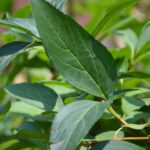
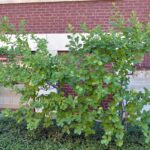
Shrub Eleutherococcus sieboldianus [Fiveleaf Aralia] Tolerates a wide range of soil and environmental conditions, including dry city conditions and shade. Little seasonal interest other than foliage, but extremely durable shrub. Prickles on stems can make pruning difficult. In poor sites, renewal pruning can improve form. In rich organic soils, renewal pruning can lead to rank growth. Usually dioecious.
Shrub Eleutherococcus sieboldianus 'Variegatus' [Variegated Aralia] This cultivar has attractive, creamy variegated foliage and is more compact than the straight species. Tolerates a wide range of soil and environmental conditions, including dry city conditions and shade. Prickles on stems can make pruning difficult. In poor sites, renewal pruning can improve form. In rich organic soils, renewal pruning can lead to rank growth. Usually dioecious.
Shrub/Tree Euonymus europaeus [Common Spindle Tree] Euonymus europaeus is an adaptable small tree (sometimes large shrub) that can spread and become invasive. The Common Spindle Tree's primary ornamental interest is its attractive and interesting fruits in the fall. Unfortunately, this tree can otherwise be quite unattractive, irregular, and spindley.
Shrub/Tree Euonymus planipes [Siberian Spindletree] The Siberian Spindletree is a large shrub (or sometimes small tree) that has showy 4-lobed, crimson fruits appearng in late summer followed by handsome red fall color. Plant can be affected by scale.
Shrub Forsythia × intermedia [Border Forsythia] The most showy forsythia cultivars are found in this vigorous and adaptable hybrid species. Cut stems excised in mid-winter will flower indoors due to very short chilling requirement. Hardy to USDA Zone 4 for vegetative parts and USDA 5(6) for flowers. Flower buds are killed by severe winters in zone 5, and frequently in colder zones. Plants, however, are hardy in Zone 4. Too big for most foundations and small border plantings (Don't Shear!). Remove…
Shrub Forsythia × intermedia 'Karl Sax' [Karl Sax Border Forsythia] The Karl Sax Border Forsythia is a dense shrub that bears its dark yellow flowers horizontally. Flower buds are more cold hardy than many Forsythia variants, but flower buds can be killed by severe winters in zone 5, and frequently in colder zones. Plants, however, are hardy in Zone 4. Cut stems excised in mid-winter will flower indoors due to very short chilling requirement. Too big for most foundations and small border plantings (Don't Shear!).…
Shrub/Tree Frangula alnus [Glossy Buckthorn] Rhamnus frangula is very weedy (invasive in some areas) and adaptable, and generally has an unattractive, leggy habit. Birds love the fruits and spread the seeds. This species is not recommended for use in the landscape.
Shrub Hamamelis × intermedia 'Sunburst' [Sunburst Witchhazel] The Sunburst Witchhazel is a large, vase-shaped deciduous shrub that produces a profusion of interesting, strap-like lemon-yellow and red flowers in mid to late winter.
Shrub/Tree Hamamelis vernalis [Vernal Witchhazel] Earliest blooming shrub for the Midwest. Good as a neutral filler for the border with quiet seasonal interest. More pH tolerant than Hamamelis virginiana. Should not be pruned (tip pinching would be acceptable to direct growth). Not as showy in bloom as Hamamelis mollis, the Chinese Witchhazel, or its hybrids.