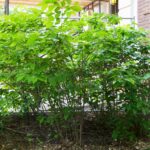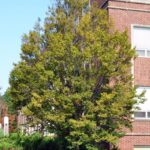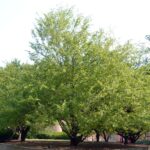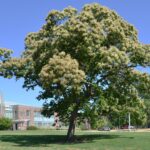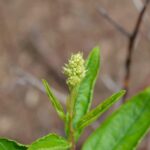
Shrub Calycanthus floridus [Common Sweetshrub] The Common Sweetshrub was one of the first native plants in the US used as an ornamental. Widely adapted to soil and sun or shade. Certain selections can permeate an area with fragrance. Can be forced for indoor fragrance. Not all plants have equally fragrant flowers; don't use seed propagated plants for that reason. Seeds are poisonous, causing convulsions, myocardial depression, and hypotension.
Tree Carnegiea gigantea [Saguaro] Arms form only after the plant reaches 50 or 60 years old. Plants may live 200 years. The ribs expand or contract depending on the amount of water being stored. Found mostly on gravelly slopes. Gila woodpeckers make their homes in the trunk. Young plants need protection from sun. Transplant readily but more difficult with older plants. State flower of Arizona. Protected. Must be transplanted from construction site. Transplant with same orientation to sun as…
Tree Carpinus betulus 'Columnaris' [Columnar European Hornbeam] Carpinus betulus is relatively trouble-free and tolerates a wide range of soil conditions and some shade. This plant is also very tolerant of heavy pruning, making it useful as a hedge. The cultivar 'Columnaris' is a narrow, columnar cultivar that is slow-growing with densely set branches and leaves.
Tree Indiana Native Carpinus caroliniana [American Hornbeam] A clean, trouble-free small tree, useful in intensive situations such as patios and malls, and equally interesting in naturalized plantings. Useful as a large hedge if coppiced when young. Performs well in heavy shade and tolerates periodic flooding. Difficult to transplant. Move balled-and-burlapped for best results. Sometimes called Blue Beech and Ironwood (although these are best not used).
Tree Carpinus caroliniana 'CCSQU' [sold as Palisade®™] [Palisade®] Palisade is an upright, narrow, oval habit cultivar that is noted for its strongly ascending branches. Its dark green leaves changes to a soft golden color in the fall. A clean, trouble-free small tree, useful in intensive situations such as patios and malls, and equally interesting in naturalized plantings. Useful as a large hedge if coppiced when young. Performs well in heavy shade and tolerates periodic flooding. Difficult to transplant. Move balled-and-burlapped for best results.
Tree Castanea mollissima [Chinese Chestnut] Overall tough and durable, but can be susceptible to blight, twig canker, and orient chestnut wasp. Also susceptible to weevils, which damages the roots. Prefers well-drained, loamy soils, full sun, and hot, arid conditions.
Shrub Indiana Native Ceanothus americanus [New Jersey Tea] New Jersey Tea is a native prairie plant that has thick, deep-reaching, red roots (which can even grow up to 8" in diameter), making it very drought tolerant, but also difficult to transplant. This small, compact shrub is able to fix atmospheric nitrogen and is quite adaptable, not only tolerating drought, but different soil types as well. It is even capable of growing in sandy and rocky soils. The leaves of New Jersey Tea were…
Tree Cedrus atlantica 'Glauca Pendula' [Weeping Blue Atlas Cedar] Cedrus atlantica 'Glauca Pendula' is an interesting and beautiful plant with distinctly blue foliage. The habit of this weeping cultivar is determined by training. If left alone and unsupported, the central leader will weep gracefully downwards, but the central leader can also be staked to create a more upright form with cascading branches coming from a straight trunk. Either method produces a quality specimen plant for the landscape. This plant should be moved balled and…
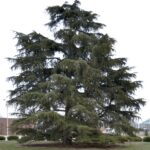
Tree Cedrus libani ssp. stenocoma 'Purdue Hardy' [Cedar of Lebanon] Widely adaptable, the Cedar of Lebanon was considered hardy from Zone 7 southward until hardy strains were imported from higher elevations in Asia Minor, beginning with the Arnold Arboretum expedition in 1903. The Cedar of Lebanon prefers pollution-free, open, and sunny areas. It is difficult to transplant and is not tolerant of air pollution or shade. This tree is also very difficult to propagate from cuttings (i.e. asexually). It is the most cold-hardy of the…
Shrub/Tree Chamaecyparis obtusa 'Filicoides' [Fernspray Hinoki Falsecypress] Chamaecyparis obtusa 'Filicoides' is a slow-growing, irregularly-branched, open shrub or small tree that has straggly branches with clusters of fernspray foliage. This plant grows well in average soils, as long as they are well-drained. Provide shelter from the wind.