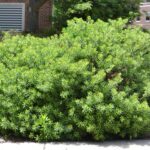
Shrub Cotoneaster apiculatus [Cranberry Cotoneaster] An excellent groundcover for full sun in almost any soil, except that weeds encroach easily for the first few years. Use effective mulch. Subject to damage from fireblight occasionally, and from mites, especially in dry situations. Not tolerant of wet sites. Collects litter and leaves (in the fall), which are difficult to rake out.
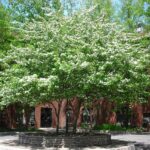
Tree Indiana Native Crataegus crus-galli [Cockspur Hawthorn] The strong horizontal branching is good for softening vertical lines of buildings. The 2-3" thorns can be dangerous, especially around children. Although attractive, some find the small, white flowers malodorous. Fireblight, leaf spot, and cedar-hawthorn rust are among the worst problems to affect this species. Japanese beetles like to feed on hawthorns.
Tree Indiana Native Crataegus mollis [Downy Hawthorn] Quite susceptible to cedar-hawthorn rust, with leaves heavily spotted with orange in some years. Rust limits usage in many areas. Large fruit pose a maintenance issue when they drop.
Tree Indiana Native Crataegus phaenopyrum [Washington Hawthorn] One of the finest small trees for winter color. The 1-3" thorns can be dangerous, especially around children. Fireblight, leaf spot, and cedar-hawthorn rust are among the worst problems, although more trouble-free than many hawthorns. Japanese beetles like to feed on hawthorns.
Tree Indiana Native Crataegus viridis [Green Hawthorn] An attractive small tree with beautiful white flower corymbs and bright red persistent fruits. Very adaptable, although leaves are often badly infected by rust so that the entire plant appears to be suffering from the measles.
Tree Crataegus viridis 'Winter King' [Winter King Green Hawthorn] An attractive, nearly thornless vase-shaped small tree with beautiful white flower corymbs and large, bright red persistent fruits. This cultivar was discovered in a fence row by Bob Simpson in Vincennes, Indiana. Very adaptable, although leaves are often badly infected by rust so that the entire plant appears to be suffering from the measles.
Shrub Cycas revoluta [Sago Palm] Unlike what the common name suggests, the Sago Palm is not a true palm, but actually a cycad. Useful for fine planting near entranceway. Not salt tolerant. Scale, leaf spot, micronutrient deficiencies can be problems. The variety variegata has yellow-green leaf variegation patterns.
Shrub Daphne × burkwoodii 'Carol Mackie' [Variegated Burkwood Daphne] Requires excellent drainage, relatively low fertility, and consistent moisture. Best in a cool site, on soil with pH near neutral, in partial shade to full sun. Notably difficult to transplant. Sometimes dies suddenly with no warning signs. 'Carol Mackie' is more vigorous than the species type.
Shrub Indiana Native Dasiphora fruticosa [Bush Cinquefoil] Extreme hardiness and long season of bloom make this a favorite in severe climates. Low stature and tolerance of poor, dry soils give it added usefulness in other areas also. Can develop a ragged, unkept habit over time. Remove 1/3 of canes each year (3-year pruning cycle), and consider renewal pruning to a very low framework every 3-5 years if needed.
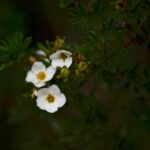
Shrub Dasiphora fruticosa 'Abbotswood' [White Bush Cinquefoil] 'Abbotswood' has beautiful, large, white flowers and an especially long blooming period. Extreme hardiness and long season of bloom make Potentilla fruticosa a favorite in severe climates. Low stature and tolerance of poor, dry soils give it added usefulness in other areas also. Can develop a ragged, unkept habit over time. Remove 1/3 of canes each year (3-year pruning cycle), and consider renewal pruning to a very low framework every 3-5 years if needed.