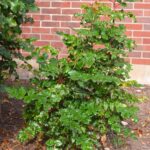
Shrub Audio Recording AvailablePurdue Plant Doctor Available Lonicera fragrantissima [Winter Honeysuckle] Widely adapted to different soils and exposures. More drought-tolerant, and also not a weed problem, like some other Lonicera. Branches can be forced indoors in winter to provide fragrance. Renewal pruning to a low framework every 5-8 years is helpful to maintain nice form and vigor. Audio Recording AvailablePurdue Plant Doctor Available
Shrub InvasiveThis plant is considered invasive Audio Recording AvailableID That Tree Video AvailablePurdue Plant Doctor Available Lonicera maackii [Amur Honeysuckle] Widely adaptable to different soils and exposures. Can be trained into a small patio tree. Suckers freely, requiring pruning in intensive situations. Seeds, carried by birds, germinate freely, and weed seedlings result. High shade tolerance contributes greatly to its highly invasive character. Perhaps the worst woody weed in the Midwestern and Northwestern US. Audio Recording AvailableID That Tree Video AvailablePurdue Plant Doctor Available
Tree Indiana Native Audio Recording AvailableID That Tree Video AvailablePurdue Plant Doctor Available Magnolia acuminata [Cucumbertree Magnolia] This tree gets it name from the cucumber-looking fruits it bears in the fall. Full sun is best, although it has tolerance for partial shade. Because the roots are thick and fleshy and grow downward more than out, it can be moderately difficult to transplant. Generally trouble-free, but scale can be a problem on occasion. This species may not be ideal for street tree plantings because of a tendency to suffer ice damage. Indiana NativeAudio Recording AvailableID That Tree Video AvailablePurdue Plant Doctor Available
Shrub Audio Recording AvailablePurdue Plant Doctor Available Mahonia aquifolium [Oregon Grapeholly] Widely adapted to soil type and environment, except high pH soils that will cause chlorosis. Quite susceptible to winter-burn. Do not plant in sites exposed to strong winds or afternoon sun in winter. Can get leggy with age. Fruits are edible and can be used in jellies. Audio Recording AvailablePurdue Plant Doctor Available
Shrub Purdue Plant Doctor Available Nandina domestica [Heavenly Bamboo] The beautiful red fruits are so prolific they can even bend down branches. Tolerates full sun or shade, even fruits well in shade. Prune by cutting canes back to ground. Develops iron chlorosis on Southwestern US due to high soil pH. 'Atropurpurea Nana' stays 2' high with reddish-green color throughout summer, turning dark red in winter. Purdue Plant Doctor Available
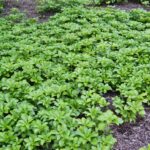
Liana (Climbing Vine) Audio Recording AvailablePurdue Plant Doctor Available Pachysandra terminalis [Japanese Spurge] Tolerates full shade, and requires at least partial shade. Does well under shallow-rooted trees with some irrigation. One of the most effective ground covers in resisting encroachment of weeds. Volutella leaf blight can be problem. Audio Recording AvailablePurdue Plant Doctor Available
Herbaceous Purdue Plant Doctor Available Pachysandra terminalis 'Green Sheen' [Green Sheen Japanese pachysandra] Purdue Plant Doctor Available
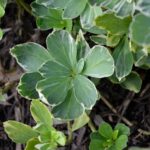
Herbaceous Audio Recording AvailablePurdue Plant Doctor Available Pachysandra terminalis 'Variegata' [Variegated Japanese Spurge] Japanese spurge is a shrubby ground cover that grows best in the shade. The plant has whorled leaves and small white flowers in early spring. This cultivar has irregular white varigation along the edges of the leaves. Audio Recording AvailablePurdue Plant Doctor Available
Shrub Purdue Plant Doctor Available Prunus laurocerasus 'Otto Luyken' [Otto Luyken Cherry Laurel] 'Otto Luyken' is a broad, compact evergreen shrub that produces numerous small, fragrant, white flowers in upright clusters in mid to late spring. This plant is shade tolerant, pH adaptable, and salt spray tolerant, but requires good drainage. Do not over fertilize. Purdue Plant Doctor Available
Shrub/Tree Indiana Native Audio Recording AvailableID That Tree Video Available Ptelea trifoliata [Hoptree] A widely adaptable species which performs best in well-drained soils, can be grown in full sun or even under heavy shade. This plant is susceptible to several leaf spot and even a rust disease, but none are serious. It's fruit can also be use as a substitute for hops, thus giving rise to one of its common name: the 'Hoptree'. This tree's bark can also be utilized for medical purposes, and its stems when bruised… Indiana NativeAudio Recording AvailableID That Tree Video Available