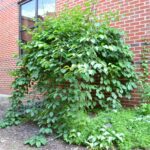
Herbaceous Actaea simplex 'Hillside Black Beauty' [sold as Hillside Black Beauty Bugbane] [Hillside Black Beauty Bugbane]
Liana (Climbing Vine) Actinidia arguta [Bower Actinidia] Requires a strong support. Dioecious. Flesh, seed, and fuzzless skin of fruit is edible, and has high vitamin C content. Rampant growth needs pruning. Japanese beetles have some attraction to the foliage.
Herbaceous Adenophora confusa 'Fairy Bells Gaudi Violet' [sold as Fairy Bells Gaudi Violet Ladybells] [Fairy Bells Gaudi Violet Ladybells]
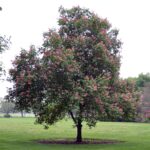
Tree Aesculus × carnea 'Briotii' [Ruby Red Horsechestnut] Has decent tolerance to drought and urban environments. Buds are not as sticky as its parent plant, Aesculus hippocastanum. Flower panicles are larger than both parent species with a rich red coloration, making it a popular tree choice in England.
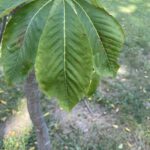
Tree Indiana Native Aesculus flava [Yellow Buckeye] The Yellow Buckeye is a large, majestic native tree that is widely adapted to soils and environments; however, very dry conditions must be avoided. Drought causes early leaf drop and leaf blotch, and leaf scorch can disfigure foliage in dry soil. That being said, this species is less prone to foliar problems than the related Aesculus glabra (Ohio Buckeye) is. Difficult to transplant once established due to long taproot. Large, abundant fruits in autumn can…
Tree Indiana Native Aesculus glabra [Ohio Buckeye] Widely adapted to soils and environments; however, very dry conditions must be avoided. Drought causes early leaf drop. Leaf blotch and leaf scorch often disfigure foliage, especially in dry soil. Spiny fruits in autumn can be troublesome underfoot, and eliminates species type as a good street tree. Fruits are toxic, containing 3-5% saponins.
Tree Aesculus hippocastanum [Common Horsechestnut] Widely adapted to soils and environments; however, very dry conditions must be avoided. Leaf blotch often disfigures foliage. Spiny fruits in autumn can be troublesome underfoot, and eliminates species type as a good street tree. Fruits are toxic containing 3-5% saponins.
Tree Aesculus hippocastanum 'Baumannii' [Baumann Common Horsechestnut] 'Baumannii' is known for its large panicles of double flowers. The flowers are sterile, so none of the large, littering, poisonous fruit of the species type are produced, increasing this tree's usability. Widely adapted to soils and environments; however, very dry conditions must be avoided. Leaf blotch often disfigures foliage.