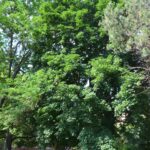
Tree InvasiveThis plant is considered invasive Acer platanoides 'Emerald Queen' [Emerald Queen Norway Maple] This cultivar has ascending branches and an oval habit. Best selection of Norway Maples for urban sites. Fast growth rate and shallow root system. Brilliant yellow in the fall. When Norway maple escapes cultivation and invades natural areas it reduces species richness and native tree regeneration by out-competing other trees and understory species for resources, creating dense shade canopies, and spreading rapidly through high seed production. It also releases toxins that reduce the growth and…
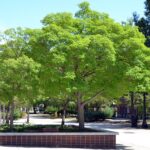
Tree Acer pseudoplatanus 'Tunpetti' [sold as Regal Petticoat™] [Regal Petticoat Sycamore Maple] This cultivar does well in urban conditions. It is highly salt tolerant and as the tree matures lower hanging branches can be removed allowing for a higher canopy that does not obstruct urban life.
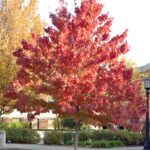
Tree Acer rubrum 'Autumn Spire' [Autumn Spire Red Maple] 'Autumn Spire' has a broad columnar form and brilliant red fall coloration. This cultivar only produces male flowers, so it is fruitless.
Tree Acer rubrum 'Bowhall' [Bowhall Red Maple] This cultivar is a great choice for wet soil areas. Its less aggressive root system makes it a better choice for a street tree. The orange-red coloration brings interest in the fall.
Tree Acer saccharum 'Fairview' [Fairview Sugar Maple] The Fairview Sugar Maple is a great choice as a shade tree and is noted for its classic Sugar Maple shape and emerald-green leaves. Does not tolerate pollution or urban conditions well.
Tree Acer tataricum ssp. ginnala 'Flame' [Flame Amur Maple] Extremely hardy small tree with interesting foliage (elongated center lobe) and colorful fruits. Widely adapted and trouble-free. Prefers sun but tolerates some shade. Good for growth in large planters. Among first trees to leaf out. Withstands heavy pruning. Can be damaged by ice stroms. Verticillium susceptible, but rare.
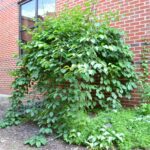
Liana (Climbing Vine) Actinidia arguta [Bower Actinidia] Requires a strong support. Dioecious. Flesh, seed, and fuzzless skin of fruit is edible, and has high vitamin C content. Rampant growth needs pruning. Japanese beetles have some attraction to the foliage.
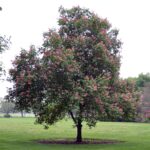
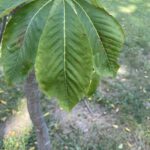
Tree Aesculus × carnea 'Briotii' [Ruby Red Horsechestnut] Has decent tolerance to drought and urban environments. Buds are not as sticky as its parent plant, Aesculus hippocastanum. Flower panicles are larger than both parent species with a rich red coloration, making it a popular tree choice in England.
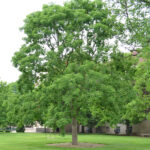
Tree Indiana Native Aesculus flava [Yellow Buckeye] The Yellow Buckeye is a large, majestic native tree that is widely adapted to soils and environments; however, very dry conditions must be avoided. Drought causes early leaf drop and leaf blotch, and leaf scorch can disfigure foliage in dry soil. That being said, this species is less prone to foliar problems than the related Aesculus glabra (Ohio Buckeye) is. Difficult to transplant once established due to long taproot. Large, abundant fruits in autumn can…
Tree Indiana Native Aesculus glabra [Ohio Buckeye] Widely adapted to soils and environments; however, very dry conditions must be avoided. Drought causes early leaf drop. Leaf blotch and leaf scorch often disfigure foliage, especially in dry soil. Spiny fruits in autumn can be troublesome underfoot, and eliminates species type as a good street tree. Fruits are toxic, containing 3-5% saponins.