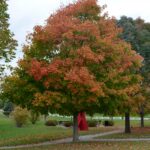
Tree Purdue Plant Doctor Available Acer saccharum 'JFS-Caddo2' [sold as Flashfire™] [Flashfire Sugar Maple] Come fall the Flashfire® Sugar Maple turns bright red before the foliage drops. The season interest does not stop there, in spring and throughout summer the foliage is glossy and dark green. Purdue Plant Doctor Available
Tree Purdue Plant Doctor Available Acer saccharum 'JFS-KW8' [Sold as Autumn Fest®] [Autumn Fest Sugar Maple] Selected for upright habit with good central leader, vigorous growth, and bright bright red fall color. Purdue Plant Doctor Available
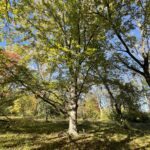
Tree Purdue Plant Doctor Available Acer saccharum 'Legacy' [Legacy Sugar Maple] The Legacy Sugar Maple is one of the most used Sugar Maple cultivars. It is known for its attractive oval form and excellent scarlet-orange fall color. Legacy is tolerant to dense shade, leaf tatter, and mild drought and is a relatively long-lived tree. Purdue Plant Doctor Available
Tree Indiana Native Audio Recording AvailableID That Tree Video AvailablePurdue Plant Doctor Available Acer saccharum ssp. nigrum [Black Maple] The Black Maple is a close relative of the Sugar Maple. Typically, Black Maples tolerate and grow in wetter soils than the Sugar Maple, but they are equally shade tolerant. Black Maples do not tolerate salts and are therefore poor street trees. This species prefers deep, uncompacted soils. Indiana NativeAudio Recording AvailableID That Tree Video AvailablePurdue Plant Doctor Available
Tree Audio Recording AvailablePurdue Plant Doctor Available Acer × freemanii 'Armstrong' [Armstrong Red Maple] The Armstrong Red Maple is a cross between Acer rubrum and Acer saccharinum and is known for its columnar habit and brilliant red to red-orange fall coloration. This species has the durability of the Silver Maple and can tolerate urban conditions. The root system is less aggressive, though, so it can be planted as a street tree. Audio Recording AvailablePurdue Plant Doctor Available
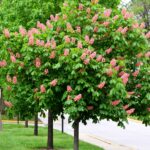
Tree Audio Recording AvailablePurdue Plant Doctor Available Aesculus × carnea 'Fort McNair' [Fort McNair Red Horsechestnut] Fort McNair Red Horsechestnut is less suscebtible to leaf scorch, leaf blotch and mildew than the straight species, although it can still contract the diseases. Does not perform well in dry sites; plant in moister soils for best growth and flowering. Flowers at an early age. Prickly fruits may be a problem underfoot. Fruits are poisonous (containing toxic saponins). Often develops branches having narrow crotch angles (branches that should be removed). Audio Recording AvailablePurdue Plant Doctor Available
Shrub Purdue Plant Doctor Available Alnus serrulata [Hazel Alder] Closely related to Alnus rugosa, differing chiefly in its leaves, which are usually broadest above the middle and have the margins set with fine, nearly regular teeth. Multi-stemmed habit and tends to sucker. Purdue Plant Doctor Available
Tree Indiana Native Audio Recording AvailableID That Tree Video AvailablePurdue Plant Doctor Available Amelanchier arborea [Downy Serviceberry] Would grow well on a streambank. Susceptible to rust, leaf blight, powdery mildew, fruit rot, leaf minor, borers, and scale. Rarely requires pruning. Indiana NativeAudio Recording AvailableID That Tree Video AvailablePurdue Plant Doctor Available
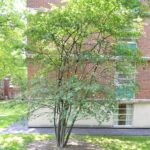
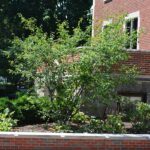
Shrub/Tree Indiana Native Audio Recording AvailablePurdue Plant Doctor Available Amelanchier canadensis [Shadblow Serviceberry] Amelanchier canadensis, the Shadblow Serviceberry, tends to be confused with Amelanchier arborea, the Downy Serviceberry, and Amelanchier laevis, the Allegheny Serviceberry. However, A. canadensis, compared to A. arborea and A. laevis, is generally much more shrub-like (often forming thickets), flowers a week later, and produces upright flower clusters (as opposed to the pendulous racemes of A. arborea and A. laevis). The Shadblow Serviceberry is excellent for woodland plantings, naturalizing, and along stream and pond banks.… Indiana NativeAudio Recording AvailablePurdue Plant Doctor Available