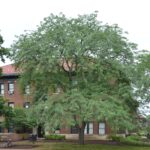
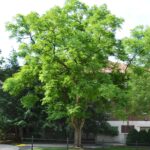
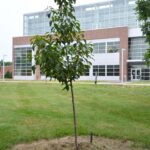
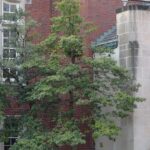
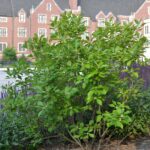
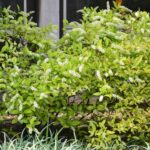
Tree Indiana Native Gymnocladus dioicus [Kentucky Coffeetree] Gymnocladus dioicus is a large deciduous tree with strong winter character from the branches and bark. Drops pods (female trees) and twigs, frequently causing litter problem, thus eliminating the straight species as a good street tree. Seeds were once used by US settlers as a coffee substitute, however pulp and seeds are toxic when not properly and completely roasted.
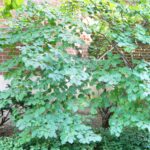
Tree Halesia carolina [Carolina Silverbell] This small tree is interesting in bloom and rather neutral otherwise, but relatively trouble free and useful in many situations as a neutral background plant, or for its flowers. Best grown as a single stem and allowed to branch low (20-30"). Does not transplant well (a particular problem with field-grown plants).
Shrub/Tree Indiana Native Hamamelis virginiana [Common Witchhazel] Flowers are in evidence because of their spicy fragrance before they are visually obvious, but are fairly showy after leaf drop. Should not be pruned (tip pinching would be acceptable to direct growth).
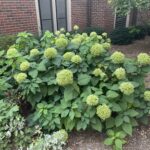
Shrub Indiana Native Hydrangea arborescens [Smooth Hydrangea] The Smooth Hydrangea is an Indiana native found along woodlands and waterways with rocky soils. The flowers of Hydrangea arborescens can be large and heavy, bending stems to the ground. Best used in a shady area or along foundations of buildings for some support. This plant often gets cut back hard to the ground in late winter to maintain a neat look and to promote vigorous flowering the following summer. Hydrangea arborescens is a fast…
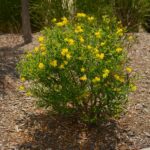
Shrub Indiana Native Hypericum prolificum [Shrubby St. John's Wort] Hypericum prolificum is a compact, rounded Indiana native shrub. The attractive bright yellow flowers, appearing in summer, are unique and crowned by a dome of many long stamens. This species can suffer in hot and humid environments, causing it to become prone to root rot and wilt.
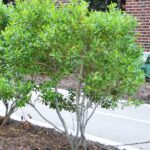
Shrub Indiana Native Ilex glabra [Inkberry] This species, like other hollies, is dioecious, so plant females for fruit and an occasional male for pollination. Withstands severe pruning. Winter desiccation injury to leaves occurs in exposed sites, with severe yellowing when temperatures drop below -20 degrees F. Avoid high pH soils.
Tree Indiana Native Ilex opaca [American Holly] This species, like other hollies, is dioecious, so plant females for fruit and an occasional male for pollination. Winter desiccation injury can occur on leaves in exposed sites. Holly leaf miners are one of the major pest problems for Ilex opaca.
Shrub Indiana Native Ilex verticillata [Common Winterberry] Excellent show of bright red berries in winter and fruiting color is best in full sun. This species, like other hollies, is dioecious, so plant females for fruit and an occasional male for pollination. Adaptable to wet soils, but tolerates more normal conditions also. Native habitats are swampy areas. Tends to sucker and can be quite twiggy. Leaf spot and mildew can be serious problems. Develops chlorosis on alkaline soils.
Shrub Indiana Native Itea virginica [Virginia Sweetspire] Quite drought and pH tolerant although best situated in moist areas with some acidity. Flowers best in full sun, but is shade tolerant. Pruning sometimes needed to maintain form, primarily for removal of wayward branches. Avoid pruning in late fall or winter as flowers form on previous season's wood. Can be subject to flea beetle and leaf spot.
Tree Indiana Native Juglans cinerea [Butternut] Juglans cinera is a large, rounded tree similar to, but overall smaller than the Black Walnut (Juglans nigra). It is not commonly grown for ornamental purposes. The nut, once one is able to crack the hard shell, is edible, sweet, oily, and buttery. Long tap root makes transplanting difficult. This species is valued for its wood and between overharvesting and losses from Butternut Canker (Sirococcus clavigignenti-juglandacearum), this species has become rare in its native habitat.