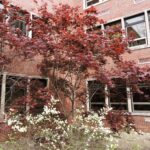
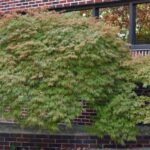
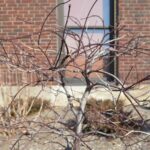
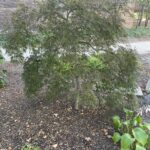
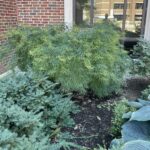
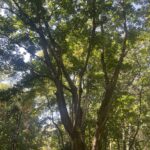
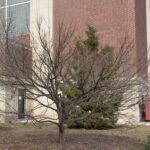
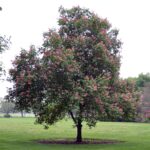
Shrub/Tree Acer palmatum var. dissectum atropurpureum 'Tamukeyama' [Tamukeyama Japanese Maple] This is a popular cultivar with red-purple leaves and a mounding growth form. The leaves turn a vivid red in the fall. With the leaf color and interesting growth habit, this makes an excellent accent tree in the landscape.
Tree Acer palmatum var. dissectum 'Waterfall' [Waterfall Japanese Maple] Best grown in moist, well-drained, organic soils. Avoid hot, dry, or excessively windy sites. New foliage may scorch in full sun location. Chlorosis may occur in high pH soils. Pruning should be kept to a minimum as it often results in significant bleeding especially in the spring/summer. The 'Waterfall' variety is a weeping cultivar that displays cascading branching.
Tree Acer pictum ssp. mono [Painted Maple] This tree will sometimes be seen growing in a shrub-like habit. A milky sap comes out of the stem when it is cut. Smooth gray bark with longitudinal fissures in an irregular pattern resembles the bark of Acer palmatum, the Japanese Maple.
Tree Acer rubrum [sold as October Glory®] [October Glory Red Maple] The October Glory Maple is one of the more popular Red Maple cultivars used in landscapes. This cultivar tends to hold its lustrous green leaves well into the fall season before changing to a vivid reddish-orange. Early freezes in northern parts of the country can hinder fall color.
Tree Acer shirasawanum 'Aureum' [Golden Full Moon Maple] This unique cultivar has light green to almost yellow, 9 to 13-lobed leaves and is a perfect choice as a small, specimen tree. It is also often trimmed into a shrub form. This plant prefers cooler summers. During spring, small reddish-purple flowers bloom in April to give way to stunning red samaras. The Golden Full Moon Maple has brilliant fall foliage in gold to orange-red.
Tree Aesculus × carnea 'Briotii' [Ruby Red Horsechestnut] Has decent tolerance to drought and urban environments. Buds are not as sticky as its parent plant, Aesculus hippocastanum. Flower panicles are larger than both parent species with a rich red coloration, making it a popular tree choice in England.
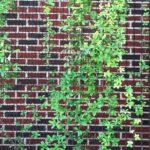
Liana (Climbing Vine) Akebia quinata [Fiveleaf Akebia] Fiveleaf Akebia is a vigorous vine that establishes quickly under many different conditions, even to the point of invading an area. Prune to keep this plant within its boundaries. Best used to climb up structures, but can also be used as a sprawling groundcover. Although generally deciduous, Akebia quinata can be evergreen in the south.
Tree Indiana Native Asimina triloba [Common Pawpaw] Needs filtered or full shade in its first few years, then tolerates full sun. Good specimen tree in a shady landscape. Fruits resemble a short, fat banana, at first green then turning yellowish then brown as they ripen in the fall, and taste like a combination between a banana and mango. Suckers rapidly.
Shrub Berberis × mentorensis [Mentor Barberry] An adaptable plant that does well in an urban environment. Can be coppiced with new growth developing better summer color. Can be pruned to ground every 5 to 7 years. Full sun to partial shade. Relatively trouble-free. Large thorns and spiny leaves are a maintenance problem. Collects litter around the base.