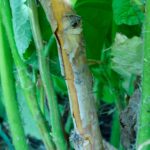
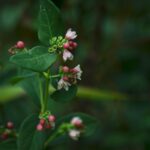
Shrub Indiana Native Rubus odoratus [Flowering Raspberry] The Flowering Raspberry offers great texture into the landscape with its exfoliating bark during the winter months and its large course leaves during the summer months. Its rich, pink-purple flowers begin to bloom in early June, offering fragrance and color. The flowers and fruits often attract birds and other wildlife, including butterflies and bees.
Shrub Indiana Native Salix exigua [Coyote Willow] Salix exigua is frost tolerant and dioecious. Spreads by small seeds through the wind or water and has an extensive root system caused by abundant suckering. It is great in moist soils or stream bottoms to help prevent soil erosion.
Shrub Indiana Native Spiraea alba [Meadowsweet] The meadowsweet is an Indiana native shrub that can be found in wet prairies, marshes, and flood plains. Its flowers appear on panicles during the later summer months and last till about September, making this shrub a great addition to the landscape as a late blooming shrub. The flowers also attract pollinators, such as bumblebees and other bee species. Wet soils are needed for this shrub and can even tolerate periods of flooding. Every three…
Shrub Spiraea japonica 'Little Princess' [Little Princess Spirea] Grows larger and faster than species
Shrub Indiana Native Staphylea trifolia [American Bladdernut] An upright, heavily branched, suckering shrub; sometimes wide-spreading, as a small tree. Used in naturalizing; best reserved for parks and other low maintenance areas; rather nice for foliage effect.
Shrub Indiana Native Symphoricarpos albus [Common Snowberry] Useful as a bank cover or large scale groundcover. Transplants well. This plant has a beautiful fruit show and is shade tolerant, however, it is also a twiggy, "garbage can plant" (collects leaves and blowing debris); this quality (especially prominent in the fall and winter) limits its usability in the landscape.
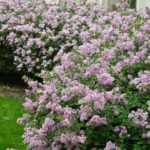
Shrub Syringa meyeri 'Palibin' [Dwarf Meyer Lilac] Flowers by the time it reaches one foot tall, very floriferous. Flowers in spring before leaves are fully out. Powdery mildew resistant. Very low maintenance. Flowers can be damaged by a late spring freeze. Best to prune immediately after flowering to promote flower buds for the next year.
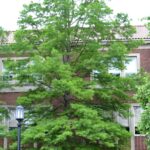
Tree Indiana Native Taxodium distichum [Common Baldcypress] Nice planted in groupings around water. Develops cypress knees (possibly for gas exchange), but generally only near water.
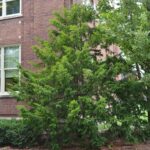
Shrub/Tree Taxus cuspidata 'Capitata' [Capitata Japanese Yew] 'Capitata' is a very functional and durable pyramidal yew. Can get up to 40-50' tall, but can be pruned to maintain a smaller size. Dioecious. Tolerates shade and heavy pruning. Bark peels on older specimens. All parts of Taxus, except the fleshy, red aril are poisonous. Can be significantly damaged by deer.